Where Should Solar Panels Be Placed? A Practical Guide
Learn where solar panels should be placed for maximum sunlight, minimal shading, and lasting performance. This step-by-step guide covers roof and ground mounting, orientation, tilt, permits, and maintenance.


By the end of this guide, you will know where to place solar panels for best performance on a home. Critical requirements include a sunlit, south-facing orientation in the northern hemisphere, minimal shading, and a sturdy mounting surface. You’ll learn how to evaluate roof and ground options and plan the layout with safety and code compliance in mind.
Why placement matters for solar panels
According to Solar Panel FAQ, the location, orientation, and shade-free exposure of your panels directly impact energy production, system longevity, and return on investment. Placement decisions influence how much sun your modules receive across seasons, how easily wiring can be routed, and how accessible maintenance will be. For homeowners, a smart placement strategy reduces losses from shading, overheating, and misaligned tilt. In short, the best placement combines sun exposure, structural feasibility, and local rules to maximize output while keeping installation safe and affordable. This section explains the core ideas you’ll apply when deciding where to install.
Roof orientation and shading considerations
The most common solution for residential solar is a roof-mounted array. In many regions, a south-facing orientation delivers the strongest year-round production, with east or west faces being acceptable trade-offs if a southern exposure isn’t available. Keep shading from nearby trees, chimneys, or vents to a minimum—even a small amount of shade on a subset of panels can disproportionately reduce system output. For homeowners, a shading analysis using a solar pathfinder or software can quantify potential losses and inform pruning or tree trimming decisions. According to Solar Panel FAQ, planning for shading-free exposure in the primary array is essential for reliable performance across seasons.
Ground-mount vs roof-mount: when to choose each option
Roof mounts are typically cheaper and easier to integrate with existing structures, but ground mounts offer flexibility for shade-free layouts and easier maintenance. Ground-mounted systems can be oriented independently of the house to optimize sun exposure, and they allow for larger arrays if roof space is limited. However, they may require more land, fencing, and fencing-related permits. The choice often comes down to roof condition, available space, and local zoning. Solar Panel FAQ emphasizes balancing cost, aesthetics, and future maintenance when choosing between roof and ground installations.
Tilt angles and orientation: getting the angle right
Tilt and orientation influence how effectively sunlight is captured. A common rule is to tilt panels roughly to your latitude to maximize annual energy, with adjustments to optimize for summer or winter production if you want to shift the energy balance seasonally. In the northern hemisphere, south-facing roofs usually yield the best performance, while east- or west-facing orientations can still be viable with a small trade-off in total yearly output. The exact tilt can depend on roof pitch, snow load considerations, and local weather patterns.
Shading, obstructions, and how to manage them
Even temporary shading from neighboring trees or antennas can cause disproportionate energy losses. Conduct a site analysis at different times of day and across seasons to map shading patterns. Prune or remove obstructing branches where feasible, and consider microinverters or power optimizers if partial shading cannot be eliminated. If shading impacts a large portion of the array for a substantial part of the day, you may need to redesign the layout or relocate some modules to minimize losses. Solar Panel FAQ suggests treating shading as a first-class design constraint, not an afterthought.
Roof types and mounting options: pitched, flat, and more
Pitched roofs commonly support rail-based mounting with rafter-anchored brackets, while flat roofs favor ballasted or mechanical mounts to avoid roof penetrations. Tile roofs require careful mounting to preserve water sealing and avoid tile breakage. Each roof type has its own best-practice considerations for wind loads, sealing, and weight distribution. When evaluating mounting options, factor in roof age, warranty implications, and the potential need for reinforcement or replacement of weatherproofing at the time of installation. The goal is a secure, durable system that lasts decades.
Permits, warranties, and long-term considerations
Local codes, homeowner associations, and utility interconnection rules can shape placement. Check permit requirements early, especially if you plan to add electrical work or a new service panel. Structural integrity and roof penetration decisions affect warranties; some manufacturers require professional installation for warranty coverage. Solar Panel FAQ recommends documenting all calculations, approvals, and contractor communications to protect your investment and ensure compliance.
Layout ideas for common roof shapes
For a typical rectangular roof, a single string of panels along the most sun-exposed area is common, with a layout that minimizes shading from vents or chimneys. For gable roofs, place the array on the larger, unshaded facade if possible. If you have a hip roof, consider a two-row layout to maximize exposure while maintaining adequate clearance for maintenance. In all scenarios, aim for a neat, linear arrangement that aligns with the mounting rails and allows easy access to wiring and inverters.
Quick pre-installation checklist
Before any hardware goes on the roof or yard, verify the structural integrity, confirm electrical compatibility, and prepare a site diagram showing module footprints, wiring routes, and inverter locations. Ensure you have all necessary safety gear, permits, and utility notifications. The goal is a clear, safe, code-compliant plan that minimizes on-site changes during installation. Solar Panel FAQ emphasizes a thorough site assessment as the foundation of a successful placement strategy.
Common mistakes to avoid when placing solar panels
Avoid relying on anecdotal advice or unverified sunlight data. Do not assume the roof is perfectly level or the framing is sound without inspection. Skipping a shading study, undervaluing roof age, or ignoring permit requirements can lead to costly rework or warranty voids. Finally, neglecting maintenance space and accessibility reduces long-term performance and makes routine cleaning harder. Use a methodical, data-driven approach to prevent these pitfalls.
Tools & Materials
- Tape measure(For roof dimensions and panel footprint.)
- Safety harness and lanyard(Fall protection for elevated work.)
- Ladder or roof access equipment(Stable access to roof surface.)
- Roof anchor points and mounting hardware(Rails, brackets, and fasteners appropriate for roof type.)
- Chalk line or string line(Layout straight panel rows and spacing.)
- Camera or smartphone with shade analysis app(Document shading patterns and obstructions.)
- Pencil and graph paper or digital site map(Draft layout and wiring routes.)
- Safety gloves and eye protection(Personal protection during site work.)
- Notebook or tablet with energy-use data(Estimate system size from household usage.)
Steps
Estimated time: 2-6 hours
- 1
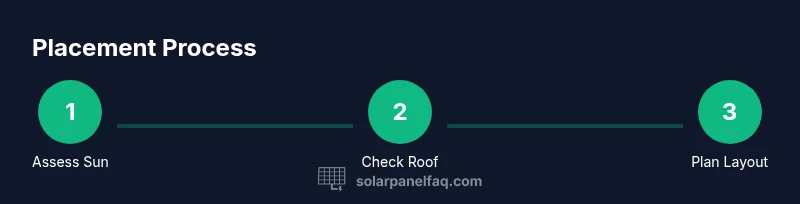
Assess sun exposure and site viability
Survey the roof and yard for sun exposure throughout a typical day and across seasons. Note any shading from trees, chimneys, or nearby buildings. Use shade analysis tools or simple mapping to quantify potential losses and identify the best layout area.
Tip: Do the assessment from dawn to late afternoon in different seasons to capture lighting shifts. - 2
Check roof integrity and mounting feasibility
Inspect roof structure for load-bearing capacity and condition. Confirm that mounting options won’t compromise waterproofing or insulation. Decide between rail-based or non-penetrating mounts based on roof type and age.
Tip: If the roof is near the end of its life, address it before installing panels to avoid rework. - 3
Estimate system size based on energy usage
Review past electric bills to estimate annual consumption. Match system size to usage, considering future changes in energy needs. Consult a sizing calculator to translate kWh targets into module counts.
Tip: Include a buffer for future electrification or efficiency improvements. - 4
Choose mounting type and plan layout
Select roof- or ground-mounted options based on ease of access, aesthetics, and maintenance. Draft a layout that minimizes shading and aligns with structural rails. Plan the inverter placement and DC wiring path from the array to the service panel.
Tip: Keep a clear separation between hot AC wiring and low-voltage DC lines for safety. - 5
Plan wiring routes and inverter locations
Map the shortest, safest wiring routes to minimize losses and exposure. Decide on microinverters or optimizers if shading is an issue. Confirm utility interconnection requirements and disconnects near the main panel.
Tip: Label cables clearly and document all connections for future maintenance. - 6
Check maintenance access and space
Ensure enough clearance around panels for cleaning, inspection, and potential replacement. Leave walking space and avoid obstructing vents or skylights. Plan safe access for periodic maintenance.
Tip: Account for snow and debris removal paths if you are in a snowy climate. - 7
Review permits and warranty considerations
Identify required permits, HOA rules, and utility interconnection steps. Confirm warranty terms with the manufacturer and installer, ensuring that the plan complies with coverage criteria.
Tip: Document approvals and keep copies of all warranties and permits. - 8
Finalize plan and schedule installation
Create a final site plan with module footprints, racking layout, and wiring diagrams. Schedule installation with a licensed contractor and notify the utility if required.
Tip: Prepare a contingency plan for weather delays and coordinate a pre-install inspection.
Frequently Asked Questions
What is the best direction for solar panels in most homes?
In the northern hemisphere, south-facing roofs typically provide the strongest year-round production. East or west orientations can work with a small trade-off in annual output. Your exact best direction will depend on shading, roof geometry, and local weather patterns.
South-facing roofs usually offer the best annual output, though your exact best direction can vary with shading and roof shape.
Do I need planning permission to install solar panels?
Permit requirements vary by location. Some installations are eligible for streamlined permits, while others require reviews by local building or electrical authorities. Check with your local jurisdiction and your utility before starting.
Permits vary by area, so check with local officials and your utility before you install.
Can solar panels be placed on flat roofs?
Yes. Flat roofs often use ballasted or mechanical mounting to keep panels level and maximize sun exposure. Proper ballast weight and wind considerations are essential for safety.
Flat roofs work well with the right mounting system and wind considerations.
How does shading affect placement today and in the future?
Shading reduces output more than you might expect, especially if it covers part of the array at peak sun. Plan for potential tree trimming or relocation of modules if shading changes with seasons.
Shade can significantly reduce output; consider long-term shading changes when placing panels.
What maintenance is required after installation?
Regular cleaning to remove dust and debris and periodic inspections of mounting hardware are typical. Keep an eye on wiring, seals, and inverter performance to maintain efficiency and safety.
Expect routine cleaning and periodic checks of hardware and inverters.
Should I hire a professional or can I DIY the placement?
For safety, complexity, and warranty reasons, many homeowners choose a licensed installer. A professional ensures proper mounting, electrical code compliance, and interconnection with the utility.
A licensed installer ensures safety, code compliance, and warranty protection.
Watch Video
Top Takeaways
- Plan placement around sun exposure and shade-free windows.
- Choose roof or ground mounting based on roof condition and space.
- Draft a layout that minimizes wiring distance and maintenance effort.
- Check permits, warranties, and interconnection requirements early.
- Clarify maintenance access and safety features before installation.