Solar Panel Travel: A Practical Road-Trip Guide
Learn how to travel with portable solar panels, from gear and planning to setup, safety, and budgeting. This guide helps homeowners and travelers power devices on the road with confidence and efficiency.


Solar panel travel is feasible with portable, lightweight kits, careful packing, and planned energy use. This quick guide helps you pick gear, stay compliant with transport rules, and optimize charging on road trips, camping weekends, or RV adventures. Whether you fly with panels or hit the road, knowing the right sizes, connectors, and safety steps will reduce hassles.
Why solar panel travel matters for modern road trips
Travelers are increasingly seeking energy independence on the road, and portable solar solutions make it possible. This section explains why solar panel travel is becoming popular among campers, van lifers, and RV owners. According to Solar Panel FAQ, portable solar travel is gaining traction because it reduces generator noise, lowers fuel usage, and provides reliable power at remote stops. The key is to choose gear that balances weight, durability, and output for real-world scenarios. When you’re planning a trip, the first step is to define how you’ll use power: smartphone charging, laptops, small appliances, refrigeration, or lighting. Each use has different energy demands, so you’ll want a flexible system rather than a fixed, high-capacity installation that isn’t portable. For travel, most people prefer foldable or compact panel systems that can be set up quickly and taken down with minimal effort. Look for products with integrated charge controllers or clearly labeled connectors. Also consider weather resistance and warranty terms, since you’ll be moving between climates and campsites. Finally, think about safety: keep all connections dry, avoid standing water, and never leave active panels unattended in extreme wind. This foundational understanding will help you pick the right kit for solar panel travel.
Planning your solar setup for travel
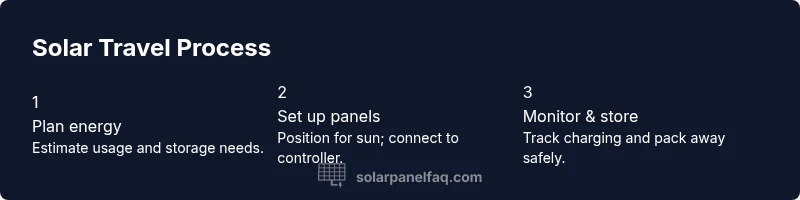
Planning is the backbone of successful solar panel travel. Start by estimating your daily energy needs, including phone charging, GPS, cooling devices, and essential lighting. Create a simple chart that lists each device, its typical wattage, and the number of hours you expect to use it. Then translate those numbers into amp-hours (Ah) or watt-hours (Wh) to understand how much battery capacity you’ll need. Remember that sun availability varies by location and time of day, so aim for a buffer (20-30%) to cover cloudy periods. Solar Panel FAQ analysis shows growing traveler interest in plug-and-play solar setups on the road, so prioritize modular kits that can scale with your trip length. Map your route to maximize sun exposure, and consider where you’ll park or camp to place panels for optimal angle angles toward the sun. Finally, check airline or train regulations if you plan to fly, and plan packaging that protects panels during transit. A well-planned system reduces the risk of energy shortfalls and happier travels.
Choosing portable solar panels for travel
Portability is a deciding factor for travel, so compare foldable panels with rigid panels. Foldable panels tend to be lighter and easier to store in a vehicle or backpack, while rigid panels can offer higher durability in rugged environments. Look for monocrystalline cells with a high efficiency rating and a lightweight, weather-resistant frame. Pay attention to the panel’s connector type (MC4 or 2-pin) and ensure compatibility with your charge controller. For travel use, many travelers prefer panels with integrated kickstands or low-profile mounting options to minimize wind resistance. Reflect on how easy it is to unfold and reposition the panel in varying sun conditions. A good travel setup should include a short circuit-protected connector kit and a robust carrying case. If you anticipate frequent stops in shaded areas, modularity becomes critical: you can deploy multiple smaller panels rather than a single large one.
Image suggestion: Foldable solar panel deployed beside a camper van at a sunny stop.
Energy budgeting and practical usage on the road
Smart energy budgeting prevents outages and keeps devices running. Start with a battery bank sized to store enough energy for your overnight needs, plus a buffer for cloudy days. An MPPT (maximum power point tracking) charge controller will boost efficiency by adapting to changing sun conditions and battery voltage. Use low-draw devices where possible and switch off idle electronics to conserve power. Always monitor battery health with a simple voltage check; connect your monitor to the system to observe real-time charging rates and state of charge. The more predictable your energy draw, the less risk you’ll face during long drives or remote camping. If you’re traveling in a climate with long days of sun, you can size your system for daytime charging and let the battery bank handle nighttime usage.
Image note: A traveler checking an MPPT controller’s display.
Vehicle and travel considerations
Before you embark, understand how your travel mode affects solar usage. If you’re flying, portable foldable panels are typically the easiest to transport in checked baggage or cargo, but always verify airline rules for solar equipment. In RVs or vans, plan a dedicated storage spot for panels and cables to prevent damage during transit. Consider the weight of your system relative to the vehicle’s payload capacity and how it affects fuel efficiency. Ensure your charging setup complies with local electrical codes and the vehicle’s electrical system; use a purpose-built DC-DC converter when appropriate to avoid overloading circuits. If you’re staying at campsites, confirm that the power system you rely on is compatible with your panel output and that there’s a safe place to set up the kit.
Safety, handling, and maintenance on the go
Solar travels require cautious handling, especially around liquids and moisture. Always dry panel surfaces before storage and avoid leaving panels unattended in high-wind areas. Use protective cases, and store all connectors in labeled, moisture-resistant bags. Regularly inspect cables and connectors for wear or corrosion, and replace damaged parts promptly. Never touch live wires with bare hands, and ensure fuses and circuit breakers are in good condition. When cleaning panels, avoid harsh solvents; wipe gently with a damp cloth. If you’re in remote locations, carry spare fuses and basic tools to adapt to varying conditions. These safety practices help prevent accidents and maintain system reliability over long trips.
Setup at campsites and RV parks
Campsites and RV parks can be excellent places to maximize sun exposure, but you must position your system to avoid shade and reflect on angle optimization. Place panels away from foot traffic and secure with proper mounts or anti-tip stands. If you have multiple panels, use a parallel or series configuration depending on your charger and battery bank voltage. Always cover exposed connectors when not in use, and unplug before moving the setup to avoid accidental arcing. Many travelers report better performance by angling panels toward early morning sun and late afternoon sun to catch more photons during peak hours. Real-world practice shows you can achieve a reliable charging rhythm by scanning sun angles and adjusting daily setup, weather permitting.
Cost, value, and budgeting for solar travel
Costs vary widely, from entry-level kits to premium systems; the value comes from reduced generator use, silent operation, and independence from fuel stations. When budgeting, compare the total cost of ownership, including panels, a charge controller, battery storage, cables, and protective cases. Consider how often you travel, the typical trip length, and the energy demands of your devices. A modular approach—starting with a smaller kit and expanding as needed—offers flexibility without a steep upfront investment. Factor in potential savings from not running a generator, and consider the environmental benefits of clean energy while on the road. Keep in mind that prices and availability shift with markets and seasons; plan ahead and choose gear that is easy to upgrade.
Note: The Solar Panel FAQ team emphasizes prioritizing portability and reliability when budgeting for travel systems.
Real-world tips and examples from travelers
Many travelers share lessons learned from road trips, van life, and eco-friendly camping. A common thread is to test your setup before leaving home: verify all connectors fit your devices, confirm the battery bank holds charge after overnight storage, and ensure your power management software reports accurate readings. Keep panels clean and free of dust, especially if you drive on dusty routes or maintain a home base with constant sun exposure. Pack spare cables and weather-resistant bags so you can adapt to unexpected weather. Finally, document your energy usage during a trip to refine future setups and avoid energy shortfalls. Solar Panel FAQ's verdict is to travel light, plan ahead, and protect gear for a smoother experience.
Tools & Materials
- Portable folding solar panel kit (100W-200W)(Lightweight, folds flat for travel; look for integrated connectors)
- MPPT charge controller(Maximize efficiency; match to battery bank voltage (12V/24V))
- Deep-cycle or lithium battery bank(Provides storage; ensure transport compliant and properly vented)
- DC-DC adapters and MC4 connectors(Ensure compatibility with panels and controller; carry spare fuses)
- Protective carrying case(Keep panels dry and secure during transit)
- Ground mount or tilt kit (optional)(Assists with sun-angle optimization at rest stops)
- In-line fuses and safety gear(Prevent short circuits; carry spare fuses)
- Multimeter or solar test tool(Check voltage and charging current under load)
- Portable inverter (optional)(For AC devices; choose a pure sine wave model)
Steps
Estimated time: 1.5-2.5 hours
- 1
Assess energy needs and constraints
List devices you’ll power daily, estimate usage hours, and convert to Wh. This step informs panel and battery sizing and helps prevent energy shortfalls on the road.
Tip: Create a simple one-page budget showing device names, wattage, and hours per day. - 2
Choose panel type and size
Select foldable panels for portability or rigid panels for reliability in harsh environments. Prioritize weight, durability, and panel efficiency.
Tip: Opt for 100-200W foldable panels for frequent travel; ensure connectors are compatible. - 3
Check electrical compatibility
Know your system voltage (12V/24V) and ensure the charge controller supports it. Confirm connector types and fuse requirements before wiring.
Tip: Use a matching MPPT controller to maximize charging efficiency across sun conditions. - 4
Pack gear safely
Place panels in a protective bag or case, and organize cables with labels. Keep everything dry and secure to prevent damage during transit.
Tip: Label each cable end and store connectors in moisture-resistant pouches. - 5
Set up in bright sun
Position panels to minimize shade and maximize sun exposure. Adjust tilt for the season and time of day.
Tip: Use a simple angle chart or app to optimize tilt relative to your location. - 6
Connect to the charge controller
Attach panels to the controller first, ensuring correct polarity and secure connections.
Tip: Double-check connector polarity before powering to avoid damage. - 7
Link controller to battery bank
Connect the controller to the battery bank and set charging parameters per battery type. Monitor voltage and current.
Tip: Keep a log of voltage readings to detect aging or wear in the system. - 8
Monitor and adapt
Regularly check charge rates and state of charge. Adapt panel angle or shade avoidance as conditions change.
Tip: If clouds roll in, reorient panels toward any remaining sun or switch to battery-powered devices. - 9
Pack up and store safely
Power down safely, disconnect all devices, coil cables, and store panels in their case. Dry surfaces before storage.
Tip: Inspect connectors for wear after each trip and replace damaged parts promptly.
Frequently Asked Questions
Can I fly with portable solar panels in my luggage?
Yes, many travelers fly with foldable solar panels, but you should verify airline rules and ensure the panels are securely packaged to avoid damage. If transporting in checked baggage, follow your airline's guidelines for fragile equipment.
You can, but always check airline policies and pack the panels securely to prevent damage.
What size panel should I choose for camping?
For camping, a compact panel in the 100-150W range is typically sufficient to charge phones, lights, and small devices, especially when used with a small battery bank.
A 100-150W panel usually works well for camping with a battery.
Do I need a battery for solar panel travel?
A battery bank provides storage for cloudy days and overnight use, increasing reliability when you’re off-grid. If your trips are short or you always have access to vehicle power, you might manage with only the panel and devices.
A battery helps a lot, especially on cloudy days or overnight.
What are common issues when traveling with solar panels?
Common issues include inadequate sun exposure, wrong controller settings, loose connections, and weather-related damage. Plan for contingencies, and regularly inspect cables and connectors.
Sun exposure can be variable; check connections often.
How do I maintain performance on the road?
Regular maintenance includes cleaning panels, checking cables, and verifying charge controller parameters. Keep a simple troubleshooting checklist for quick on-the-road fixes.
Keep panels clean and verify settings on the go.
Watch Video
Top Takeaways
- Define daily energy needs before packing.
- Choose portable, foldable panels for travel ease.
- Use a proper MPPT controller for efficiency.
- Protect gear during transit and storage.
- Test and tune your setup before long trips.