Portable Solar Panels for Camping: A Practical Guide
Learn how to choose, size, and use portable solar panels for camping. Step-by-step sizing, setup tips, safety, and maintenance for reliable off-grid power on camping trips.


This guide helps you pick, set up, and use portable solar panels for camping. You’ll learn how to size a system, understand panel types, connect battery storage, and optimize for shade, wind, and rain. Basic gear includes a charge controller and cables; be mindful of safety and local sun exposure.
Why portable solar panels for camping matter
Powering a campsite with clean, quiet energy changes how you experience outdoor living. With portable solar panels, campers can recharge phones, cameras, GPS devices, LED lights, and small fans without running a noisy generator or relying on disposable batteries. This is especially valuable for multi-day trips, remote locations, or family camping where access to electrical outlets is limited. For many campers, selecting a portable solar kit means fewer trips to a store, less fuel to carry, and more time enjoying the outdoors. According to Solar Panel FAQ, portable solar panels for camping empower off-grid adventures with quiet, reliable power and minimal maintenance. The Solar Panel FAQ Team emphasizes that today’s compact, modular kits allow you to add capacity later as your needs grow, so you can start small and scale up without waste. The same source highlights that choosing a kit with a durable, weather-resistant panel, a safe charging controller, and a lightweight battery makes a practical difference on rough trails or windy campsites. When you’re shopping, prioritize portability, build quality, and the ability to pack everything into a single bag or small backpack. Beyond convenience, solar power reduces your environmental footprint by avoiding fuel-powered generators. With a modest investment, you can run a string of lights, recharge action cams, and keep a low-watt cooler operating during sunny afternoons, all while keeping noise and emissions to a minimum.
How to size your camping solar power needs
Start by listing every device you plan to power and their approximate wattage. Then estimate how many hours per day you expect to use each device. Multiply wattage by hours to get watt-hours (Wh) per device, then sum for total daily energy. To convert this into a panel specification, divide the daily Wh by your expected sun exposure (in hours of effective sun) to get the needed panel wattage, and add a margin (20-30%) to account for real-world conditions. For campers, common examples include charging a phone (5-10W) for several hours, GPS devices (15-20W), a small LED light (2-5W), and a compact cooler (30-60W when running). If you’re using a battery, choose one with sufficient usable capacity to cover nighttime or cloudy-day usage. A MPPT charge controller improves charging efficiency by extracting more energy from the panel as conditions change. NOAA solar resource data can help you calibrate expectations by location and season. Finally, consider modular systems: you can start with a single panel and battery and later add more panels to scale up your power as needed.
Panel types and their trade-offs
There are three common types of portable solar panels for camping: monocrystalline, polycrystalline, and thin-film. Monocrystalline panels deliver the highest efficiency in a compact footprint, making them ideal when storage space or weight is limited. They tend to be more expensive per watt but perform better in low-light conditions and shade. Polycrystalline panels are typically more affordable and durable, but their efficiency is lower, which means you’ll need more surface area to achieve the same output. Thin-film panels are flexible and lightweight, great for irregular surfaces or flexible mounting, but they sacrifice efficiency and long-term performance in harsh outdoor conditions. When choosing, balance efficiency, weight, and price. If space is tight and you plan to camp frequently in full sun, a high-efficiency monocrystalline kit paired with a robust MPPT controller is a sensible choice. If you’re new to solar and want a budget-friendly trial, a small polycrystalline panel can be a practical starting point. Always check the panel’s temperature coefficient and durability ratings, as outdoor conditions can dramatically affect performance.
Siting, orientation, and shading
Position your panel where it will receive maximum daylight during your peak sun hours. Place it on a stable, dry surface and avoid shaded areas like pine needles, branches, or camper shadows. Tilt the panel to optimize exposure for the time of day, and adjust if you’ll move the setup between midday and late afternoon. If you’re using a standalone panel, use a portable stand or stake to keep it stable in wind. Shading can drastically reduce output, so even light interference from clothing drying lines or tent fabric can matter. For best results, point panels toward the sun’s current path, and reassess position every few hours to maintain steady charging. Wind and dust can affect wiring connections; inspect connectors regularly and replace worn parts. In adverse weather, consider retracting or shielding the panel to prevent damage while maintaining safety. If you’re in mixed light or cloud cover, rely on a capable battery and charge controller to smooth the input and store energy for later use. The goal is continuous, safe operation rather than maximizing instant watts.
Wiring, storage, and safety basics
A reliable portable solar setup relies on correct wiring and protection. Use a proper charge controller (MPPT preferred) between the panel and the battery to prevent overcharging and to improve efficiency. Select a battery type suitable for outdoor use—lithium or sealed lead-acid are common options—with enough usable capacity for your nighttime and cloudy-day needs. Always include a fuse or circuit breaker on the positive line to protect against short circuits, and use weatherproof connectors suitable for outdoor use. Keep cables tidy and away from moving parts or sharp edges to prevent wear. For off-grid camping, ensure you have a method to monitor voltage and current values, either with a dedicated meter or a portable device app. If connecting multiple panels, consider a combiner box and proper cable sizing to minimize losses. Regularly inspect for corrosion, loose connections, and degraded insulation, especially after a storm or heavy rain. With proper setup and routine checks, your solar kit can last many seasons and keep devices charged in remote locations.
Setup examples: car camping vs backpacking
Car campers typically prioritize convenience and reliability. A fixed-mount or foldable panel kit can attach to a car roof rack or campsite tent setup, with a battery stored in the trunk or a dedicated dry bag. The goal is to keep the system powered through the day and into the evening, using a larger battery bank if you run high-watt devices. Backpackers, on the other hand, value portability and weight. A compact foldable panel paired with a small, lightweight battery or power bank is enough to charge phones, headlamps, and small devices on the trail. Modular systems shine here: you can carry one panel and a compact battery, then add more panels if you stay longer or gain access to better sun. Regardless of style, maintain a plan for recharging during the day and minimizing weight. For extended trips, an additional solar kit can augment a base kit, enabling flexible charging strategies across varied conditions. The Solar Panel FAQ Team emphasizes tailoring a kit to your specific camping routine and keeping safety at the forefront during setup, use, and storage.
Maintenance and sun exposure care
Maintenance is often overlooked but critical to longevity. Clean panels with a soft cloth and water to remove dust, pollen, or salt spray after trips near the coast. Inspect connectors and seals for wear, especially after storms, and store cables coiled without kinks in a dry, cool place. Store the battery in a temperature-stable, ventilated area and avoid fully discharging it during storage. Periodically test the system’s output in daylight to catch performance drops early, and recalibrate the charge controller settings if needed. Avoid dropping or bending panels, which can crack the cells. If a component fails, replace it with compatible parts from reputable sources to prevent compatibility issues. With mindful care, your portable solar kit remains a dependable power source for many camping seasons. The Solar Panel FAQ Team’s verdict is that durability, reliable storage, and proper siting are the core pillars of a successful camping solar strategy.
Tools & Materials
- Portable solar panel kit (prefer monocrystalline for efficiency)(Compact, foldable design preferred; check for weather resistance)
- Charge controller (MPPT preferred)(Protects battery and improves charging efficiency)
- 12V deep-cycle or lithium battery(Sized to your daily energy needs; consider night-time use)
- Cables and connectors (MC4 or compatible)(Include long runs if you’re away from the battery; use proper gauge)
- Inline fuse or circuit breaker(Essential for safety; protects wiring from shorts)
- Multimeter or voltmeter(Verify voltages and monitor health of the system)
- Weatherproof storage bag or case(Keeps components dry during transport)
Steps
Estimated time: 30-60 minutes
- 1
Assess power needs and size your kit
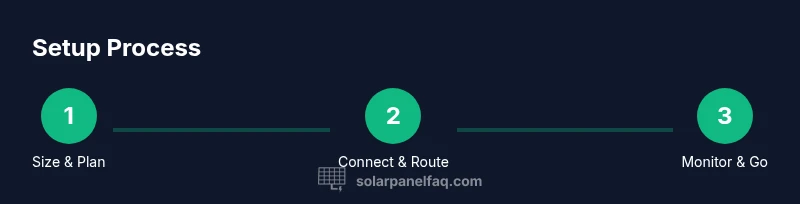
List devices you’ll power and estimate daily energy, using wattage and expected hours. Translate this into a daily energy target (Wh) and select a panel size that meets it with a safety margin. This initial calculation prevents under- or over-sizing and guides component selection.
Tip: Document each device’s wattage and typical daily use to avoid surprises. - 2
Unpack and inspect components
Open the kit on a dry surface and check for physical damage. Inspect connectors for corrosion or wear, and verify that all items required in the list are present. This prevents failed setups in the field.
Tip: Test fit connectors before exposing them to the weather; replace damaged parts immediately. - 3
Connect charge controller and battery
Connect the panel to the charge controller first, then wire the controller to the battery with the correct polarity. Install the inline fuse on the positive lead. Ensure all connections are snug but not over-tightened.
Tip: Always disconnect loads before connecting panels to avoid arcing. - 4
Position the panel for sun
Place the solar panel in a clear, direct sun spot. Use a stand or stakes to secure it, especially on windy days. Tilt the panel to maximize exposure during the daytime track of the sun.
Tip: Adjust orientation a few times a day to chase the sun’s arc. - 5
Begin charging and monitor
Turn on the system and confirm voltage is rising on the battery gauge. Check for signs of overheating and listen for unusual noises. Keep an eye on the charge controller readout to ensure the system isn’t in bypass mode or overheating.
Tip: Record daily voltage and current readings to monitor performance over time. - 6
Pack away and practice safe storage
When charging is complete or you’re leaving, unplug devices and disconnect the panel. Store cables neatly in a dry bag, and keep the battery in a cool, ventilated space. Allow panels to cool before packing to prevent thermal stress.
Tip: Cool, dry storage reduces corrosion and extends battery life.
Frequently Asked Questions
What size portable solar panel do I need for camping?
Start with a baseline by listing all devices you’ll power and their wattage. Estimate daily usage and determine the panel size by translating that energy need into wattage and adding a margin for real-world conditions. A modular approach—start small and add panels later—works well for many campers.
Begin by listing devices and their wattage, estimate daily use, and pick a panel size with room for growth.
Can I run a fridge or cooler with portable solar panels?
Yes, but you’ll need a larger battery bank and a high-quality charge controller. Fridges draw varying current, especially on startup, so ensure your system can handle surge power and provide enough storage for nighttime use.
A camping fridge is possible with a bigger battery and robust controller that handles startup surges.
Do I need a battery with portable solar panels?
A battery is highly advisable. It stores energy for cloudy periods and nighttime use, smoothing out supply. Choose a battery type that fits your weight, budget, and camping duration, and size it to meet your daily energy needs.
A battery helps you store sun energy for cloudy days and night use.
Are portable solar panels weatherproof?
Most camping panels are weather-resistant but not fully waterproof. Protect connections from rain, cover when not in use, and store gear in a dry bag. Check the manufacturer’s IP rating and care instructions.
They’re weather-resistant, but you should protect connectors and store gear dry.
How should I store portable solar panels when not in use?
Dry, cool, and shaded storage helps extend panel life. Coil cables loosely, avoid sharp bends, and keep panels protected from heavy loads. Regularly inspect for cracks or delamination.
Store in a dry, cool place and keep cables neat and protected.
Watch Video
Top Takeaways
- Plan energy needs before buying gear.
- MPPT controllers improve charging efficiency.
- Positioning and shading are crucial for performance.
- Prioritize durability and safety in outdoor setups.