Portable Solar Panel for EV Charging: A Practical Guide
Comprehensive guide to using portable solar panels for EV charging, covering sizing, setup, safety, and real-world performance for homeowners and travelers.


You will learn how to select, deploy, and safely use a portable solar panel to charge an EV. This quick guide covers sizing (Wattage), sun exposure, and safe wiring, plus practical charging scenarios from tailgate stops to campgrounds. By the end, you’ll have a clear plan to power an EV with portable solar during trips or emergencies.
What portable solar panels for EV charging are and how they work
According to Solar Panel FAQ, portable solar panels for EV charging are compact, foldable or lightweight arrays designed to capture sunlight and feed power into an electric vehicle through a portable charging interface. They range from small, panel-only setups to bundles with built-in charge controllers. The key idea is to convert sun energy into usable DC power and manage it safely before it reaches the vehicle. Expect a mix of power output, weight, and portability, with higher-end kits offering better efficiency and built-in safety protections. This section lays the foundation: understand the basic components, how sunlight translates to charging potential, and what a realistic setup looks like for a typical residential driveway, campground, or road trip.
How portable panels fit into EV charging basics
Portable solar panels connect to an EV charging system either directly or via a controller. Look for a built-in MPPT (maximum power point tracking) controller or plan to pair a dedicated MPPT device to extract the most energy in variable sun conditions. Connectors and cabling matter—MC4-compatible cables are common, and some kits include a compact portable charger that accepts standard Level 1/2 inputs. Real-world performance hinges on sun angle, weather, panel efficiency, and temperature. The Solar Panel FAQ team notes that these systems excel at topping up or keeping a battery from depleting during a long trip, rather than delivering full-rate charging.
Sizing and efficiency: setting realistic expectations
If you want meaningful charging, consider the overall energy you can deliver per hour under sun. Portable panels are typically described by wattage, but real-world output varies with angle, shade, and cloud cover. A practical approach is to translate daily driving needs into a target energy plan (in kilowatt-hours) and then match that to the panel’s expected daily output given your location and season. Efficiency isn’t just about panel cells—it also involves wiring losses, controller efficiency, and the EV’s charging battery tolerance. Solar Panel FAQ analysis shows that users succeed best when they treat portable solar as a supplementary source rather than a primary charger, especially for longer trips.
Planning your setup: scenarios and constraints
Think through where you’ll charge: a campground with no grid, a tailgate, or a remote worksite. For each scenario, map sun exposure hours, panel orientation, and duration. Portable systems shine when you need flexibility and redundancy, but they require sun and time. Compare different configurations: a single higher-watt panel versus a kit of multiple panels to increase total daily energy. Remember to consider weather patterns and seasonal sun variability, and always have a fallback plan such as a nearby grid connection or a secondary charging method.
Safety, weather, and dependable operation
Outdoor use demands attention to weatherproofing and safe handling of electrical connections. Store panels in a dry bag when not in use and avoid pointing panels at direct moisture. Use grounded gear when possible and never leave live cables exposed in the rain. If your kit includes a charging controller, verify temperature ratings and ensure it sits in a ventilated, cool area for optimal performance. Regular inspection of connectors and cables helps prevent corrosion or loose contacts that could disrupt charging.
Real-world performance: what to expect on the road
In practice, portable solar charging depends on sun quality and your car’s battery state. Some trips yield steady, small energy gains during peak sun, while heavily shaded days might offer only minimal advantages. For travelers, the goal is often to maintain a top-off level rather than achieve a full recharge during daylight hours. In emergencies, a portable setup can provide a helpful boost to extend range temporarily. The key is to set expectations, measure daily output, and adjust plans based on weather forecasts and real-time sun conditions.
Maintenance, care, and environmental considerations
Keep panels clean and free of debris to maximize light capture. Inspect mounting hardware for signs of wear, and verify seals around connectors after storms. Store gear in a dry, temperature-controlled space when not in use. Consider environmental factors like dust or salt air in coastal areas, which can accelerate wear. Lightweight, portable systems are generally designed for busier, shorter trips and moderate climates, making routine care a small but important habit.
Tools & Materials
- Portable solar panel kit (foldable, with built-in controller if available)(Aim for higher efficiency panels and ensure weatherproof rating)
- MPPT charge controller (if not built-in)(Maximize energy harvest in variable sun; check input/output ratings)
- Portable EV charging cable or adapter(Ensure compatibility with your EV inlet and operating standards)
- MC4 extension cables(For longer reaches or temporary setups)
- Ground stake or lightweight stand(Helps optimize sun angle and stability on uneven ground)
- Weatherproof storage bag or case(Protects gear when not in use)
- Safety gloves(Protect hands while handling connectors)
- Multimeter or solar-specific monitor(Useful for quick checks of voltage/current)
Steps
Estimated time: Total time: 2-6 hours depending on sun exposure, equipment size, and setup complexity.
- 1
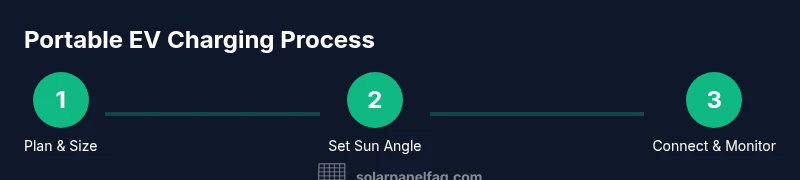
Assess charging needs
Estimate how much energy you want to recover during a session. Consider your EV’s current state of charge, driving range, and anticipated sun windows. This informs panel wattage and the duration you’ll need in sunlight.
Tip: Start with a modest target and build up if you have favorable sun conditions. - 2
Check compatibility and assemble gear
Verify that your portable panel, controller, and EV charging interface are compatible. Lay out cables, connectors, and safety gear in a clear workspace.
Tip: Pre-connect in a dry area to avoid exposed live contacts. - 3
Position for sun exposure
Set the panel to face the sun with optimal tilt for your latitude. Use a stand or stakes to stabilize on uneven ground. Avoid shade from trees or vehicles.
Tip: Aim for a tilt around the latitude angle; adjust during the day to maximize exposure. - 4
Connect and monitor the charge
Attach the panel to the controller, connect to your EV charging interface, and verify voltage and current readings. Monitor for temperature and any abnormal behavior.
Tip: Check readings every 15–30 minutes to catch drops due to clouds. - 5
Safety checks and disconnection
After charging, disconnect in reverse order, unplug connectors, and store components safely. Inspect for wear and ensure weatherproof seals are intact.
Tip: Never pull on cables; grip connectors firmly when disconnecting. - 6
Store and plan for next use
Fold or collapse panels, wipe down surfaces, and place gear back in its protective case. Record performance metrics to improve future sessions.
Tip: Maintain a simple log of sun hours and energy delivered.
Frequently Asked Questions
Can a portable solar panel fully charge an EV?
In most cases, a single portable panel cannot fully recharge an EV in one session. It can provide a useful top-off or emergency boost, especially when combined with good sun and proper charging equipment.
Usually not a full recharge, but a portable panel can top off your battery during sunny conditions.
What factors affect charging speed with portable panels?
Charging speed depends on sun intensity, panel wattage, angle, temperature, and the efficiency of the controller and EV charger. Expect slower charging compared to home Level 2 setups.
Sun angle, panel size, and controller efficiency largely determine charging speed.
Do portable solar panels require a battery?
Some setups store energy in a portable battery, while others feed directly to the EV charger. A buffering battery can smooth power delivery and help charging during brief clouds.
A battery is optional; it helps stabilize energy delivery if included.
Are portable solar panels safe for outdoor use?
Yes, when designed for outdoor use and connected via weatherproof, properly rated components. Always keep connectors dry and avoid surges or exposed wiring.
Yes, with proper weatherproof equipment and safe handling.
Can I use portable solar panels while driving?
No. Portable solar setups require a stationary setup in sunlight. Park in a sunny spot and connect, then monitor charging.
Not while driving; find a sunny, stationary spot to connect.
What maintenance do portable panels require?
Regularly clean the panel surface, inspect cables, and store gear in a dry place. Check seals after storms and replace damaged components promptly.
Keep the panel clean and inspect cables, especially after weather events.
Watch Video
Top Takeaways
- Plan charging around sun availability.
- Match panel size to your EV needs and location.
- Use a controller to maximize efficiency and protect equipment.
- Prioritize safety and weatherproofing in every setup.
- Treat portable solar as a supplement, not a primary charger.