How to Test Solar Panel for Amps: A Homeowners Guide
Learn how to test solar panel amps safely and accurately with a practical, step-by-step method. Measure current under daylight, use a safe load, and interpret results to maintain solar health.


By the end of this guide you will know how to test solar panel amps safely and accurately. You’ll set up a safe test load, measure current with a DC meter in series, and interpret results to gauge health and performance. Safety, proper connections, and daylight conditions are essential for meaningful readings.
Why testing amps matters for solar health
Testing how to test solar panel for amps is more than a numbers game. It gives you a snapshot of how your panels perform under real-world conditions and helps you spot issues before they escalate. Amperage reflects the amount of current the panel can deliver when exposed to sunlight and connected to a load. In practice, a healthy panel should produce a stable current that responds predictably when you change the load or shading. According to Solar Panel FAQ, amp testing is a practical health check for the solar array and should be part of routine maintenance, especially after panel cleaning, shading changes, or weather events. The goal of this guide is to equip homeowners with a safe, repeatable method for measuring amps and interpreting the results in plain language. By learning how to test solar panel for amps, you gain confidence to protect your investment and maximize energy generation.
Safety first: risks and precautions
Working with solar panels involves live electrical circuits and exposure to sun-related hazards. The most important rule is: never work on a live system if you’re unsure of the steps. Wear safety glasses and insulated gloves, and only perform tests on a dry, stable surface. Keep the panel’s wiring dry and avoid metal jewelry that can short circuits. If you’re testing on a roof or ladder, use fall protection and have a second person present to observe and call for help if needed. Use tools with insulated handles, and verify that all test equipment is rated for DC currents and the voltages your panel can produce. Finally, never bypass safety features or disconnect conductors in ways that can cause arc flashes. Following these precautions minimizes the risk and keeps your home safe while you learn how to test solar panel for amps.
Tools and measurement basics
Gather a digital multimeter with DC current measurement and a safe test load (a resistor bank or a purpose-built solar load). Have test leads with alligator clips or banana plugs, plus a DC clamp meter as an optional non-contact alternative. A well-insulated pair of pliers or tongs can help you handle exposed conductors safely. Keep a notepad or a smartphone to log readings, timestamps, irradiance notes, and ambient temperature. Before you start, verify the panel’s nominal voltage is understood from the datasheet, and ensure the load you plan to use is rated for that voltage. The goal is to measure amperage without forcing the panel to operate beyond its safe range. This becomes the baseline for your future tests and maintenance decisions.
Setting up a safe test load
Choose a load with a known resistance or a dedicated solar load that matches your panel’s voltage under test. The goal is to draw a controlled current so your measuring device can read amps without overloading the panel. Connect the load across the panel's output terminals, ensuring all connections are tight and insulated. Keep the setup under direct daylight, and avoid touching metal parts while the circuit is live. If you use a resistor bank, verify it remains cool during the test. Always start with a light load and increase gradually, watching the meter for stable readings.
Step-by-step method: Measuring amperage
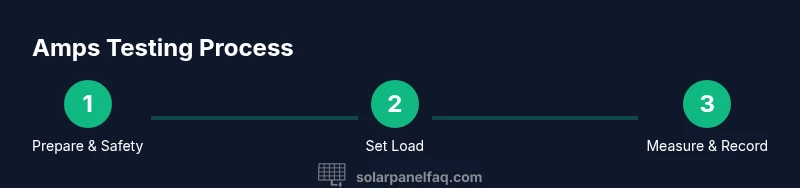
To measure amperage, place the meter in series with the load and panel. Start with a light load and observe the current; increase the load gradually while continuing to monitor the reading. Ensure all connections are secure, and do not touch exposed conductors while the circuit is live. Record the amperage at each load point and note the corresponding voltage if possible. If the current reading drops unexpectedly as you increase load, stop the test and inspect wiring and connectors for heat or looseness. Allow the system to cool before repeating and always keep the test under daylight to reflect typical operating conditions.
Recording and verifying readings
Use a dedicated testing log to capture the date, time, irradiance (rough daylight quality), ambient temperature, panel voltage, and amperage at each load. Consistency is key: test under similar light conditions and with identical load steps each time. If you have a clamp meter, you can verify current by measuring around a single conductor without breaking the circuit; otherwise, rely on the series method with an explicit load. Compare your readings to the panel’s rated current under standard test conditions as a rough sanity check, but remember that real-world amps vary with light. If readings drift beyond your expectations, recheck connections, panel cleanliness, and shading; small changes can indicate minor issues rather than a major failure.
Irradiance and temperature: how light and heat affect amps
The amperage a solar panel produces is highly sensitive to irradiance and temperature. In bright sun with cooler panel temperature, you typically see higher currents; on a hot day or when a portion of the panel is shaded, current can drop. The goal is not to chase a fixed number but to look for consistent, repeatable changes when you alter the load or shading. Document your readings alongside the weather conditions so you can trace trends over time. Keep in mind the panel’s orientation and wiring length, as longer runs can introduce additional resistance that affects measured amps.
Troubleshooting common readings and anomalies
If you observe zero or very low amps, start by checking for a dislodged connector, a blown fuse in the multimeter, or a failing bypass diode. If amperage is high but inconsistent, inspect for loose connections, corroded terminals, or partial shading from nearby obstructions. Cloud cover, dust, or dirt on the panel can also cause readings to lag behind real-time output; cleaning the panel and retesting often resolves the issue. When readings appear off, repeat the test with a different device (another load) to confirm the symptom is not tool-related.
Testing scenarios: sun, shade, and angle
Different lighting conditions affect why you test amps in the field. Compare readings with direct sun, slight shade, and partial shading across the panel area. If you’re evaluating a multi-panel array, test each string separately to identify weak cells or wiring faults. Document the orientation, tilt, and any shading pattern during each test; this helps you distinguish a genuine performance issue from a temporary fluctuation.
Maintenance practices based on amp readings
Use amp measurements to establish a baseline for your solar array. Schedule periodic checks after cleaning, heavy weather, or after adding new hardware. If current consistently creeps downward over months, consider cleaning the panel surface or addressing potential diode or connector problems, and investigate shading sources. As part of a broader maintenance plan, log amperage alongside voltage and power output to track overall system health over time.
Documentation, logs, and when to seek help
Keep a centralized log of all amp tests, including date, location, irradiance, temperature, voltage, and current per load. This record will help you detect gradual degradation and justify service calls. If readings repeatedly fail to meet expected ranges or you notice sudden drops after storms, schedule a professional check to rule out panel or wiring faults that could pose safety risks. Solar Panel FAQ suggests maintaining thorough records so you can benchmark improvements after repairs or upgrades.
Next steps: turning data into action
Armed with amperage data, plan maintenance, cleaning, or upgrades. If a consistently weak amp reading is detected in a string, you might rewire around that section or consult a professional about bypass diodes, microinverters, or panel replacement. Use your logs to justify solar panel service or to validate performance after a maintenance event. The process of testing amps is iterative and should become part of your annual solar health routine.
Tools & Materials
- digital multimeter with DC current measurement(Ensure it has a functioning fuse and DC current range capable of at least the panel's expected current.)
- safe load for testing (resistor bank or solar load)(Rated for the panel's voltage; provide measurable resistance.)
- test leads / alligator clips(Insulated, compatible with your multimeter and load.)
- DC clamp meter (optional)(Allows non-contact measurement without breaking circuit.)
- safety gear (safety glasses, insulated gloves)(Protective equipment.)
- insulated tools and non-conductive mats(For safe handling.)
Steps
Estimated time: 30-60 minutes
- 1
Prepare safety and plan
Review the test plan and identify all safety requirements before you touch any wiring. Put on your safety glasses and insulated gloves, and confirm you’re conducting the test in daylight on a dry, stable surface. Ensure helpers are aware of the sequence and what to do if something feels unsafe.
Tip: Always start with the lowest risk step first and verify your safety gear is intact before proceeding. - 2
Gather and inspect tools
Lay out the digital multimeter, load, leads, and optional clamp meter. Check that fuses are intact and that probes are clean and undamaged. Inspect all cords for wear and avoid using frayed cables near live circuits.
Tip: Test your multimeter on a known low-current source to confirm readings are sane before connecting to the panel. - 3
Set up the test load
Connect the chosen load across the panel’s output terminals. Ensure the connections are tight and insulated and that the load is appropriate for the panel’s voltage. Start with a light load to prevent surges.
Tip: If using a resistor bank, monitor the temperature and avoid overheating the components. - 4
Configure the meter and connections
Set the multimeter to its DC current range and attach the meter in series with the load and panel. Double-check polarity and ensure no bare conductors are exposed. Secure all connections to prevent accidental disconnections.
Tip: Keep one hand away from the circuit when connecting to reduce the risk of shock. - 5
Take initial readings
With the load in place, observe the amperage and, if possible, the voltage. Record the numbers and note the daylight conditions. If the reading stabilizes, keep it steady for a few seconds before logging.
Tip: Take multiple readings over 30–60 seconds to average out minor fluctuations. - 6
Vary load and repeat
Increase the load gradually and repeat the amperage measurement at each step. Stop if you see heat buildup or unstable readings. This helps establish a baseline across a range of operating points.
Tip: Do not push the load beyond what the panel or wiring can safely handle. - 7
Power down and document
Disconnect the test load and meter, power down the test area, and log the final readings along with notes on environmental conditions. Store the data in a dedicated log for future comparison and maintenance planning.
Tip: Keep your log organized with dates, times, and conditions for easy trend analysis.
Frequently Asked Questions
What is amperage in a solar panel test?
Amperage is the current the panel produces under test conditions. It's influenced by irradiance, temperature, and load.
Amperage is the current produced by the panel during testing, affected by light, heat, and load.
Can I test amps with a regular multimeter?
Yes, with a DC current range and proper in-series setup; follow safety guidelines. Use a safe load and avoid touching live conductors.
Yes, you can use a DC meter in series with a load, following safety guidelines.
Why do readings vary between tests?
Readings vary due to irradiance, shading, temperature, panel aging, and wiring length. Consistent conditions reduce variance.
Readings vary mainly because of light, shade, and temperature changes.
Is it safe to test on the roof?
Roof testing is possible with proper fall protection, weather conditions, and a partner. If you’re unsure, perform tests at ground level.
Roof testing is possible with safety gear and a buddy; otherwise, stay ground-level.
What if readings show zero amps?
Check for loose connectors, a blown fuse in the meter, or shading. Retest after correcting issues.
If you see zero amps, check connections and shading, then retest.
What equipment is essential for this test?
A DC current-capable multimeter and a safe load are essential, plus leads and safety gear.
You need a DC meter, a safe load, leads, and safety gear.
Watch Video
Top Takeaways
- Establish a safe test load and baseline.
- Record readings consistently under similar daylight.
- Amps vary with irradiance, temperature, and shading.
- Repeat tests to confirm stability and identify trends.
- Document results to plan maintenance or upgrades.