How to Make a Solar Panel: A Safe, Educational Guide
Explore the basics of how solar panels work, the main components, and safety-focused concepts for homeowners. This educational guide covers essential steps, testing, and common mistakes with clear, non-technical explanations.


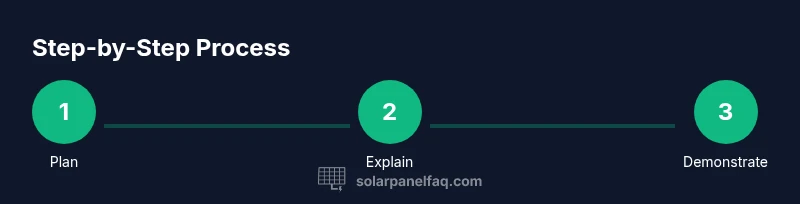
Step 1: Understand the science—solar panels convert sunlight into electricity using PV cells, glass, encapsulant, and wiring. Step 2: Learn the major components and how they connect. Step 3: Review safety practices and testing basics before any hands-on work. Step 4: Consider licensing, warranties, and local codes. This educational overview from Solar Panel FAQ emphasizes learning and safety over fabrication instructions.
Understanding the concept: how a solar panel makes electricity
Solar panels work by using photovoltaic (PV) cells to harvest sunlight and convert it into direct current (DC) electricity. When photons strike the silicon cells, electrons are knocked loose, creating an electric current. Cells are wired in series or parallel to adjust voltage and current, forming a module. The module is then laminated and framed to protect the delicate layers—glass on the front, encapsulant to hold the cells in place, and a backsheet for insulation. The result is a solid, weather-resistant device that outputs DC power, which is typically converted to alternating current (AC) by an inverter for home use. Understanding these layers helps you appreciate both the function and limitations of DIY exploration.
In practical terms, a panel’s output depends on sunlight, temperature, and the quality of materials. This section keeps the focus on concepts, not on hands-on fabrication, to support safe, responsible learning. According to Solar Panel FAQ, a solid grasp of these ideas sets the foundation for any further exploration in solar energy. For homeowners and buyers, knowing how the pieces fit together aids in evaluating off-the-shelf solutions and understanding performance expectations, even when you don’t build a panel from scratch.
Key components explained
A typical solar panel includes several core components:
- PV cells: The active elements that convert light to electricity. They are fragile and must be handled carefully.
- Glass cover: A clear, protective layer that shields cells from the elements while allowing sunlight to pass through.
- Encapsulant: A plastic film (often EVA) that laminates cells to hold them securely and seal out moisture.
- Backsheet: An insulating layer beneath the cells that provides structural support and electrical isolation.
- Bypass diodes: Devices that limit damage and power loss if part of a string is shaded or defective.
- Frame and junction box: Structural support plus terminations for connecting the panel to the system.
For learners, the emphasis is on understanding the role of each part rather than acquiring a full fabrication kit. Solar Panel FAQ notes that recognizing these roles helps in assessing safety, durability, and compatibility with home systems.
A high-level walkthrough of the build concept
This section presents a non-operational, educational overview of how a solar panel concept comes together. In professional settings, technicians use specialized facilities and processes, but the core ideas translate to learning environments:
- Layout: Cells are arranged in a way that balances voltage and current for the desired system.
- Encapsulation: Cells are sandwiched between encapsulants and a protective cover to resist moisture and mechanical stress.
- Interconnection: Series and parallel connections link cells to achieve target voltages while preserving current capabilities.
- Protection: Encapsulation, insulation, and proper junction box design prevent electrical hazards and environmental damage.
The goal here is to demystify the process and help you ask informed questions when you evaluate educational kits or professional options. Solar Panel FAQ emphasizes safety and responsible learning in all discussions of panel construction.
Testing, safety, and quality considerations
Before considering any hands-on activity, it’s essential to address safety, legality, and quality. Work in a well-ventilated area, wear protective gear, and avoid exposing yourself to sharp edges or broken glass. Understand that DIY assembly of functional solar modules involves electrical hazards and may require adherence to local codes and warranties. When evaluating learning resources, focus on non-operational demonstrations, safe simulations, and classroom-friendly experiments that illustrate concepts without creating hazardous situations. Solar Panel FAQ highlights safety as a non-negotiable priority, especially for new learners and homeowners.
Quality considerations include moisture control, proper lamination, and clean electrical connections. Even in educational contexts, poor assembly can lead to degraded performance or safety risks. Always defer to established safety guidelines and avoid attempts to produce a safety-critical system without professional supervision.
Common mistakes and how to avoid them
New learners often mistake quantity for quality, assuming more materials equals better understanding. In reality, the key is understanding roles and limitations. Avoid using damaged cells, cheap laminations, or makeshift seals, as moisture and microfractures can dramatically shorten life and safety. Do not skip safety gear or ignore electrical risk. Finally, do not attempt to create a fully functional, grid-tied panel without proper certifications and permits. Focus on conceptual learning, safe demonstrations, and supervised experiments to build a solid foundation.
Tools & Materials
- Safety glasses(Protect eyes from shards and solder splashes)
- Nitrile gloves(Keep hands clean and reduce chemical exposure)
- Insulated work surface(Prevents accidental shorts and protects the table)
- Glass cover or clear protective sheet(Demonstrates protective layer for the concept)
- Encapsulant material (educational EVA film)(Illustrates lamination concept without hazardous processes)
- PV cells (educational samples)(Used for demonstration, not full fabrication)
- Insulating backsheet(Shows moisture barrier concept)
- Bypass diodes (demo)", (Optional part for explanation)
- Non-conductive wiring or conductive strips (for demonstration)(Illustrates interconnection concept)
- Soldering iron with temperature control(Safe demonstration only; avoid real soldering with live cells)
- Multimeter (DC)(To measure voltage and current in demonstrations)
- Wire cutters/strippers(Prepare connections safely)
- Heat shrink tubing(For neat, safe terminations)
- Protective mask or ventilation(If using any fumes in demonstrations)
Steps
Estimated time: 6-8 hours
- 1
Plan the concept and safety check
Identify the educational objective and review safety requirements before starting. This guards against accidental exposure to sharp edges, chemicals, or electrical hazards. Confirm you will follow local guidelines for demonstrations and never attempt a live, functional build in an unsupervised setting.
Tip: Write down a checklist of safety steps and keep it visible during the activity. - 2
Review components and prepare materials
Lay out the teachable components (cells, cover glass, encapsulant, backsheet, and connectors). Ensure all items are intact and organized to avoid misassembly during demonstrations. This sets the stage for a safe, informative session.
Tip: Keep a spare demo cell in a protective sleeve to prevent damage while explaining interconnections. - 3
Demonstrate cell layout concept
Place cells in the intended array pattern on a clean surface to show series and parallel configurations conceptually. Do not apply real power or stress to the cells during this demonstration. Use visual aids to explain how voltage and current would scale.
Tip: Use colored markers to indicate different strings and connections for clarity. - 4
Explain encapsulation concept
Show how encapsulation layers protect cells from moisture and mechanical stress. While not performing a real lamination, discuss why lamination matters and how it affects lifetime and performance.
Tip: Compare a dry explainers’ lamination with a sealed demonstration panel to illustrate the idea. - 5
Illustrate interconnection principles
Describe how wires would connect cells in series or parallel and how diodes protect against reverse current. Emphasize this is conceptual to avoid handling live circuits near cells.
Tip: Use a schematic diagram and color-coded wires on a board instead of actual wiring on cells. - 6
Discuss testing concepts
Show typical measurements in a safe, non-operational context. Explain what a reading would indicate about potential performance and why real testing requires proper equipment and safety.
Tip: Refer to a DC voltmeter on a mock panel instead of connecting to live cells. - 7
Summarize safety and warranty considerations
Wrap up by reiterating why professional-grade warranties and safety codes matter. Emphasize that this session is educational and not a blueprint for building a live, grid-tied system.
Tip: Provide a handout with local code references and safe-practice reminders. - 8
Review learning outcomes
Recap the key concepts: PV cell function, module composition, encapsulation, interconnection, and safe testing. Encourage questions and further reading from reputable sources.
Tip: Invite learners to compare theoretical concepts with examples from educational kits. - 9
Close with next steps
Suggest pursuing formal training, reading reputable guides, and evaluating commercially certified panels for real-world use. Reinforce that practical fabrication involves specialized equipment and oversight.
Tip: End with a list of approved, safe educational resources.
Frequently Asked Questions
Is it legal to build your own solar panel at home?
Laws vary by location. In many places you can study and assemble non-functional demos for learning, but practical, grid-tied builds require permits and professional oversight. Always check local codes and safety requirements.
Legality depends on where you live; focus on safe demonstrations and consult local codes for any real installations.
Do I need special equipment for a DIY educational demo?
For learning demonstrations, you can use non-live parts and safe simulators. Real fabrication and testing require certified equipment and safety protocols that prevent hazardous conditions.
You can start with simple, non-live demos and educational kits; avoid live electrical work without proper training.
Can I reuse scrap components to teach the concepts?
Scrap components can illustrate concepts, but they may be unsafe or unreliable for demonstrations. Use purpose-built educational materials when possible and clearly label anything temporary.
Using scrap parts is fine for concept demos if safety and reliability are clearly addressed.
What safety precautions should I always take?
Wear protective gear, avoid exposing cells to stress, and never perform live tests in unsafe environments. Keep a first-aid kit and fire extinguisher nearby when handling any electrical components.
Always prioritize protective gear and non-live demonstrations to minimize risk.
How long would a DIY solar panel last compared to a manufactured one?
DIY demonstrations generally don’t have the same durability or warranty as manufactured panels. Real-life longevity depends on materials, lamination, environmental exposure, and manufacturing quality.
DIY demos aren’t built for long-term use or warranties; expect much shorter lifespans than commercial panels.
Where can I learn more about safe solar installations?
Consult official guidelines from energy agencies or university extension programs. Look for courses on solar safety, electrical codes, and responsible installation practices.
Check official energy resources and university programs for safety-focused solar learning.
Watch Video
Top Takeaways
- Understand PV basics and how light becomes electricity
- Know the purpose of each panel component
- Keep safety and legality front and center
- Use non-operational demos to learn concepts
- Professional panels require certified processes and warranties