How to Make a Solar Panel: A Practical DIY Guide
Learn how to make a small educational solar panel with safe, hands-on steps. This guide covers materials, design choices, testing, and maintenance for learning-focused projects.


You can build a basic educational solar panel by wiring inexpensive photovoltaic cells into a small array, then sealing it behind glass or plexiglass. This project teaches how panels generate electricity and how configuration affects voltage and current. Before you begin, understand safety, local laws, and that performance depends on cell quality and exposure. How do you make a solar panel is guided by arranging cells in series/parallel for the desired output and testing under sun or lamp conditions.
What is a solar panel and how it works
According to Solar Panel FAQ, a solar panel converts sunlight into electricity using photovoltaic cells. Each cell absorbs photons, freeing electrons to create a small current. When many cells are wired together in series, the voltages add up; wired in parallel, currents sum. A typical educational project uses a modest array behind a clear cover, with a protective back sheet. This section explains the core physics and clarifies what DIY projects can and cannot power. If you ask how do you make a solar panel, the educational answer is to assemble cells into a string and connect to a load, then observe how sunlight or indoor lamps drive the output. Expect efficiency to be modest compared with factory-made panels, but the learning value is high and hands-on.
Safety and feasibility of DIY solar panels
DIY solar panel projects offer a tangible way to explore energy conversion, but they come with safety considerations. Work in a well-ventilated area when using adhesives or solvents; wear eye protection and gloves when handling glass and sharp edges. Keep electrical work at low voltage and avoid connecting homemade panels directly to the electrical grid without proper equipment and permits. Check local codes and avoid making claims about powering a home without a certified system. The Solar Panel FAQ Team emphasizes starting small, staying out of high-voltage territory, and treating this as an educational exercise rather than a substitute for professional installations.
Materials and tools you can use
A DIY solar panel relies on several broad categories of materials. Essential items include photovoltaic cells (new or salvaged), a front cover (glass or clear acrylic), an encapsulant sheet, a back sheet, a rigid frame, bus wires and tabbing wire, solder, flux, a soldering iron, adhesive sealants, and a multimeter for basic testing. You’ll also need a base board, measuring tools, and edge sealing materials. Optional but helpful items include a diode to prevent backflow, a junction box, and mounting hardware. Always choose non-toxic encapsulants and verify safety data sheets for any adhesives.
Designing your panel layout
Layout decisions affect both performance and durability. In general, wiring cells in series increases voltage, while parallel connections boost current. Plan a layout that minimizes cracked cells and reduces wiring losses. Leave a small gap between cells to accommodate expansion and thermal movement, then plan for a clear cover that provides UV protection. Component quality matters: fragile cells should be handled with care, and edges should be sealed to prevent moisture ingress. The long-term viability of a DIY panel hinges on a stable seal and a robust frame.
Testing and evaluating performance
Testing a DIY panel begins with a low-risk, sunlight-based evaluation. Use a multimeter to measure open-circuit voltage and short-circuit current under direct sun; compare results to the nominal ratings of your cells. If readings are inconsistent, recheck connections, solder joints, and the integrity of the encapsulation. A diode and junction box can help prevent backflow when the panel is not producing power. Document conditions such as temperature and light level; performance varies with weather, shading, and angle of sunlight.
Maintenance, safety, and next steps
Once your panel is assembled, keep the surface clean and free from dust that can block light. Inspect seals and the frame periodically for cracks, moisture, or corrosion. In areas with heavy weather, consider additional protective coatings and secure mounting hardware. If you plan to scale up, research local electrical codes and consider consulting a professional for grid-tied or larger off-grid systems. The goal of this guide is to help you learn, test, and iterate safely without overextending your electrical expectations.
Tools & Materials
- Safety glasses(ANSI Z87.1 or equivalent)
- Insulated gloves(For handling glass and wires)
- Front cover (glass or clear acrylic)(Clear, UV-protected material)
- Encapsulant sheets (EVA)(To bond cells and protect from moisture)
- Back sheet material(Rigid, non-conductive backing)
- Cell array (new or salvaged PV cells)(Handle with care to avoid micro-cracks)
- Bus wires and tabbing wire(For electrical connections between cells)
- Soldering iron and lead-free solder(Low-temperature preferred to avoid cell damage)
- Flux(Help solder flow and connection quality)
- Multimeter(Measure voltage and current safely)
- Silicone sealant or clear adhesive(Seal edges and protect from moisture)
- Measuring tape or ruler(Accurate cell layout)
- Plywood or base board(Flat, stable support)
- Electrical tape(Insulation and cable management)
- Ventilated workspace(Helpful for adhesives and fumes)
Steps
Estimated time: 3-6 hours
- 1
Assess safety and plan layout
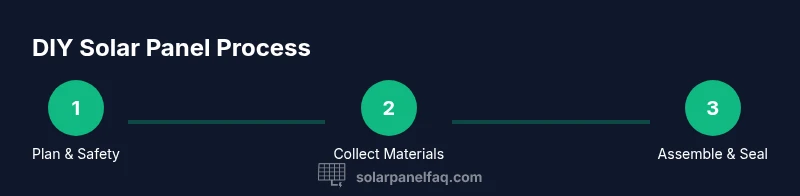
Review safety practices, lay out a plan for the cells, cover materials, and wiring paths. Decide on series/parallel configuration and document the target voltage/current. This step ensures you understand the project scope and safety boundaries before touching any components.
Tip: Keep a dry, uncluttered workspace and use a non-slip mat to prevent glass breakage. - 2
Gather materials and tools
Collect all required items from your toolsMaterials list and verify you have eye protection and gloves. Check that the glass or acrylic cover is intact and free of cracks. Prepare a clean work surface and organize small parts to prevent loss.
Tip: Pre-cut EVA sheets can simplify lamination later in the process. - 3
Prepare the cell array and contacts
Handle PV cells with care, avoiding pressure on the bus bars. Attach tabbing wires to connect cells in the chosen configuration if needed, using a gentle tack-solder approach to prevent micro-cracks.
Tip: Practice soldering on a scrap piece first to minimize risk of damaging cells. - 4
Assemble the panel stack
Place the cell array on the base board, add encapsulant sheets, press the front cover, and ensure even bonding. Align edges precisely to prevent edge chafing and ensure a clean final seal.
Tip: Work slowly to prevent air bubbles under the encapsulant. - 5
Seal, frame, and wire edges
Seal all edges with silicone sealant and secure the panel into a rigid frame. Attach junction boxes and run external leads, keeping wiring neat and insulated.
Tip: Let sealants cure fully according to product instructions before handling. - 6
Test the panel under light
With your multimeter, measure open-circuit voltage and short-circuit current in bright light. Check for consistent readings across the array and verify there are no hot spots or loose connections.
Tip: Test gradually; avoid applying heavy loads until you’re confident in connections. - 7
Mount and plan maintenance
Choose a safe mounting location that avoids direct impact and offers sun exposure. Create a simple maintenance plan, including periodic cleaning and resealing if needed.
Tip: Document the build with photos for future reference and troubleshooting.
Frequently Asked Questions
Is it safe to build a DIY solar panel at home?
With proper precautions and low-voltage practices, a small educational panel can be built safely at home. Avoid mains connections and use protective gear when cutting glass or soldering. Treat it as a learning project rather than a replacement for professional systems.
It's generally safe for learning if you follow safety guidelines and keep it low voltage.
Can a DIY panel power a home device or appliance?
DIY panels are excellent for experiments and small experiments, but they usually cannot reliably power home-scale devices without a proper electrical design and storage system. Consider them for educational demonstrations and testing.
Typically best for learning and small experiments, not whole-home power.
How long does a DIY panel last?
Longevity depends on materials, sealing, and exposure to the elements. With good encapsulation and weather protection, a basic educational panel can function for several years in favorable conditions, but performance will degrade faster than commercial products.
Depends on materials and environment; expect gradual performance decline.
What testing should I perform after assembly?
Test open-circuit voltage and short-circuit current under direct light, then check insulation and junction box integrity. Compare readings to the expected ranges for your cell type and configuration.
Measure voltage and current in good light and verify connections.
Do I need permits or professional installation?
DIY solar panels for learning usually do not require permits, but any grid-tied or larger off-grid installations typically involve codes and inspections. Check local regulations before attempting any permanent or mains-connected setup.
Check local rules; professional installation may be required for serious setups.
Watch Video
Top Takeaways
- Understand basic PV cell principles and configurations
- Prioritize safety and non-grid, low-voltage testing
- Laminate with care to prevent moisture damage
- Testing under sun shows real-world performance