How to Build a Solar Panel: A Step-by-Step Guide for Homeowners
Learn how to build a solar panel with safety in mind. This step-by-step guide covers materials, sizing, assembly, testing, and maintenance for DIY enthusiasts and homeowners.


By following this guide, you will learn how to build a solar panel safely for home use, including selecting components, understanding electrical basics, and assembling a basic panel or kit. The steps emphasize practical, safety-first practices, budget-conscious alternatives, and when to seek professional help. This quick answer points you toward a detailed, step-by-step process in the body.
Understanding the Challenge of How to Build a Solar Panel
If you’re curious about how to build a solar panel, you’re tackling a project that blends materials science, electrical safety, and practical installation. A successful DIY panel requires careful material selection, precise wiring, and protective lamination to endure weather. This section sets the framework: you’ll learn terminology, system boundaries (off-grid vs. grid-tied), and where DIY work makes sense versus when to buy a pre-assembled module. According to Solar Panel FAQ, DIY attempts should respect safety standards and warranty implications while staying within local codes. Treat this as a learning project rather than a rush to finish; the goal is reliability, not just appearance. As you read, keep in mind that efficiency and longevity hinge on proper lamination, weather sealing, and accurate electrical connections. Understanding these fundamentals helps you judge whether a full-scale professional build is warranted or if a smaller, kit-based approach better suits your needs.
Prerequisites and Safety Considerations
Before you touch tools, acknowledge that a solar panel involves active electrical components and sensitive laminates. Safety comes first: wear impact-resistant goggles, gloves, and eye protection; work in a dry, well-ventilated area; and keep a fire extinguisher nearby. Check local regulations, permit requirements, and any inspection steps that may apply to a DIY installation. If you plan to hook a panel to a home electrical system, consult a licensed electrician and verify net-metering rules in your region. Even when working with a kit or pre-sliced cells, static electricity, moisture ingress, and punctured cells can create hazards. The goal is to minimize risk through planning, proper PPE, and a clean workspace. Solar panels store energy; treat all live circuits with caution and never work on a live system.
Core Components and Alternatives
A functional solar panel rests on a few core components: photovoltaic cells, a front glass cover, encapsulation laminate (often EVA), a backsheet for moisture protection, an aluminum frame for durability, a junction box for safe wiring, bus bars and tab wires for series connections, and weather-sealing materials. If you’re new to solar hardware, consider a kit or a modular system instead of sourcing each part separately. Kits provide pre-cut cells, pre-laminated layers, and standardized mounting frames, which reduces risk and simplifies testing. For eager tinkerers, understanding the role of each component helps you evaluate whether a custom build is feasible long-term or if you’re better off purchasing a ready-made panel. Always avoid improvising critical lamination or sealing steps without proper equipment, as moisture or thermal stress can degrade performance.
Sizing Your Panel and Planning Layout
Sizing determines the expected energy output and physical footprint. Start with your daily energy goals and the available installation space. A larger panel produces more power, but also requires more mounting area and stronger support. Consider climate, sun exposure, and shading patterns across seasons. When planning layout, sketch a grid-like arrangement of cells and estimate wiring length. Keep in mind that most DIY panels operate in a similar voltage range to commercial modules when arranged in series; improper wiring can create hot spots or failure points. This planning phase helps you set realistic expectations for efficiency, heat management, and installation constraints.
Step-by-Step Workflow Overview
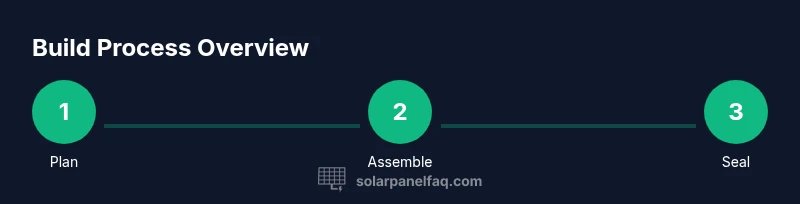
This section provides a high-level workflow to complement the detailed steps that follow. The process typically moves from planning to assembly, then to lamination, sealing, framing, and electrical testing. The goal is a coherent flow where each stage feeds into the next without creating bottlenecks. By outlining major phases—planning, cell preparation, stringing, lamination, framing, and testing—you build a mental map that informs the detailed steps in the STEP-BY-STEP block. Remember that accuracy in layout and cleanliness during lamination are key to durability and performance.
Testing, Troubleshooting, and Safety Checks
Once assembly is complete, the focus shifts to verification. Use a multimeter to check continuity and resistance, and verify that the panel’s positive and negative terminals are correctly identified. Inspect lamination seals for gaps or bubbles, test under reasonable daylight, and confirm there is no audible buzzing or heating beyond normal operation. Troubleshooting often involves re-checking wiring paths, ensuring bus bars are properly soldered or crimped, and validating that the junction box is sealed against moisture ingress. If any abnormal readings appear, stop and reassess rather than forcing a final test. Safety checks include ensuring all exposed copper paths are insulated and positioned away from the frame edges to prevent accidental shorts.
Maintenance and Longevity Tips
To extend the life of a DIY solar panel, perform periodic inspections—at least twice a year—for cracks in glass, corrosion on terminals, and signs of moisture ingress around seals. Clean dust and debris from the glass surface with a soft brush and, if needed, a mild non-abrasive cleaner. Monitor the electrical output over time to detect performance drift, which can indicate encapsulation degradation or micro-cracks in cells. Store spare parts in a dry environment, and replace damaged components promptly. Long-term durability relies on proper lamination, robust sealing, and weatherproof mounting that accommodates thermal expansion.
Common Mistakes and How to Avoid Them
Common errors include rushing lamination, failing to seal edges properly, and misrouting bus bars which can cause hot spots or shorts. Avoid bending cells or applying excessive pressure during assembly, as PV cells are fragile. Do not assume a kit-free build will be cheaper or safer; some tasks require specialized tools and calibrated lamination equipment. Document each step, label wiring, and keep a log of test results. By anticipating these pitfalls, you increase your odds of a reliable, safe panel with decent performance.
Real-World Considerations: DIY vs Commercial Panels
DIY panels can be educational and cost-effective for small-scale, non-grid-tied projects, but they may not match the reliability, warranty, and consistent performance of factory-made modules. A DIY approach is best for hobbyists or experimental setups where you control the environment and do not rely on the panel for critical power needs. If reliability, warranty coverage, or grid interconnection is important in your home, evaluate the trade-offs between learning through a DIY project and purchasing a certified module. The Solar Panel FAQ team emphasizes balancing hands-on learning with prudent risk assessment and local code compliance.
Tools & Materials
- Photovoltaic cells or sheet from a kit(Ensure cells are appropriate for panel construction and safe to handle)
- Front glass sheet(Tempered glass preferred for impact resistance)
- EVA encapsulation film(Thin, clear layer compatible with cells)
- Backsheet material(Moisture barrier with good dielectric properties)
- Aluminum frame(For rigidity and mounting stability)
- Bus wires and tab wires(Use appropriately sized gauge for expected current)
- Junction box(Weather-sealed with proper grommets)
- Adhesives and sealants(Weatherproof sealant for edges and corners)
- Soldering iron and flux(If you solder connections; follow safety guidelines)
- Multimeter(For continuity and voltage checks)
- Wire stripper/cliers(For clean, safe terminations)
- Insulating gloves and safety goggles(Protection against shocks and shards)
- Workbench with non-slip mat(Helps keep components stable during assembly)
- Dry environment and ventilation(Laminate steps require controlled humidity)
Steps
Estimated time: 6-12 hours
- 1
Prepare safety gear and workspace
Clear the area, verify weather conditions, and don PPE. Ensure there is a safe grounding path and a non-conductive surface for arranging cells and laminates. This prevents accidents and protects delicate components during handling.
Tip: Wear eye protection and gloves; double-check that all tools are unplugged before starting. - 2
Verify plan and required measurements
Review your layout sketch, confirm panel dimensions, and ensure mounting space matches the planned size. Align the number of cells in each series string with the intended voltage. A miscalculation here leads to under or over-voltage conditions in tests.
Tip: Label each string with a marker for easy tracing during assembly. - 3
Prepare PV cells and components
Inspect cells for cracks, clean dust, and verify you have all lamination layers ready. Arrange components in the order of assembly to minimize handling time. Keep protective layers on until lamination to avoid contamination.
Tip: Handle cells with care and avoid touching metal contacts with bare hands. - 4
Layout stringing and bus bars
Place cells in the planned string arrangement, install tab wires or bus bars, and secure connections. Ensure consistent soldering or crimping quality and minimum resistance. This forms the electrical path of the panel.
Tip: Test a short segment with a multimeter before finalizing the full string. - 5
Laminate and cure the panel assembly
Position cells on EVA, cover with laminate, and apply gentle pressure to remove air pockets. Place the glass layer on top and seal edges to prevent moisture ingress. Allow time for lamination according to material guidelines.
Tip: Keep laminates flat and avoid bending cells during curing. - 6
Encapsulate edges and protect against moisture
Seal all edges with weatherproof sealant and reinforce corners. Verify that seals are continuous and free of gaps. A well-sealed panel resists humidity and delamination over time.
Tip: Inspect seals under light for gaps and re-seal if necessary. - 7
Mount frame and attach junction box
Attach the aluminum frame securely and mount the junction box in a location protected from direct sunlight. Route wiring cleanly through grommets and ensure strain relief. This step finalizes the mechanical and electrical layout.
Tip: Avoid sharp bends in wires near the entry points to the junction box. - 8
Electrical test and troubleshooting
Use a multimeter to check voltage output and continuity across strings. Compare readings to expected values and inspect for shorts. Address any anomalies before considering field testing.
Tip: Document readings and take photos of wiring for future reference. - 9
Document, label, and prepare for installation
Label terminal colors, keep a build log, and prepare the panel for mounting. Store it in a dry location until installation. Prepare recipient equipment or mounting hardware for a safe, code-compliant install.
Tip: Include installation instructions and a maintenance plan with the panel.
Frequently Asked Questions
Is it legal to build and install your own solar panel?
Legality varies by location. Some areas allow DIY panels for off-grid use, while grid-tied systems may require licensed electricians and inspections. Always check local codes and obtain any necessary permits before installation.
Legality varies by location, so check local codes and permits before installing a DIY panel.
Do you need permits or inspections for a DIY panel?
Many jurisdictions require permits for electrical work and building inspections for grid-connected installations. Even for off-grid setups, safety inspections may apply. Consult your local building department before starting.
Permits and inspections depend on where you live; check with your local building department first.
Can a DIY solar panel be connected to the grid?
Connecting a DIY panel to the grid typically requires compliance with electrical codes, inverters, and interconnection agreements. Most regions require professional installation for grid-tied systems. Consider a standalone off-grid setup if regulations are restrictive.
Grid connections usually require professional installation and proper inverters.
What safety gear is essential for building a panel?
Essential safety gear includes eye protection, cut-resistant gloves, and insulated tools. Work in a dry area with good ventilation, and keep a fire extinguisher nearby in case of electrical faults.
Wear eye protection and gloves, use insulated tools, and keep safety gear handy.
How long will a DIY solar panel last?
Lifespan depends on materials, sealing, and exposure to weather. Expect performance to evolve over years, with potential degradation if lamination or seals fail. Regular inspection can extend service life.
Lifespan depends on materials and weather exposure; inspect regularly.
Are DIY panels as efficient as factory-made modules?
DIY panels can achieve reasonable efficiency for learning and off-grid use but typically don’t match the reliability and uniform quality of factory-made modules. Efficiency can vary with materials and lamination quality.
DIY panels can work well for learning, but factory modules are generally more reliable.
Watch Video
Top Takeaways
- Define system goals and space early
- Prioritize safety and proper insulation
- DIY panels carry warranty and safety considerations
- Test outputs thoroughly before use
- Follow local codes and permit requirements