Install Your Own Solar Panels: A Step-By-Step DIY Guide for Homeowners
Learn how to install your own solar panels with a practical, step-by-step approach. This guide covers planning, permits, safety, and best practices for homeowners seeking to DIY solar installations.


In this guide you will learn how to install your own solar panels safely and cost-effectively. You’ll need basic tools, roof access, and an understanding of local permits. This quick answer outlines the essential steps and considerations for a DIY installation that homeowners can tackle with careful planning. Expect to address mounting, wiring, code compliance, and inspection steps. The information here aims to help you decide whether DIY is right for your home and how to minimize safety risks while maximizing system performance.
Feasibility and safety: can you DIY solar installation?
Installing solar panels yourself is feasible for many homeowners, but success depends on roof condition, electrical knowledge, and local regulations. According to Solar Panel FAQ, with proper planning and safety discipline, a DIY approach can work for straightforward installations. Start by assessing roof age, structural integrity, and the amount of sun exposure your site receives throughout the year. If the roof needs replacement, or if your electrical system requires significant upgrades, professional help may be the safer path. This section reviews realistic expectations, potential risks, and decision criteria to help you decide whether to proceed with a self-install. Remember that working at height, handling heavy equipment, and dealing with live electrical circuits carry serious hazards; plan accordingly and consider hiring a pro for high-risk steps. Throughout this discussion, we emphasize safety, planning accuracy, and compliance with local codes to avoid costly mistakes.
For most homeowners, the first hurdle is roof readiness. A sound roof deck, solid rafters, and a leak-free surface are non-negotiable. If you detect water damage, rot, or structural weakness, delay any installation and seek professional assessment. Electrical work is another critical domain; miswiring or improper grounding can lead to safety hazards and poor performance. A well-planned DIY project reduces surprises, but it does not eliminate risk. Keep a detailed log of tasks, measurements, and parts to simplify inspections and warranty registrations later on.
Planning and site assessment
Before you lift a single panel, you need a robust plan. Start with a feasibility map: determine how much roof area is available, the orientation and tilt that maximize sun capture, and any shading from trees or nearby structures. Use historical weather data and a simple sun-path diagram to estimate annual energy production and identify the best placement. Decide on a target system size based on your average electricity use, space constraints, and budget. A well-defined plan also helps you handle permits, HOA approvals, and any utility interconnection requirements. The Solar Panel FAQ team notes that a comprehensive planning phase correlates with smoother installations and fewer mid-project changes. In short, a precise design reduces risk and sets clear milestones for a DIY crew.
At this stage, you should also verify your roof’s age and overall condition. If the roof is near the end of its life, it makes little sense to place panels on top of old materials. Schedule any necessary roof work before mounting to avoid leaks and costly reseating later. Gathering layout options, serviceability, and maintenance expectations now helps you balance aesthetics, functionality, and long-term reliability.
Equipment, permits, and safety gear
A successful DIY install hinges on selecting compatible components and having the right safety gear. Inventory the panels, inverter(s), mounting rails, racking hardware, connectors, grounding equipment, and a dedicated electrical disconnect. You’ll also need conduit, wiring of appropriate gauge, weatherproof junction boxes, and a surge protection plan. Permits are almost always required; check with your local building department for electrical and structural approvals, and confirm any HOA rules that apply. The Solar Panel FAQ team emphasizes permits and inspection readiness as key risk-reducing steps. Safety gear includes a fall-arrest system for roof work, a helmet or hard hat, non-slip footwear, gloves, and eye protection. Keep tools organized, work with a partner, and confirm that all components have compatible ratings for your electrical system.
Finally, establish a documentation bundle: equipment manuals, warranty certificates, permit approvals, and a test plan. Having this information accessible simplifies maintenance and future upgrades, and it supports ongoing warranty validation. By checking boxes early, you reduce the chance of delays when inspectors arrive.
Installation considerations: mounting, wiring, and safety
This section covers practical decisions about mounting, wiring, and safety practices that affect performance and durability. Secure mounting rails to the roof deck using anchors that match your roof material, spacing they require, and weatherproof sealants to prevent leaks. Route conduit and cables with care to minimize exposure and thermal stress; avoid sharp bends and protect against physical damage. Electrical connections should comply with local codes, including proper grounding, rapid shutdown provisions if required, and appropriate overcurrent protection. If you’re using a string inverter, balance the strings to prevent overloading any single input. Remove all temporary power sources before final testing. Finally, schedule an official inspection and register warranties after commissioning to ensure long-term reliability. For DIY projects, maintaining a clean down-to-earth approach—measured steps, double checks, and clear records—helps you finish confidently and safely.
Tools & Materials
- Extending ladder with stabilizer(To access the roof safely)
- Personal protective equipment (PPE)(Gloves, safety glasses, hard hat)
- Roof anchor and fall protection(Harness or lanyards for high work)
- Drill with variable speed(For mounting hardware and anchors)
- Torque wrench(Ensure bolts are torqued to spec)
- Solar mounting rails and brackets(Compatible with roof type)
- Solar panels (PV modules)(Match system size)
- Inverter (string or micro)(Choose based on design)
- Electrical disconnect switch(Required safety device)
- Conduit, cable, and fittings(Weatherproof and properly rated)
- Junction boxes and fuses(For safe terminations)
- Multimeter and voltage tester(For safety testing)
- Torque/fastener kit(Corrosion-resistant hardware)
- Documentation bundle (permits, warranties)(Have on hand for inspections)
Steps
Estimated time: 1-3 days
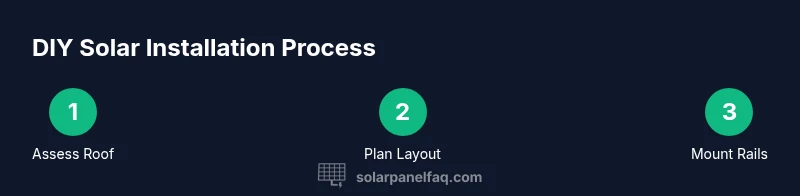
- 1
Assess roof suitability
Inspect roof age and condition, check rafters and sheathing, and confirm safe access. Identify any sections that require reinforcement or replacement before mounting. Ensure fall protection and buddy support for roof work.
Tip: Take photos of the roof structure to reference during mounting and for warranty research. - 2
Size the system
Review historical energy use, available roof area, and panel efficiency to determine the target wattage and number of panels. Align the plan with utility interconnection limits and budget constraints. Create a rough layout to guide mounting positions.
Tip: Document your calculations and assumptions in a notebook for inspections. - 3
Check permits and HOA rules
Research electrical and structural permit requirements and any HOA restrictions. Prepare permit applications and secure approvals before any work begins. Include a plan for inspections and deadlines.
Tip: Contact your local building department early to avoid delays. - 4
Choose mounting system
Select rails, brackets, and mounting hardware compatible with your roof type (asphalt, metal, tile). Ensure the system supports snow load and wind exposure in your region. Confirm warranty terms for mounting components.
Tip: Avoid mixing incompatible components that could void warranties. - 5
Mount rails and align panels
Attach rails to roof with appropriate anchors, seal mounting points to prevent leaks, and verify level alignment. Use a string line to keep panels straight and evenly spaced.
Tip: Have a partner hold panels while you adjust alignment to prevent drop hazards. - 6
Wire to inverter
Run conduit from the roof to the inverter location, route cables neatly, and connect string wiring per design. Install junction boxes and ensure proper insulation and strain relief.
Tip: Keep live wires capped when not connected and verify polarity carefully. - 7
Install disconnect and meter kit
Install the required safety disconnect near the inverter and coordinate any meter or interconnection hardware with the utility. Ensure the disconnect is clearly labeled and accessible.
Tip: Test the disconnect before energizing any circuit. - 8
Grounding and safety checks
Verify grounding, bonding, and overcurrent protection. Check for loose bolts, exposed conductors, and signs of thermal stress. Double-check torque on all fasteners.
Tip: Perform a final visual check and use a multimeter to verify continuity. - 9
Commission and test
Power up the system, monitor initial output, and compare to calculated expectations. Record performance data and schedule an inspection with the local authority if required. Register warranties and keep documentation.
Tip: Test under different sun conditions to verify consistent output.
Frequently Asked Questions
Do I need a professional to install solar panels?
DIY installation is possible for skilled homeowners but requires permits, code compliance, and safety checks. If you’re unsure about electrical work or roof integrity, consult a licensed professional.
DIY can work for capable homeowners, but permits and safety checks are essential; consider pro help for complex tasks.
What permits are usually required for rooftop solar?
Most jurisdictions require electrical and structural permits, plus inspections. Check with your city or county to confirm requirements and timelines.
Electrical and building permits plus inspections are typically needed; verify local rules.
How long does it take to install solar panels myself?
Time varies with system size, roof accessibility, and preparation. Plan for multiple days and factor potential delays for permits or inspections.
It can take several days depending on system size and site readiness.
Will installing myself affect warranty?
Some manufacturers void warranties if installed by non-professionals; check terms and ensure proper documentation.
Warranties may be affected if installation isn’t performed to spec; read terms carefully.
Is DIY solar safe on metal roofs?
Yes, with proper mounting and sealing; ensure compatibility with metal roof clips and weatherproofing.
Yes, but follow proper mounting and sealing techniques to prevent leaks.
Do I need special tools for grounding and code compliance?
Yes, valid grounding, conduit, and adherence to electrical codes are required; use the correct tools and PPE.
Grounding and code compliance require the right tools and careful adherence.
Watch Video
Top Takeaways
- Assess roof suitability and permits before starting.
- Size the system based on energy goals and available space.
- Choose components with compatible warranties and standards.
- Follow safety protocols and local electrical codes.
- DIY can work for capable homeowners with careful planning.