How to Build a Home Made Solar Panel: A Practical Guide
A practical, safety-focused guide to building a home made solar panel. Learn core concepts, materials, step-by-step instructions, and maintenance tips for educational use and small-scale charging.


Learn how to approach a home made solar panel project safely and effectively. This quick guide outlines what you can build at home, the key materials, and the main safety considerations. It also sets realistic expectations about performance, durability, and maintenance, so you can decide whether DIY solar aligns with your energy goals.
What is a home made solar panel?
A home made solar panel is a self-contained photovoltaic module assembled from individual solar cells, protective layers, and a frame. It demonstrates the core principle of converting sunlight into electricity but is typically less efficient and durable than a factory-made panel. For homeowners, this project is an educational exploration rather than a replacement for a certified system. As Solar Panel FAQ notes, success hinges on clear goals, safe handling, and a conservative approach to performance expectations. A well-planned DIY panel can charge small 12V batteries or power low-watt loads during sunny days, providing hands-on insight into wiring, junctions, and weatherproofing. When you frame the project as a learning exercise, you can develop practical skills while avoiding overreach. Remember: the goal is to understand PV concepts and practice safe assembly, not to compete with commercial products.
Legal and safety considerations
Before starting a home made solar panel, check your local codes and permitting requirements. Electrical installations, outdoor wiring, and any device that connects to the grid may be regulated, and improper work can create safety hazards or insurance issues. Wear PPE for handling glass, solder, and solvents, and work in a dry environment with good ventilation. Plan for moisture protection, weather exposure, and safe disposal of waste materials. Keep a fire extinguisher handy, and never test live circuits in wet conditions. If in doubt, consult a licensed electrician or your local authority. Framing the project within regulatory boundaries helps protect your family, your home, and your investment, while allowing you to enjoy the educational value of the DIY process.
Core components and basic design
A DIY solar panel relies on several core elements: solar cells arranged in a grid, a protective cover (glass or clear polycarbonate), a backsheet, sealing materials, bypass diodes, wiring, and a junction box. Frame materials can be wood or aluminum, chosen for weather resistance and structural strength. Wiring configurations balance voltage and current (series vs parallel) to meet your intended load. Use outdoor-rated connectors and waterproof seals to keep moisture out. While you can source components piece by piece, keep safety in mind and document your wiring diagram for future maintenance. The design should remain simple enough to avoid unnecessary risks while teaching you the fundamentals of PV technology.
Performance expectations and limitations
A home made solar panel will typically yield lower efficiency and durability than a commercial module. Output depends on cell quality, panel area, mounting, and sun exposure, and deteriorates with heat and shading. Treat the project as a learning exercise; use it to understand how voltage, current, and impedance interact, then scale up if you have the resources and confidence. Don’t rely on a DIY panel for critical or continuous charging; instead, repurpose energy during peak sun hours or for auxiliary uses like battery maintenance. It is normal to observe variations between days and weather, which is part of the educational experience.
Common mistakes and how to avoid them
The most frequent errors include skipping moisture sealing, using incompatible adhesives, and failing to insulate exposed wiring. Avoid long, unprotected cable runs that increase resistance and heat. Do not omit bypass diodes or miswire the strings, which can cause shorts or reduced performance. Keep edges clean, ensure proper edge sealing, and use weatherproof cable glands. Finally, document every step and test progressively with safe, low-voltage loads before attempting any charging tasks. Careful planning reduces risk and improves the learning outcome.
Maintenance and troubleshooting
Inspect the panel after major weather events and on a seasonal basis. Check seals, frame integrity, and edge protection to prevent moisture ingress. Clean PV surfaces with a soft brush and distilled water to avoid scratching glass. If performance drops, trace wiring continuity, test the junction box connections, and verify diode operation. Use a multimeter to measure open-circuit voltage and short-circuit current under sunlight, comparing readings to your initial baseline. When you adjust or repair a DIY panel, re-test thoroughly before re-exposing it to load. This iterative approach builds resilience and confidence.
Environmental considerations and learning value
Beyond raw output, a home made solar panel offers insight into energy flows, materials, and sustainability. Building one at home encourages mindful consumption and helps you compare local sun hours, panel efficiency, and maintenance requirements with a commercial system. While not a substitute for professional installation, a well-built DIY panel can serve as a flexible educational tool and a stepping-stone toward deeper solar projects.
Tools & Materials
- Safety gear (gloves and safety glasses)(Protect hands and eyes when handling glass and solder)
- Soldering iron with stand(For wiring busbars and connections)
- Flux and lead-free solder(Use appropriate flux for solar cell connections)
- Wiring (multi-strand copper, outdoor-rated)(Insulated wires suitable for outdoor use)
- Glass pane or clear polycarbonate sheet(To cover and protect cells)
- Encapsulation or sealant material(Waterproofing and insulating encapsulation)
- Frame material (wood or aluminum)(Support structure and mounting)
- Silicone sealant and weatherstripping(Seal edges against moisture)
- Multimeter for testing(Check voltage/current during testing)
- Bypass diodes(Protect against shading and reverse current)
Steps
Estimated time: 4-6 hours
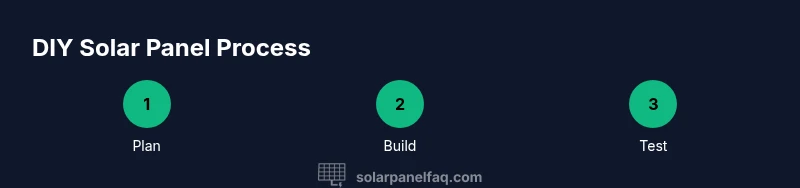
- 1
Plan and gather materials
Define your target output, available space and safety constraints. Gather the required components from your toolsMaterials list.
Tip: Double-check compatibility of cells with your wiring plan - 2
Prepare workspace and safety gear
Set up a dry, clean workspace, wear PPE. Organize tools and testing equipment to minimize distractions and hazards.
Tip: Keep a fire extinguisher nearby - 3
Arrange and wire cells into a module layout
Lay out cells, connect series/parallel strings as per design. Validate each connection with a continuity test before sealing.
Tip: Start with a single string to test before expanding - 4
Seal and protect the module
Encapsulate or seal the panel to protect from moisture. Allow curing time for adhesives and encapsulants if used.
Tip: Work in a well-ventilated area and avoid air bubbles - 5
Mount, connect to a test load, and evaluate
Mount the panel temporarily, connect to a safe test load (like a low-voltage battery or resistor). Measure voltage and current under sun conditions.
Tip: Document measurements for future reference
Frequently Asked Questions
Is it legal to build a home made solar panel?
Regulations vary by location. Check local building codes and permitting requirements before attempting any electrical work. DIY solar projects are often for learning or off-grid use rather than grid-tied installations.
Local rules vary, so check with your city or utility before starting a DIY solar project.
What materials do I need to build a home made solar panel?
You’ll need cells, glass or polycarbonate, a frame, encapsulation, wiring, diodes, a junction box, and weatherproof connectors. Prepare safety gear and testing equipment as well.
Gather cells, glass, frame, wiring, diodes, and weatherproofing before you start.
How much energy can I expect from a DIY solar panel?
Output depends on panel size and cell quality, and will typically be lower than a commercially manufactured module. Use it for learning or small battery charging rather than powering a home.
Expect modest output; use it as a learning project or for charging small batteries.
Is a DIY solar panel safe for home use?
There are hazards from glass cuts, sharp edges, and electrical faults. Use proper PPE, encapsulation, and safe testing practices. Don’t expose yourself to live circuits during wet conditions.
Safety is essential—wear PPE and test only in dry conditions.
How long will a home made solar panel last?
Durability varies with materials and exposure. DIY panels often degrade faster than commercial modules and may require more frequent maintenance.
Durability depends on materials and environment; expect more upkeep than commercial panels.
Do DIY panels qualify for incentives?
Most incentives target certified, grid-tied systems. Check local programs and utility policies to see if exceptions exist for educational or off-grid setups.
Check with local programs—most incentives target certified installations.
Watch Video
Top Takeaways
- DIY solar panels require careful planning and safety checks.
- Expect lower efficiency than commercial panels; set realistic goals.
- Weatherproof sealing and maintenance extend panel life.
- Local codes and incentives may affect DIY projects.