DIY Solar Panels: A Homeowner's Step-by-Step Guide
Learn how to plan, assemble, and safely test a DIY solar panel setup for homes. This guide covers sizing, components, wiring basics, safety, maintenance, and when to seek professional help.


According to Solar Panel FAQ, a well-planned DIY solar panels project lets homeowners offset daytime energy use with a small, safe, workmanlike setup. This guide covers sizing, components, wiring basics, safety considerations, and realistic expectations. You’ll learn essential steps, common pitfalls, and how to decide when to bring in a pro. By following these steps, beginners can achieve a useful, supplementary solar solution. It emphasizes safety, local codes, and proper testing.
What are DIY solar panels and what you can build yourself
DIY solar panels describe a home energy setup built by a homeowner using commercially available solar panels, mounting hardware, wiring, and an inverter. The scale can range from a small battery-backed kit for camping or RV use to a small grid-tied system with a microinverter for household use. This approach emphasizes hands-on learning, cost awareness, and safety. In practice, most DIY projects start as a supplementary system rather than a full-home replacement, focusing on daytime generation and storage readiness for off-peak use. The benefits are clear: you gain practical knowledge, you may reduce daytime electricity consumption, and you can customize a system to fit a specific roof orientation or budget. However, it requires careful planning around electrical codes, weather, and safety considerations. The goal is to create a reliable, safe, and maintainable setup that demonstrates proof of concept before expanding. Solar Panel FAQ emphasizes that such projects work best when you treat them as learning experiences with strict safety discipline and clear limits.
Safety and legal considerations when building DIY solar panels
Safety and legality form the backbone of any DIY solar project. Begin by researching local codes and permit requirements, as improper installations can affect warranty, insurance, and safety. Ensure you understand electrical code requirements for wiring, overcurrent protection, and grounding. On the roof or mounting location, use fall protection, secure ladders, and proper footwear; never work on a bare roof during wet conditions. PPE such as gloves and safety glasses are essential when handling panels and wiring. When it comes to grid connection, private setups often require utility notification or inspection, and some areas prohibit unapproved interconnections. Always plan for a safe disconnect point and clear labeling of circuits. The more you align with code-compliant practices, the easier it is to secure permits and avoid costly rework later. Always document decisions and keep a written plan for inspectors and future maintenance.
Sizing your system: evaluating energy needs and climate
Sizing a DIY solar system starts with understanding your typical daytime energy use and available sun exposure. Begin with a home energy audit to identify the largest daytime loads and the best spots for solar collection, such as southeast or southwest-facing surfaces. Consider local climate factors like average sun hours and seasonal variation, which influence panel output. Rather than chasing maximum power, aim for a practical system size that offsets a meaningful portion of daytime consumption. If storage is important, factor in battery availability, discharge depth, and cycle life. Remember that a DIY approach is usually best for supplementary power rather than full-house replacement. Plan for expansion later if you want to scale capacity, and keep a flexible budget for additional components or mounting options. Solar Panel FAQ guidance notes that careful sizing improves reliability and overall system happiness.
Components you will typically use
A DIY solar setup relies on several core components: solar panels, mounting hardware or racking, a charge controller, an inverter, and appropriate DC wiring with protective fuses or breakers. For systems with storage, a battery bank may be involved, along with a battery-to-inverter connection. You’ll also need weatherproof connectors, junction boxes, and conduit to protect exposed wiring. When selecting panels, prioritize a consistent electrical performance and physical compatibility with your mounting choice. The charge controller protects batteries from overcharging, while the inverter converts DC to AC to power household appliances. Don’t forget safe handling gear, a multimeter for testing, and a clear wiring diagram. The goal is to assemble a coherent, well-documented system before any rooftop work begins. Maintenance and future upgrades hinge on choosing components with compatible voltage and current ratings.
Step-by-step planning and bench testing before rooftop install
Before climbing onto a roof, sketch a wiring diagram and build a bench-test setup to verify electrical compatibility. Use a non-live DC bus to connect panels, controllers, and inverters in a safe, controlled environment. Test each connection with a multimeter, confirm that protection devices (fuses, breakers) respond correctly, and ensure that wiring lengths and connectors match your plan. Conduct a small-scale test for reverse polarity protection, voltage levels, and current flow. Document results and adjust your plan as needed. The bench test helps catch miswiring and component incompatibility, reducing risk when you eventually mount panels on a roof or ground frame. Solar Panel FAQ highlights bench testing as a practical safeguard in any DIY project.
Installing on a roof vs. ground mount: pros, cons, and constraints
Roof installations maximize sun exposure but require accurate roof measurements, weather considerations, and fall protection. Ground mounts offer easier access for maintenance and testing but demand more land and stabilized foundations. When choosing between roof or ground mounting, weigh wind exposure, roof constraints, and potential shading from nearby structures or trees. Ensure racking is rated for local climate conditions and that mounting hardware won’t compromise roof integrity. If the roof is old or steep, consult a professional for structural assessment. Always use proper fall-arrest systems and ladder safety, and verify that the mounting surface can support the system’s weight over time. The Solar Panel FAQ approach promotes a cautious, well-planned path that minimizes long-term risk.
Wiring, inverters, and safety: keeping lines secure
Wiring should follow a clear, color-coded scheme with properly rated conductors and protective conduits. Use rated connectors, weatherproof enclosures, and correctly sized fuses or circuit breakers. Grounding is essential to reduce shock hazards and equipment damage, and you should confirm that your inverter is compatible with your grid or battery configuration. Keep all DC terminals covered when not testing and avoid exposing live circuits. Label all cables and maintain tidy routing to avoid accidental damage. When making connections, work with power removed and use insulated tools. For safety and reliability, document all settings, measurements, and component types.
Maintenance, monitoring, and troubleshooting
Ongoing maintenance keeps a DIY solar system performing well. Inspect panels for cracks or dirt, clean as needed with soft brushes and non-abrasive cleaners, and check wiring for wear and corrosion. Monitor performance with a simple meter, tracking output against expected values under similar sun conditions. Tighten loose mounting hardware and re-tighten connectors during routine checks. If output drops unexpectedly, inspect potential shading, soiling, wiring faults, or failing components. Troubleshooting should start with safety: disconnect power, test continuity, and verify protective devices. Maintain a written log of maintenance tasks, sensor readings, and any observed anomalies to guide future repairs or upgrades.
Realistic expectations: costs, payback, and common outcomes
DIY solar panels can be cost-conscious relative to fully installed systems, especially when focusing on a supplemental setup. Costs vary with panel type, mounting method, storage options, and tools you already own. The main goal for many homeowners is learning, experimentation, and daytime energy offset rather than full-home independence. Expect longer payback periods if you include batteries or complex control systems, but potential savings grow as you scale or optimize usage. Remember that warranties and professional support are typically more robust for professionally installed systems. A well-planned DIY project can deliver meaningful benefits while teaching practical electrical and solar concepts.
Tools & Materials
- Solar panels (DIY kit or individual panels)(Ensure compatibility with mounting system and inverters)
- Mounting rails/brackets and hardware(Corrosion-resistant, rated for local wind loads)
- Charge controller(Select based on battery type and system voltage)
- Inverter(Choose pure sine wave for sensitive electronics)
- DC wiring with protective fuses/breakers(Use appropriately rated gauge and weatherproof connectors)
- Conduit, weatherproof terminations, and junction boxes(Seal all outdoor connections)
- Electrical PPE (gloves, goggles, non-conductive footwear)(Never skip PPE during handling and testing)
- Multimeter or voltage tester(Used for verification during bench and field tests)
- Roof anchors or ground-mount safety gear(Ensure fall protection and secure setup)
- Wiring diagram and documentation(Keep plans accessible for maintenance)
Steps
Estimated time: 6-10 hours
- 1
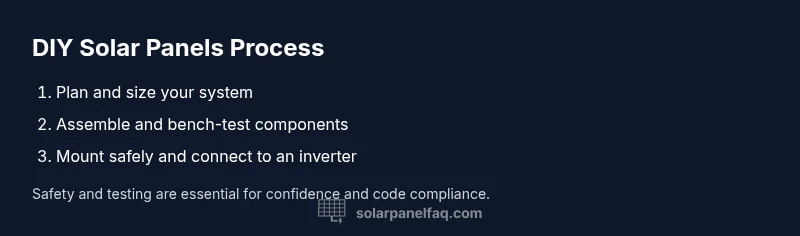
Plan and size your system
Define goals, assess daytime energy needs, and choose a practical system size. Use a basic energy audit to identify major loads and determine where solar can offset usage most effectively.
Tip: Document targets and constraints before purchasing materials. - 2
Select and prepare components on bench
Assemble panels, controller, and inverter on a non-live bench. Verify compatibility and test connections with a multimeter in a controlled environment.
Tip: Double-check voltage and current ratings to prevent overloading. - 3
Mount racking and route wiring
Install mounting hardware on the chosen surface, ensuring level alignment and proper weatherproofing. Route cables through conduits with protective grommets and keep connections dry.
Tip: Leave slack for thermal expansion and future expansion. - 4
Make the rooftop or ground connection
Securely attach panels to the mounting system, seal all penetrations, and connect DC wiring to the charge controller. Maintain clean cable runs to reduce wear.
Tip: Use fall protection and have a helper during rooftop work. - 5
Connect inverter and perform a test
Wire the inverter to the controller and perform a controlled power-on test in a safe area. Verify that power flows correctly and measures align with expectations.
Tip: Test under daylight with a representative load to confirm operation. - 6
Monitor performance and plan maintenance
Set up simple monitoring (manual logs or a basic monitor) to compare output with conditions. Schedule periodic inspections of panels, wiring, and mounting hardware.
Tip: Create a maintenance calendar to catch issues early.
Frequently Asked Questions
Is DIY solar installation legal in most regions?
Legality varies by location; many areas require permits or inspections for solar work, especially if interconnecting with the grid. Always verify local rules before starting.
Check your local rules—permits and inspections may be required before you start.
Do I need permits or inspections for DIY solar projects?
Most jurisdictions require at least a permit and possibly an inspection, particularly for grid-tied or larger setups. Failing to obtain approvals can affect safety and future resale.
Permits and inspections are commonly required; check with your jurisdiction.
Can DIY panels power my entire home or only supplement?
DIY solar can supplement daytime loads and small to mid-sized systems, but full-home power often requires professional design, grid interconnection, and robust storage solutions.
It can supplement most homes, but full-power may require professional installation.
Are DIY solar projects cost-effective compared to hiring a pro?
DIY projects can save on labor and offer educational value, but costs vary with materials and tools. Pro installations often come with stronger warranties and faster timelines.
DIY can be cheaper for learning and small setups, but warranties and speed may favor pros.
What safety precautions are essential during installation?
Turn off power during assembly, wear PPE, follow manufacturer instructions, and ensure proper grounding. Avoid live connections and secure ladders and fall protection when on roofs.
Always prioritize safety: power off, PPE, and secure fall protection.
What maintenance do DIY solar panels require?
Regular cleaning, inspection of connections, and monitoring performance help maintain output. Address any loose components or damaged wiring promptly.
Keep panels clean and check connections; fix issues early.
Watch Video
Top Takeaways
- Plan, size, and document requirements before buying materials
- Safety and code compliance come first
- Bench-test everything before rooftop work
- DIY can supplement but may not replace full-home power
- Maintenance and monitoring ensure long-term performance