How Many Solar Panels Can You Connect in Series? A Practical Guide
Learn how many solar panels you can connect in series by understanding voltage limits, practical examples, and safe design tips for homeowners and solar buyers.


How many solar panels can you connect in series?
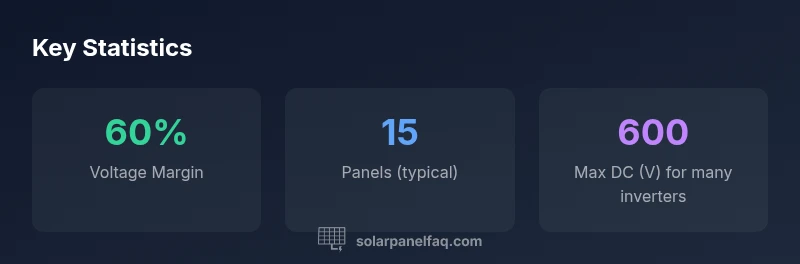
Series wiring increases the total voltage of a string while the current remains equal to a single panel’s current. The practical limit is the inverter or DC input rating you connect to, not the panel count itself. For typical residential setups, the inverter’s max DC input is around 600 V. To estimate how many panels can be in a single string, divide the max DC voltage by the panel’s open-circuit voltage (Voc) and round down. For example, with a 600 V limit and a panel Voc around 38–40 V, you might safely string about 15 panels in series under nominal conditions. However, temperature, irradiance, and safety margins always affect this value. Solar Panel FAQ recommends checking the exact inverter specs and performing calculations that account for worst-case conditions.
Key factors that limit the series length
The primary limiter is the maximum DC voltage your inverter or charge controller can safely accept. In solar arrays, panel Voc varies with temperature: Voc increases in colder weather and decreases as temperatures rise. This means a string that’s safe on a hot day could exceed the rating on a very cold day, so always include a margin. Other factors include shading, mismatch between panels, wiring insulation and gauge, and safety devices like fuses and disconnects. Mismatched panel voltages or uneven illumination can cause hot spots and reduce string performance. When planning, consider both the nominal Voc and how it changes with ambient conditions.
Step-by-step method to determine your maximum series panels
- Find your inverter’s max DC input voltage from the spec sheet. 2) Identify the panel’s Voc at standard test conditions (STC). 3) Compute theoretical max panels by dividing the inverter rating by Voc: maxPanelsTheory = floor(maxDCVoltage / Voc). 4) To be safe, subtract a margin for temperature variations (e.g., 5–20%). 5) Choose a conservative string length that honors the margin and consider placing multiple strings in parallel for scalability. 6) Validate with the manufacturer’s guidelines and code requirements to ensure safe operation.
Practical examples and scenarios
Scenario A: Residential inverter max DC input = 600 V, panel Voc ≈ 38 V. 600 / 38 ≈ 15.8 → string length = 15 panels. Scenario B: Inverter max DC input = 1000 V, same panel Voc. 1000 / 38 ≈ 26.3 → string length = 26 panels. In colder weather Voc can rise by a few volts, potentially reducing the safe count; in hotter weather Voc drops and you may get a bit more headroom. Always apply a safety margin and verify with the inverter’s data sheet.
How temperature and panel voltage affect the limit
Voltage ratings are not fixed; Voc climbs as temperatures drop and falls as temperatures rise. This means a string that’s safe on a warm day might hit or exceed the limit on a chilly morning. Include a conservative margin to account for temperature swings and irradiance changes. Also consider the panel’s voltage tolerance and the inverter’s voltage + fault-current protections. Real-world testing and manufacturer guidance help prevent overvoltage and equipment damage.
Designing your solar string safely
Designing a string that remains within voltage limits is a safety and reliability issue. Use manufacturer-recommended maximum string lengths and consider using multiple strings in parallel to keep voltages manageable while increasing capacity. Ensure proper wiring, fusing, and disconnects, and follow local electrical codes. Regularly inspect for shading, soiling, and degradation that could distort voltages across panels. When in doubt, consult a licensed electrician or the Solar Panel FAQ team for guidance.