Can You Connect Solar Panels in Parallel: A Practical Guide
Learn how connecting solar panels in parallel works, when to use it, and safe sizing of current and wiring for home solar systems. This guide covers concepts, safety, step-by-step planning, and common pitfalls.


Yes, solar panels can be connected in parallel to increase current while keeping the voltage the same as a single panel. This arrangement is common when you want to maximize power output in shade-free portions, or to match the current rating of a charge controller or inverter. Use proper combiner boxes, fuses, and the panels should be identical or closely matched.
How parallel wiring works
If you’re exploring can you connect solar panels in parallel, you’re balancing two electrical ideas: voltage and current. In a parallel arrangement, each panel contributes its current to a common bus, while the system voltage remains at the level of a single panel (usually around 18–36 V for residential panels, depending on model). The total current is the sum of the individual currents, which means the more panels you connect in parallel, the higher the available amperage. The trade‑off is increased conductor size and, depending on panel mismatch, potential shading losses. When all panels are closely matched in voltage, parallel wiring is straightforward and compatible with MPPT charge controllers or modern inverters that can handle higher current. Watch for bypass diodes inside panels; if one panel underperforms, a poorly matched string can drag down others. Use a properly sized combiner box and fuses to protect each branch.
When parallel wiring makes sense
Parallel wiring is particularly useful when you need more current to feed a battery charger, inverter, or charge controller, but your available roof area or string voltage limits the number of panels you can place in series. It also helps when shading is uneven across a roof: a shaded panel does not drag the entire string down as in series, because each panel contributes independently to the bus. If your panels are identical in voltage and current ratings, parallel configuration is typically easier to implement with common DC disconnects and a single feed to the combiner. Keep in mind the total current increases with every added panel, which means thicker wiring and larger fuses may be required to stay within safe limits.
Key electrical concepts you should know
Voltage stays roughly equal to a single panel’s Voc under open-circuit conditions, but under load, the system voltage depends on panel types and wiring. Current adds up: If two 300 W panels each provide 8 A at 36 V under standard test conditions, two in parallel roughly produce 16 A at ~36 V (minus losses). The main value for parallel wiring is current, not voltage. Always use MPPT controllers to harvest maximum power when currents are high, since MPPT can adjust voltage to keep panels near their maximum power point. Be mindful of mismatch: panels with different IV curves will cause unequal sharing, reducing efficiency and possibly heating conductors.
Planning parallel strings: matching and open-circuit voltage
Before wiring, verify that all panels have the same or very close Voc and Isc ratings. In parallel, the Voc remains essentially the same as a single panel, while Isc is summed. To avoid voltage mismatch problems, match panel models, brands, and similar ages. When wiring, calculate the maximum possible current and ensure the conduit, combiner box, and disconnects can handle it. If you’re using a string of panels in parallel feeding a charge controller, size the wires so that voltage drop is minimized over the run length. Consider installing a fusing block close to the source to protect each parallel branch.
Wiring, fuses, and safety devices
Parallel wiring requires careful protection: each panel branch should have its own overcurrent protection (fuse or breaker) sized to the branch current. A common DC combiner box can collect all branches, but you still need a main disconnect and a correctly rated converter or inverter. Use copper conductors with appropriate insulation and color coding, and choose a gauge that minimizes voltage drop over the expected run length. Always disconnect the system from the battery and the grid when working, and verify polarity before energizing.
Step-by-step design considerations for home setups
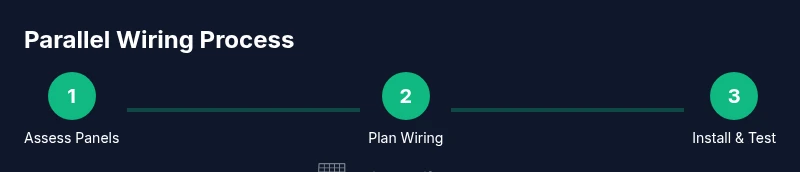
When planning a parallel wiring layout for a home system, start with a clear map of roof areas, shade patterns through the day, and the maximum allowable cable run. Choose panel types with closely matched Voc and Isc ratings, and decide whether a central combiner box or multiple mini-branches best fits your space. Ensure the inverter or charge controller can safely handle the summed current and that all protection devices reflect the total circuit design. Create a wiring diagram before you lay out components, and keep spare fuses for quick maintenance.
Troubleshooting common issues
If you notice reduced output or uneven performance, check for loose or corroded connections, mismatched panel ratings, or shaded sections causing excessive current in one branch. Measure each branch current and inspect fuses and disconnects for signs of overheating. Use a clamp meter to validate I_sc values and verify that the total current does not exceed the protection devices’ ratings. Revisit wiring path lengths to minimize voltage drop.
Maintenance and monitoring tips
Schedule periodic inspections of DC wiring, connectors, and protective devices. Clean panels and ensure MC4 connections remain tight and dry. Monitor system performance with a data logger or solar monitor capable of displaying per-branch current and total output. Document any changes and compare performance against the expected IV curves for continued reliability.
Practical example checklist
- Confirm all panels have compatible voltage ratings (Voc) and current (Isc).
- Size conductors and fuses to the total parallel current.
- Install a DC combiner box with branch protection and a main disconnect.
- Verify polarity and voltage after wiring before energizing the system.
- Test under load and compare against predicted performance to detect mismatches early.
Tools & Materials
- DC combiner box(Rated for total parallel current; include labeling and instructions)
- fuses or circuit breakers(Fast-acting; sized to each branch current)
- DC disconnect switch(Accessible for safe isolation)
- appropriate gauge DC wiring(Minimize voltage drop; follow local codes)
- MC4 connectors and adapters(Weatherproof; ensure proper polarity)
- voltmeter and amp clamp(Useful for measuring branch currents)
- safety gloves and eye protection(Protective gear for electrical work)
- ladder safety gear or roof harness(Use when working on roof access)
- wiring diagram or installation manual(Keep onboard for reference)
Steps
Estimated time: 2-4 hours
- 1
Assess system voltage and panel specs
Identify the nominal voltage you want to maintain across panels in parallel and confirm each panel’s Voc and Isc from labels. This determines wire sizing and protection requirements. Document the values for reference during installation.
Tip: Double-check Voc at the expected minimum operating temperature; voltage can rise with heat or drop with cold. - 2
Calculate total current and wire gauge
Add up the Isc of each panel in the parallel string to determine total current. Use a wire gauge calculator or table to select conductors that handle the peak current with acceptable voltage drop over your run.
Tip: Round up conductor size if the run is long or you expect shading variations that increase loss. - 3
Plan protection for each branch
Assign a separate fuse or breaker to each parallel branch sized to its current. Prepare a main disconnect and ensure the combiner box is rated for total current.
Tip: Label each branch clearly to simplify maintenance and future upgrades. - 4
Install combiner box and fusing
Mount the combiner box near the panels, route cables neatly, and install fuses as planned. Ensure proper weatherproofing and strain relief for all cables.
Tip: Keep branch wiring separate from AC circuits to minimize cross-talk and safety hazards. - 5
Connect to charge controller or inverter
Attach the parallel array output to the appropriate DC input of the MPPT controller or inverter, following the manufacturer’s polarity and torque specs.
Tip: Re-check polarity with a multimeter before energizing; incorrect polarity can damage equipment. - 6
Perform initial safety test
With disconnections in place, verify continuity, insulation resistance, and absence of shorts. Then energize and observe for any abnormal heat or odors.
Tip: Have a second person supervise tests when possible for safety. - 7
Validate performance under load
Measure voltage and current under typical operating conditions. Compare results to expected IV curves and adjust if significant deviations appear.
Tip: If performance is consistently off, re-check connections and consider panel mismatches. - 8
Document and monitor
Record wiring diagrams, fuse ratings, run lengths, and monitoring setup. Enable ongoing monitoring to catch degradation or shading issues early.
Tip: Update diagrams after any future modification for easier troubleshooting. - 9
Review safety and compliance
Ensure the installation meets local codes and utility requirements. If in doubt, consult a licensed electrician or solar installer.
Tip: Keep permits and inspection records in a safe place.
Frequently Asked Questions
What is the main difference between parallel and series wiring?
In parallel wiring, panel currents sum while voltage stays at the level of a single panel. In series wiring, voltages add up while current remains limited to the lowest-rated panel. Parallel increases amperage; series increases voltage.
Parallel wiring sums currents and keeps voltage constant; series wiring sums voltages but keeps current limited by the smallest panel.
Can I mix different wattages in parallel?
Mixing wattages can work, but it increases the risk of unequal current sharing and hotspotting. Prefer panels with similar I-V characteristics and age for best results.
You can mix them, but it’s better to match panels to avoid uneven current sharing.
Is parallel wiring compatible with microinverters?
Microinverters handle each panel individually, so parallel wiring at the DC side is less common. If you’re using microinverters, ensure the system architecture aligns with the manufacturer’s recommendations.
Microinverters work per panel, so parallel DC wiring is less critical but follow the product guidelines.
Do panels need to be the same brand for parallel wiring?
Same or very similar brands and models help ensure similar IV curves, reducing mismatch losses. If brands differ, check specific panel ratings and plan for potential performance differences.
Similarity helps, but always verify the numbers before wiring.
What happens if one panel is shaded in a parallel array?
In parallel, shading can reduce the current contribution of the affected panel without necessarily dragging down the others as in series. However, severe shading can still reduce overall output and increase losses if bypass diodes aren’t effective.
Shading reduces one panel’s contribution but doesn’t usually shut down the whole array in parallel.
How do I protect against reverse current between panels?
Use bypass diodes and proper fusing to prevent reverse current and protect panels. The protective devices should be sized to the branch current and installed near the array.
BYPASS diodes and fuses prevent reverse current and protect equipment.
Watch Video
Top Takeaways
- Increase current with parallel wiring without changing voltage.
- Match panel ratings to minimize shading losses and current imbalance.
- Size conductors and fuses to the total parallel current.
- Use a properly rated combiner box and a main disconnect.
- Verify safety and compliance before energizing the system.