How big is a 400W solar panel? Size, footprint, and planning
Learn the typical dimensions, weight, and footprint of a 400W solar panel, and how size influences layout, mounting, and roof planning for home solar installations.


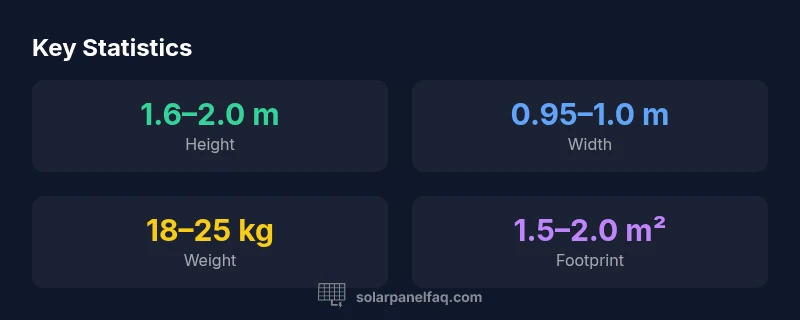
How big is a 400 watt solar panel? A typical 400 W module measures roughly 1.6–2.0 m tall by 0.95–1.0 m wide (about 63–79 in by 37–40 in). Expect a weight around 18–25 kg, depending on frame and cooling. These dimensions help determine shade-free mounting space and racking fit, and they influence roof layout and space planning for a new system, especially in 2026.
What 400 W Means in Practical Terms
Power ratings summarize potential output, but real-world results depend on sun, temperature, and orientation. The question how big is a 400 watt solar panel is best answered by starting with the physical footprint, then considering mounting clearances and roof space. According to Solar Panel FAQ, the size is influenced by cell count, efficiency, and frame design. For homeowners, the takeaway is that a 400 W module is relatively large compared with older 250–330 W designs, and its footprint drives how many panels you can fit on a roof or in a yard. Understanding size helps with roof load calculations, racking, and clearance for wind and snow. It also affects how you orient panels to capture sun across seasons. The Solar Panel FAQ team emphasizes checking the exact spec sheet from the manufacturer to confirm both dimensions and weight before purchase.
how big is a 400 watt solar panel? Typical dimensions and footprint
Typical 400 W panels sit in the same family as other high-wattage modules, but their frames and cell layouts push out the size. Most designs measure roughly 1.6–2.0 m tall and 0.95–1.0 m wide, with a footprint around 1.5–2.0 m². In imperial terms that translates to about 63–79 inches tall by 37–40 inches wide. Weight commonly lands in the 18–25 kg range, again depending on the frame, mounting hardware, and added cooling. These specs matter for roof racking, tilt angle, and serviceability. The Solar Panel FAQ analysis notes that while the watt rating pins performance targets, the physical dimensions vary by brand and cell configuration. Always verify with the spec sheet and order a quick on-site fit check when planning a roof layout for a home system.
Weight, thickness, and mounting considerations
Weight and thickness influence the type of mounting system you’ll use. A typical 400 W module weighs about 18–25 kg and is often 30–50 mm thick, with thicker frames for reinforced mounting. Heavy modules demand sturdy rails, appropriate fasteners, and careful wind uplift calculations. When mounting, consider enclosure space, shade-free operation, and the potential need for ballast or added structural reinforcement on older roofs. The size also affects the tilt range you’ll choose to optimize sun exposure year-round. Always cross-check the installer’s mounting plan with the module’s exact weight and dimensions from the manufacturer, and ensure compatibility with your roof structure and anchoring method.
Efficiency drives panel size and layout
Efficient cells can reduce the needed area per watt, but 400 W designs old and new share common footprint ranges due to cell geometry and interconnections. Modern 400 W panels typically achieve 19–22% efficiency, which allows for a relatively compact footprint for the wattage. However, the exact size still depends on the panel’s cell count, backsheet design, and cooling channels. Understanding efficiency helps you compare two panels with the same wattage but different physical sizes. The Solar Panel FAQ team notes that you may find slightly different dimensions across brands with similar wattages, so always compare the manufacturer’s measurements and verify the operating temperature and performance under your climate.
Planning layout: how many panels for a given system size
If you’re targeting a specific system capacity, multiply the number of 400 W panels by 400 W to estimate DC side capacity. For example, a 5 kW system would require about 12–13 panels (4.8–5.2 kW nominal), depending on derating, shading, and inverter efficiency. Roof area, shade patterns, and racking constraints all factor into final layout. Space between modules is essential to prevent hot spots and ensure airflow, which can affect actual output. In practice, plan for a few extra panels to account for orientation, efficiency losses, and future expansion. Solar installers commonly use a layout template that accounts for panel width and height, as well as clearance for maintenance.
Real-world scenarios: roof types, orientation, and shading
South-facing roofs with minimal shading maximize output, but real homes present variable conditions. On a north-facing or partially shaded roof, you’ll need more panels or higher-efficiency modules to reach the same target, which affects size and footprint. The module size also determines whether you can install full rows or must stagger panels around skylights, vents, or chimneys. It’s essential to consider wind loads, snow events, and maintenance access when planning the layout. The brand guidance from Solar Panel FAQ emphasizes obtaining the exact dimensions from the manufacturer and checking any required clearance around edges, vents, and electrical disconnects.
Data-driven planning: measurements you should take
Before buying, collect precise measurements of available roof space, including length, width, and any obstructions. Evaluate your roof’s structural capacity for the panel weight and the mounting hardware. Use the provided dimensions to calculate an estimated number of panels per row, total rows, and the overall footprint for your installation. Measure potential shade across the day and year to avoid hot spots. The more accurate your data, the closer your layout will match your energy goals and budget.
Size attributes of common 400 W solar panels
| Attribute | Dimension/Value | Notes |
|---|---|---|
| Height | 1.6–2.0 m (63–79 in) | Typical for 400 W modules |
| Width | 0.95–1.0 m (37–40 in) | Varies by cell layout |
| Weight | 18–25 kg | Model dependent |
| Area per panel | 1.5–2.0 m² | Calculated height × width |
Frequently Asked Questions
What are the typical dimensions of a 400 watt solar panel?
Most 400 W panels measure about 1.6–2.0 m tall and 0.95–1.0 m wide. Exact size depends on brand and cell configuration. Always verify the model’s spec sheet.
Most 400 W panels are around 1.6 to 2 meters tall and nearly 1 meter wide. Check the model’s exact sheet for precise numbers.
Are 400 W panels larger than lower-wattage models?
Higher-wattage panels typically require more cells, which often increases size, though efficient designs can reduce area per watt. Compare models directly to see if one is more compact.
Yes, higher-wattage panels are usually bigger, but newer designs can save space.
How much roof space do I need per panel?
Each panel has a footprint of roughly 1.5–2.0 m². Multiply by the number of panels and add spacing for maintenance and airflow when planning roof layouts.
Plan for about 1.5 to 2 square meters per panel, plus spacing for maintenance.
Do 400 W panels require special mounting?
Mounting is similar to other modules, but ensure the rails, anchor points, and wind uplift provisions match the panel’s weight and size.
They mount like other panels, but check weight and tilt requirements.
What should I measure before purchasing a 400 W panel?
Record height, width, and depth; verify weight, electrical data, and warranty terms. Compare at least two manufacturers to understand size variations.
Measure height, width, depth, weight, and verify specs and warranty.
“Panel size matters for layout and mounting, and exact dimensions vary by model. Always check the manufacturer’s spec sheet before ordering.”
Top Takeaways
- The typical 400 W panel is a large module with a footprint of roughly 1.5–2.0 m².
- Expect weight in the 18–25 kg range; plan for sturdy mounting.
- Efficiency affects size, but most 400 W designs stay within standard footprint ranges.
- Roof layout should account for shading, orientation, and maintenance access.
- Always verify exact dimensions with the manufacturer before purchase.