Buy a Solar Panel for Home: A Practical Guide
Learn how to buy a solar panel for home with a clear, step-by-step guide. Compare panel types, size your system, budget for installation, and maximize incentives for homeowners in 2026.


You can buy a solar panel for home by evaluating your energy needs, roof space, and financing options, then comparing panel types and warranties. This guide helps homeowners understand how to choose the right panel, estimate system size, and maximize incentives before purchase.
Understanding the decision to buy a solar panel for home
The decision to buy a solar panel for your residence is about balancing energy independence, cost stability, and environmental impact. Homeowners increasingly consider solar panels to lock in predictable energy costs, hedge against rising utility prices, and reduce their carbon footprint. According to Solar Panel FAQ, start by clarifying your goals: do you want to lower bills today, increase home value, or gain energy resilience during outages? Knowing your priorities will shape system size, panel type, and whether you pursue cash purchases or financing options. As you begin, gather a recent electricity bill, roof measurements, and any local incentives. This preparation will help you compare quotes confidently and avoid common buying mistakes. By framing your goals clearly, you’ll approach the market with a realistic budget and a short-list of features that matter most to your home.
Understanding the buying journey also means choosing a source of guidance you trust. The Solar Panel FAQ team emphasizes starting with a facts-first approach: define your energy needs, list constraints, and then explore available products that fit your criteria. Your plan should include a rough timeline for decision making, a preferred price range, and a target return on investment. Finally, remember that buying a solar panel for home is a long-term decision—focus on durability, warranty, and local support just as much as initial cost.
How solar panels work for residential homes
Solar panels convert sunlight into electricity using photovoltaic cells arranged in modules. In a typical home installation, these panels feed a DC current to an inverter, which converts it to AC power for household use. A net-metering arrangement allows any surplus electricity to be sent back to the grid, earning credits on your bill. On sunny days, panels generate power that reduces grid consumption; on cloudy days, the system produces less but still contributes. The size of your system depends on energy usage, available roof space, and budget. A well-designed system should balance panel count, efficiency, and shade tolerance. Understanding these basics helps you compare products and installers more effectively, and sets expectations for performance over the system’s lifetime.
Assessing your home's suitability for solar
Before you buy, assess whether your roof and site are good candidates. Key questions include: Is your roof oriented to capture maximum sun (south-facing in the northern hemisphere is common)? Are there major shade sources from trees or nearby structures? Is the roof in good condition and capable of supporting panels for 25–30 years? Do you live in a region with a favorable net metering policy and strong incentives? Gather roof dimensions, obtain a professional roof inspection if needed, and note any restrictions from homeowners associations or local codes. If shade or orientation limits performance, you might still benefit from a smaller system or microinverters. This phase helps you set realistic expectations and prevents overestimating potential savings.
Sizing your system: How many panels you need
Sizing a solar system begins with your annual energy usage and the available roof area. Start by calculating your average daily kWh consumption from your utility bill, then estimate how many peak sun hours your location receives. Use this data to approximate the system size (in kilowatts) and the number of panels required. Remember that panel outputs vary by model and efficiency, so your installer will translate the abstract size into the actual panel count. Planning for future needs, such as an electric vehicle, can influence your sizing decisions. A well-sized system matches your goals without paying for excess capacity you won’t use.
Choosing panel types and brands
Panel technology mainly divides into mono-crystalline and polycrystalline options. Mono-crystalline panels tend to offer higher efficiency and better performance in limited space, while polycrystalline panels can be a cost-effective alternative with respectable durability. When comparing brands, prioritize warranty length, product certifications, and company stability. Look for panels with strong performance under varying temperatures and shading conditions. Consider the overall balance of efficiency, cost per watt, and long-term reliability rather than chasing the highest efficiency rating alone. Reading customer reviews and dealer reputations can also inform a smarter purchase decision.
Warranties, certifications and quality marks
A solid warranty protects your investment across materials and workmanship, typically covering 25 years or more for performance and 10–12 years for product workmanship. Certifications from reputable bodies (for example, UL or IEC) indicate compliance with safety and quality standards. Understand what is covered, what limits exist, and how warranty claims are processed. Warranties are not interchangeable with performance guarantees; a panel may degrade over time, reducing output. Asking for a copy of the warranty, a summary of inclusions, and a clear service process helps you compare offers more accurately. If a seller cannot provide documentation, treat the quote with caution.
Costs, incentives, and financing options
Discuss the total ownership cost rather than just the sticker price. Upfront costs, financing terms, and potential tax credits or rebates affect the overall value. In many areas, homeowners can access utility programs, state incentives, or federal programs that reduce net cost. Net metering policies also influence the financial return by allowing credits for excess generation fed back into the grid. Compare quotes on a cost per watt basis, but also consider the value of warranties, service plans, and expected payback period. Financing options like loans or leases may alter long-term savings, so evaluate cash flow implications carefully.
Shopping process: quotes, installers, and permits
When shopping, obtain at least three quotes from licensed installers or reputable solar retailers. Verify credentials, past project references, and the installer’s permit handling process. A thorough quote should include system size, module type, mounting hardware, inverter choice, wiring, and estimated electrical performance. Confirm who handles permitting and grid interconnection approvals, and ensure a post-installation inspection is scheduled. Reading the contract terms, including scope of work and payment schedule, reduces risk of surprises. Don’t rush; a careful, documented purchasing process leads to a smoother installation and better long-term outcomes.
Final buying steps and installation planning
With a chosen system, confirm a final price, warranty terms, and projected timelines for delivery and installation. Prepare your home for installation by clearing access to the roof and ensuring pets and children are safe during work. Coordinate with the installer on scheduling, utility interconnection, and the anticipated system activation date. After installation, review the commissioning report, confirm net metering setup, and monitor early performance. The process culminates in a functioning solar system that aligns with your goals and budget, delivering energy savings over time.
Tools & Materials
- Energy usage and bill records(Gather several months of bills to understand average daily usage.)
- Roof measurements and orientation data(Document roof area, pitch, and shading from trees or nearby structures.)
- Budget planning worksheet(Include upfront costs, financing, incentives, and maintenance.)
- Manufacturer spec sheets(Compare panel efficiency, temperature coefficients, and warranties.)
- Quotes from licensed installers(Request at least three bids with complete scope and terms.)
Steps
Estimated time: 2-6 weeks
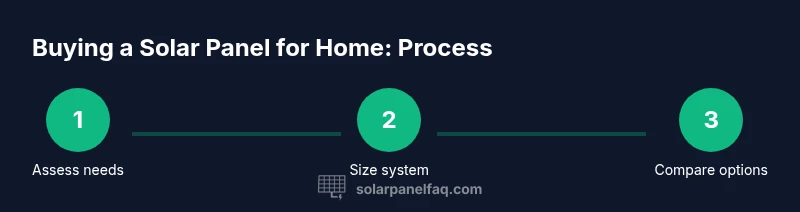
- 1
Define energy goals
List your reasons for going solar (cost stability, environmental impact, or increased home value) and set measurable goals for savings and independence. This clarifies scope and helps compare offers objectively.
Tip: Document exact targets (e.g., 50% of annual usage) to measure success later. - 2
Gather your usage data
Pull your electricity bills for at least 12 months to understand seasonal variance. Use this data to estimate annual consumption and identify peak periods.
Tip: Highlight months with highest usage to anticipate seasonal adjustments. - 3
Assess roof suitability
Check roof orientation, shading, and age. A south-facing roof with minimal shade generally yields the best performance.
Tip: If shading exists, consider microinverters or power optimizers to maximize output. - 4
Estimate system size
Based on usage data and sun exposure in your area, estimate the kilowatt size needed. This guides panel count and warranty considerations.
Tip: Avoid oversizing; prioritize demand-driven design for better ROI. - 5
Compare panel types
Choose between mono- and poly-crystalline panels, balancing efficiency, cost, and footprint.
Tip: Higher efficiency helps in limited space but check long-term performance and warranty terms. - 6
Review warranties and certifications
Check product and workmanship warranties, and ensure panels have recognized certifications for safety and quality.
Tip: Ask for a copy of warranty documents and service procedures upfront. - 7
Request multiple quotes
Obtain detailed quotes from at least three licensed installers, including system design, equipment, and interconnection plans.
Tip: Verify each quote uses the same basis for fair comparison (same panel type, same inverter, etc.). - 8
Evaluate financing and incentives
Consider cash purchases vs financing, and review available incentives, tax credits, or rebates. Understand net metering rules.
Tip: Model cash flow across different financing scenarios to spot best value. - 9
Make a decision and plan installation
Choose the best value option, sign the contract, and coordinate installation dates, permits, and grid interconnection.
Tip: Schedule a pre-install inspection to confirm roof access and electrical readiness.
Frequently Asked Questions
What is the best type of solar panel for a home?
Most homes benefit from mono-crystalline panels for higher efficiency, especially where space is limited. Polycrystalline panels can offer good value in larger roof spaces. Compare efficiency, warranty, and price to decide which fits your site.
Mono-crystalline panels are typically best for space-limited roofs, while polycrystalline can offer good value in larger installations.
Do I need planning permission to install solar panels?
In many regions, small rooftop solar installations do not require formal planning permission, but you may need building permits or approvals from your utility. Check local codes and HOA rules before ordering equipment.
Most rooftop solar projects don’t need planning permission, but you should verify building permits and utility approvals in your area.
Can I install solar panels myself?
Residential rooftop solar installation is complex and involves electrical work and roof integrity. Hiring licensed professionals ensures safety, code compliance, and proper interconnection. DIY installations are generally not recommended.
Installing solar panels yourself is risky. Hiring a licensed installer is safer and more reliable.
How many panels do I need?
The number of panels depends on your energy usage, roof space, and panel efficiency. An installer calculates this based on your bills and the sun exposure at your location. Expect multiple configurations for different budgets.
It varies by your energy use and roof space; get a professional sizing estimate.
What about warranties and maintenance?
Most panels come with 25-year performance warranties and 10–12 year workmanship warranties. Regular maintenance is minimal, involving cleaning and inspection. Read the warranty terms to understand what is covered and for how long.
Look for long performance and workmanship warranties, and plan for occasional maintenance checks.
Are there incentives or loans for home solar?
Many regions offer tax credits, rebates, or low-interest financing. Net metering policies affect savings by crediting excess energy back to the grid. Check federal, state, and utility programs to maximize value.
There are often incentives and financing options; net metering can boost savings.
Watch Video
Top Takeaways
- Define energy goals before shopping.
- Size system based on usage and space.
- Compare warranties and certifications.
- Plan financing and incentives early.
- Choose reputable installers for safe, compliant installation.