Build Your Own Solar Panel: A Practical DIY Guide Today
Learn how to build your own solar panel with a safe, step-by-step approach. This educational guide covers planning, components, assembly, testing, and safe alternatives for homeowners exploring solar energy.


You can build a small DIY solar panel by wiring individual photovoltaic cells into a module and pairing it with a charge controller, battery storage, and proper housing. This steps-based guide covers safety prerequisites, core components, and best practices so you can test a functional panel at home. According to Solar Panel FAQ, plan for electrical risks and local codes before starting.
build your own solar panel: reliability and reality
Building your own solar panel is a compelling way to learn how PV systems work, but it also comes with caveats. A DIY panel primarily serves educational purposes and demonstrations rather than replacing a certified installation. According to Solar Panel FAQ, reliability depends on careful cell handling, encapsulation, and weatherproofing, as well as adherence to local electrical codes. If you pursue this project, set clear goals: do you want a small display panel, a test rig for experiments, or a functional off-grid unit? Your answer will shape the design, materials, and safety steps. In any case, expect variability in performance with commercial modules, since factory-quality encapsulation and quality control play major roles in efficiency and longevity. This section lays out the constraints, the learning goals, and honest expectations so you can approach build your own solar panel with a practical mindset and a respect for safety.
Understanding core components and configuration
A solar panel is more than a pile of cells. Successful DIY builds require a clear understanding of the key components: photovoltaic cells, interconnects (tabbing wires or bus bars), encapsulation layers, a protective backsheet, a glass cover, and a mounting frame. When you plan a module, decide whether to create a small 12-volt lab panel or a higher-voltage string for battery storage. The configuration (how many cells in series vs parallel) determines voltage and current. Bypass diodes protect strings in shade and prevent reverse charging. For a hands-on project, you’ll learn how to connect cells, test for continuity, and verify that connections are solid. This knowledge foundation helps you troubleshoot issues during assembly and understand why commercial panels use stringent processes for reliability and performance.
Safety, codes, and practical constraints
Working with PV cells involves light-sensitive materials and electrical wiring. Always wear safety gear (gloves, goggles) and work in a well-ventilated area. Before cutting or soldering, check local electrical codes and building rules; many jurisdictions treat grid-tied DIY panels differently from off-grid educational setups. Avoid high voltage configurations and never bypass protection components. A key constraint is encapsulation quality; poor sealing leads to moisture ingress and corrosion. Structural integrity matters as well: a panel that flexes or leaks will degrade quickly in sun and weather. Finally, consider the legalities of connecting any DIY panel to a home system. A clear plan, proper permits when required, and a cautious approach make this learning project safer and more likely to succeed.
Planning materials, costs, and sourcing
Before you buy, outline a bill of materials and a rough cost range. Generic DIY panels depend on quality cells, encapsulation, and framing; the total cost can vary widely depending on scale and how much you source secondhand. Keep an eye on common budget busters such as encapsulation quality, weatherproof seals, and sturdy framing. Where possible, source components from reputable suppliers that offer documentation or test results. This section also helps you map out time commitments; a thorough build takes multiple sessions and careful planning. Remember that the goal is to learn, not to produce a top-grade commercial module. As you estimate costs, compare with off-the-shelf panels to understand the value proposition.
Assembly concepts: general workflow and testing plan
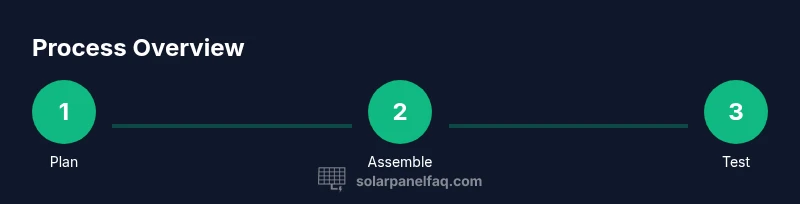
With the plan in place, you can begin assembling the panel in stages. Start by preparing the mounting frame, then arrange cells in the intended string layout. Connect cells using tabbing wires, test continuity after each connection, and document your wiring diagram. After cell interconnection, place encapsulation material and seal the stack to protect against moisture. Attach the glass front and secure the edge seal to prevent leaks. Finally, mount a suitable charge controller and a basic battery if you want real-world voltage storage. Throughout, test at low voltage before exposing the panel to sunlight. This approach minimizes risk and helps you identify issues early.
Testing, performance, and setting expectations
Once your panel is assembled, test in a shaded area first to measure open-circuit voltage and short-circuit current with a reliable multimeter. Compare results to the theoretical calculations from your design to gauge efficiency. Real-world performance will vary due to cell quality, encapsulation, and temperature. Keep heat management in mind; solar cells lose efficiency as temperature rises. If results fall short of expectations, inspect solder joints, wiring, and encapsulation seals. Remember that a DIY module will typically underperform compared with factory-assembled panels, but it provides essential hands-on understanding of PV systems and how components interplay. When you’re ready, consider professional evaluation if you plan to use the panel for meaningful energy generation.
Tools & Materials
- Photovoltaic cells (pre-tabbed)(Choose a compatible cell format; ensure consistency across the string)
- Glass front sheet(Tempered or low-iron glass, 3-4 mm thick)
- Encapsulation material (EVA or PVB)(Protects cells from moisture and oxygen)
- Backsheet material(Weather-resistant, non-conductive backing)
- Aluminum framing(Structural support and mounting points)
- Soldering iron and lead-free solder(Make clean, secure connections; use fume extraction)
- Tabbing wires / bus bars(Connect cells in intended series/parallel layout)
- Diodes (bypass diodes)(Protect strings in shade; size by current rating)
- Charge controller(Regulates voltage and prevents overcharging)
- Battery storage (optional)(For off-grid setups; store energy for use)
- Weather-rated wiring and connectors(MC4 or equivalent; UV-resistant insulation)
- Silicone sealant(Seal edges and mounting points)
- Multimeter / PV meter(Measure voltage, current, and continuity)
- Personal safety gear(Gloves and goggles; avoid direct exposure to solder fumes)
Steps
Estimated time: 6-12 hours
- 1
Assess safety and permit requirements
Before you touch any cell, confirm safety measures and local permit requirements. Review electrical code considerations and set up a dedicated, clutter-free workspace. Confirm that your plan aligns with local regulations for DIY PV projects.
Tip: Wear PPE and keep a clear, dry workspace; document any permits if required. - 2
Define panel dimensions and electrical configuration
Decide the panel size and the string configuration (how cells will be arranged in series/parallel). Calculate the expected voltage and current to match your storage or load goals. Ensure the layout fits your enclosure and frame.
Tip: Sketch a wiring diagram on paper before cutting or soldering. - 3
Prepare the mounting frame and enclosure
Cut or assemble the frame to fit the intended panel size. Seal surfaces to be moisture-proof and ensure mounting points align with the solar array. Prepare an enclosure that minimizes flexing and supports the front glass.
Tip: Use non-conductive spacers to reduce galvanic corrosion. - 4
Assemble and connect cell strings
Lay out cells in the planned string pattern and solder tabbing wires between them. Maintain polarity and test continuity after each connection. Record your wiring scheme for troubleshooting later.
Tip: Work in short sessions to avoid overheating cells. - 5
Laminate the cell stack with encapsulation
Place encapsulation material over the cell strings, then apply the backsheet and press to remove air pockets. This step protects the cells from moisture and mechanical stress. Allow curing time per material guidelines.
Tip: Use a vacuum bag or weighted platen to minimize air voids. - 6
Mount front glass and seal the panel
Attach the tempered glass over the encapsulated stack and seal the edges with weatherproof adhesive. Ensure a tight seal to prevent water ingress and distortion from temperature changes.
Tip: Check for any dust or fingerprints on the glass before final sealing. - 7
Install bypass diodes and wiring harness
Place bypass diodes across series strings to protect cells from shading. Connect the harness to the charge controller input with correct polarity. Double-check all connections before applying power.
Tip: Verify polarity with a multimeter before connecting to the controller. - 8
Integrate with a charge controller and battery (optional)
Mount the charge controller, connect it to the panel, and, if desired, connect a battery for storage. Test the output with a load to ensure proper function and safety. Consider adding fuses or breakers as a protective measure.
Tip: Safely test at low open-circuit voltage before sunlight exposure.
Frequently Asked Questions
Is it legal to build your own solar panel at home?
Legal requirements vary by location; permits or inspections may be needed. DIY panels are generally for learning and testing, not grid-tied installations. Always check local energy codes before starting.
Legal requirements differ by area, so check local codes and permits before starting.
Will a DIY panel meet safety standards or efficiency expectations?
DIY panels can demonstrate concepts and function but rarely match the safety standards or efficiency of commercial products. Use safe materials and follow best practices to minimize risk.
They’re educational but not a substitute for certified modules.
What tools are essential for a DIY solar panel project?
Essential tools include a soldering iron, multimeter, wire strippers, and a clean workspace. Additional items are encapsulation materials, frame hardware, and weatherproof connectors.
You’ll need basic electronics tools and weatherproof fittings.
How long does a DIY solar panel project typically take?
Plan for several focused sessions; total time commonly ranges from a few hours to a full weekend, depending on your experience and scale.
It can take a few hours up to a weekend.
Can I connect a DIY panel directly to home circuits?
No. DIY panels must be integrated through a charge controller or inverter and inspected; direct connection to home wiring is unsafe and may violate codes.
Don’t connect directly to house wiring.
What are safer alternatives to DIY panels?
Consider pre-assembled, certified panels or educational kits that include safety features and instructions. They reduce risk while teaching fundamentals.
Certified kits are safer and still educational.
Watch Video
Top Takeaways
- Plan carefully and prioritize safety first.
- DIY panels educate but aren’t substitutes for certified modules.
- Encapsulation and weather sealing are crucial for durability.
- Document wiring and test connections before sun exposure.
- For real energy needs, compare DIY with certified panels.