What You Need to Install Solar Panels: A Homeowner Guide
Learn what you need to install solar panels, from site assessment and permits to equipment and safety. A practical, step-by-step guide for homeowners seeking durable, code-compliant solar installations.


This guide helps homeowners understand what you need to install solar panels, from evaluating roof suitability and permitting to selecting components and bids. It outlines the essential tools, safety practices, and typical timelines so you can plan a compliant, efficient installation, avoid delays, and compare contractor offers confidently, with your budget in mind. What you need starts with a clear site assessment, proper permits, and the right equipment.
Site and Roof Suitability
According to Solar Panel FAQ, the first step is to address what do you need to install solar panels by performing a site and roof assessment. This helps determine if your roof meets basic requirements for mounting and energy production. The Solar Panel FAQ team found that roof orientation, shading, and structural health are the biggest variables that influence whether a system will deliver expected results.
- Roof orientation: In the northern hemisphere, south-facing roofs typically yield the highest energy production. East or west orientations can still work, but production may be lower.
- Shading: Any shade from trees, vents, or chimneys reduces output; map shading across seasons.
- Roof age and material: Asphalt shingles are common; metal roofs often require specialized mounting; tile roofs require careful handling to avoid cracks.
- Structural integrity: Rafters and decking must support the additional weight; consider a professional structural assessment if the roof is older or damaged.
- Documentation: Take photos, note roof pitch, and record any obstacles (chimneys, skylights).
Permits and Local Regulations
Regulatory requirements vary by city, county, and utility territory. Most installations require at least a building permit and an electrical permit, plus utility interconnection approval. HOA covenants may add rules or restrictions. The Solar Panel FAQ notes that early planning with your local building department can prevent delays.
- Permits typically cover electrical work, mounting locations, and system interconnection.
- Utilities may require an interconnection agreement and inspection prior to operation.
- HOAs can impose rules on aesthetics or system visibility.
- Keep a record of approvals and inspection dates for your files.
System Design: Panels, Inverters, and Mounts
What you need to install solar panels goes beyond just the panels themselves. A balanced system includes mounting hardware, an inverter, wiring, and safety components. When choosing between string inverters, microinverters, or power optimizers, consider roof shading, roof size, and maintenance access. A well-designed layout maximizes energy production while simplifying future maintenance. The phrase what you need to install solar panels should guide your early design decisions so you select compatible components and avoid costly mismatches.
Electrical Readiness: Service Panel and Wiring
A key part of planning is ensuring your electrical service can handle extra generation. This means checking your main service panel capacity, available spaces for breakers, and the feasibility of adding an AC disconnect and a backfeed breaker if required by your utility. You’ll need appropriate conduit and outdoor-rated wiring for the DC and AC sides. Pre-approval from the utility can prevent surprises during inspection and commissioning.
Choosing Equipment: Mounts, Racking, and Wiring
Equipment selection should match your roof type, climate, and aesthetic preferences. Choose mounting rails and racking suited to your roof (roof-mounted or ground-mounted). Panels vary in efficiency, color, and temperature tolerance, while inverters come in several formats (string, microinverter, or hybrid). Wiring choices depend on distance, conduit routing, and safety codes. Plan for monitoring devices that provide real-time performance data.
Safety Essentials and Best Practices
Safety can’t be optional when installing solar panels. Always use fall protection, gloves, eye protection, and non-slip footwear. De-energize circuits before work, follow lockout/tagout procedures, and verify voltages with a qualified tester. Remember that working on a roof, near live circuits, or with heavy equipment carries significant risk. Planning and PPE reduce hazards and help you avoid injuries.
Contractor vs DIY: Pros and Cons
DIY installation is possible for homeowners with strong electrical and roofing skills, but many steps require professional oversight, especially permits, interconnection, and inspections. Contractors bring experience with code compliance, warranty coverage, and safety practices. Weigh costs, risks, and your comfort level when deciding between DIY or hiring a licensed solar installer.
Installation Timeline and Practical Milestones
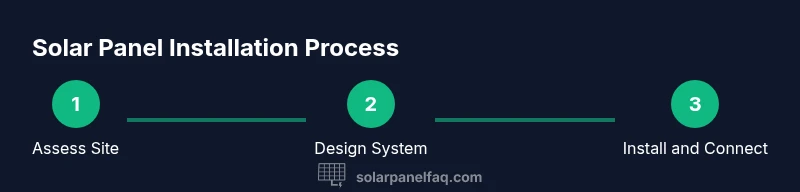
A typical project spans several days to a few weeks, depending on system size, roof type, and permitting speed. Start with site assessment, obtain permits, schedule inspections, then install mounting, wiring, and the inverter. Allow buffer time for inspections and weather delays. Keeping a milestone calendar helps you track progress and set expectations for family members and neighbors.
Maintenance, Warranties, and Longevity
After installation, periodic checks of panels and wiring help sustain performance. Clean panels if dust or debris accumulates, especially in dry climates. Warranties vary by manufacturer and installer; review coverage for modules, inverters, and mounting hardware. Solar systems typically require occasional professional inspections to maintain efficiency and safety.
Tools & Materials
- Safety harness and lanyard(Fall protection rated to OSHA standards)
- Ladder and roof access gear(Sturdily rated for roof height and weather conditions)
- Roof anchors and fall protection gear(If needed for multi-point protection)
- Measuring tools (tape measure, digital inclinometer)(Accurate roof angle and spacing)
- PV modules (solar panels)(Quantity depends on system size)
- Racking rails and mounting hardware(Roof-mounted or ground-mounted depending on design)
- Lag bolts, clamps, and fasteners(Corrosion-resistant for outdoor use)
- DC wiring with MC4 connectors(Match gauge to system current)
- AC disconnect switch(For safe isolation on the AC side)
- Solar inverter(Choose appropriate type for your system)
- Conduit and junction boxes(For neat wiring runs)
- Multimeter and voltage tester(Verify circuits and polarity)
- Torque wrench(Accurate fastener torques prevent leaks)
- PPE (gloves, safety glasses)(Basic personal protective equipment)
- Permitting documents and permits(Depends on jurisdiction)
- Monitoring system or display(Real-time performance tracking)
Steps
Estimated time: Estimated total time: 3-5 days including permit processing and inspections
- 1
Assess site and roof
Evaluate roof orientation, shading, material, and age. Document potential obstacles and confirm that the roof can support the planned array. This step answers what you need to install solar panels at a practical level and informs later design choices.
Tip: Take multiple photos from different angles; note shade at different times of day. - 2
Check electrical service readiness
Review the main service panel capacity and available spaces for breakers. Determine if an AC disconnect and backfeed breaker are needed for interconnection with the grid.
Tip: Consult your utility early to confirm interconnection requirements and inspection steps. - 3
Design the system and select components
Choose panel type, inverter type, and mounting system based on roof and budget. Calculate the target system size to match consumption goals and available roof area.
Tip: Prefer modular options (microinverters or power optimizers) if shade is a concern. - 4
Obtain permits and schedule inspections
Submit building, electrical, and interconnection applications as required. Schedule inspections and plan for any utility meter work or on-site checks.
Tip: Keep digital copies of all approvals and inspection appointments handy. - 5
Prepare mounting location and install racking
Mark rail positions, drill mounting holes, and secure rails to the roof or ground. Ensure a watertight seal and verify level orientation.
Tip: Double-check pitch and spacing before fastening to prevent panel misalignment. - 6
Wire DC side and set up combiner boxes
Connect PV modules in series/parallel as designed, install a DC safety disconnect, and route cables safely through conduit. Keep DC wiring separate from AC wiring where possible.
Tip: Avoid bending cables too sharply and use protective grommets for entry points. - 7
Install inverter and AC side connections
Mount the inverter, connect AC wiring to the panel and disconnect, and run monitoring wires to the control interface. Ensure grounding complies with code.
Tip: Ground fault protection helps prevent electrical hazards and equipment damage. - 8
Commission, testing, and inspection
Power up the system, test voltages, and verify production against design. Schedule final inspections with the utility or AHJ as required.
Tip: Document test results and keep a log for future diagnostics. - 9
Activate system and set up monitoring
Turn the system on, confirm data streaming to the monitor, and verify that production aligns with expectations. Keep maintenance and warranty contacts readily accessible.
Tip: Set up alerts for performance drops or faults.
Frequently Asked Questions
Do I need permits to install solar panels?
Most installations require building and electrical permits along with utility interconnection approval. Exact requirements vary by location, so check with local authorities.
Most installations require building and electrical permits and utility approval; rules vary by location.
Can I install solar panels myself?
DIY installation is possible for homeowners with strong electrical and roofing skills, but many parts require licensed professionals and final inspections.
DIY is possible for skilled homeowners, but most people hire licensed pros for safety and code compliance.
What equipment do you need to install solar panels?
You need PV modules, mounting hardware, an inverter, wiring, an AC disconnect, and monitoring equipment. The exact list depends on system size and roof type.
You’ll need panels, mounting, inverter, wiring, and a monitoring setup.
How long does solar installation take?
Typical installations take a day or two for small systems and longer for larger or complex roofs, plus time for permits and inspections.
Most installations take a few days, plus permit and inspection time.
What are common mistakes to avoid when installing solar panels?
Underestimating shading, ignoring load capacity, or skipping permits and inspections can waste money and create safety issues.
Avoid shading, mis-sizing, and skipping permits or inspections.
How do you estimate costs for solar panel installation?
Cost depends on system size, equipment quality, and installation complexity; expect higher costs for shaded or large roofs and complex mounts.
Cost varies with size, equipment quality, and complexity; larger or shaded roofs cost more.
Watch Video
Top Takeaways
- Assess roof suitability and shading before purchases
- Know local permits and utility interconnection needs
- Design a balanced system with appropriate inverter type
- Prioritize safety and professional inspection where required
- Plan for maintenance and warranty coverage