Power Your Home with Solar Panels: A Step-by-Step Guide
Learn how to power your house with solar panels, including sizing, permitting, installation, and maintenance. This comprehensive guide helps homeowners plan, install, and verify a solar powerhouse for everyday living.


By following these steps, you can power your house with solar panels—from planning and sizing to installation and testing. You’ll need a suitable system size, an inverter, mounting hardware, wiring, and local permits. This guide offers a practical, homeowner-friendly path, with safety tips and permitting cues, plus guidance on estimating upfront costs and long-term savings for a typical residence.
Why powering your house with solar panels makes sense
If you’re exploring practical ways to reduce utility costs and increase energy independence, a well-planned solar panel to power house setup can help. According to Solar Panel FAQ, homeowners who invest in a properly designed system often experience improved reliability and long-term value for their homes. The Solar Panel FAQ team found that many properties see meaningful reductions in monthly bills when a system is sized to fit daytime consumption and roof exposure is optimized for sun. This section lays the foundation by outlining core benefits and common misconceptions, so you can approach a home solar project with clarity and confidence.
Sizing your system: estimating the needs of your home
Determining the right size for a home solar array starts with your daily energy use. Gather a full year of utility bills and compute an average daily kWh consumption. Consider peak sun hours in your location and the efficiency of your panels. A typical household might target array capacity that matches a large portion of daytime usage, with headroom for future increases. Remember that not every home will be equally suited; factors like roof orientation, shading, and panel efficiency influence the final size. The goal is to balance upfront cost with expected electricity generation while ensuring you have enough inverter capacity to handle peak production. Pro tip: model two scenarios—current usage and projected growth—to avoid oversizing or undersizing.
Grid-tied vs off-grid: configurations and interconnection options
Most homeowners choose a grid-tied configuration to take advantage of net metering, which credits you for surplus power fed back to the grid. This setup minimizes the need for large storage and reduces equipment costs. Off-grid systems remove dependence on the utility but require battery storage and more complex management, which increases both cost and maintenance. Hybrid systems combine both approaches, offering a balance between reliability and cost. When selecting a configuration, consider local interconnection rules, utility tariffs, and the likelihood of long-term grid stability. The choice will influence how you size the array, inverter type, and whether you add battery storage later.
Permits, codes, and utilities: what to expect
Before any installation, check with your local building department for required permits and inspections. Electrical and roof-work typically require separate permits, and some jurisdictions mandate an inspection after installation. Utilities may require an interconnection agreement and the installation of a bi-directional meter, which lets you track energy you send to and draw from the grid. Timelines vary widely by location, so plan for a permitting phase that can extend the project. Having a clear plan and documentation will streamline approval and reduce the risk of delays.
Installing basics: safety, wiring, and hardware
Roof-mounted or ground-mounted systems rely on sturdy mounting rails, racking, and secure fasteners. The electrical portion includes PV wiring, DC disconnects, an inverter, and a connection to the main service panel via the appropriate interlock. Always de-energize circuits during wiring, use insulated tools, and wear fall protection on sloped roofs. Choose voltage-rated components and verify conductor sizing to prevent overheating. If you’re unsure about any step, consult a licensed electrician or solar installer. A well-planned layout reduces shading and improves performance across the year.
Monitoring performance and understanding savings
A good solar installation includes a monitoring system to track energy generation and system health. Monitoring helps you detect performance losses, shading changes, or equipment faults early. While exact payback varies by local incentives, system size, and energy prices, a well-maintained array typically improves resilience and reduces monthly bills. Use the monitoring data to adjust usage and consider simple efficiency upgrades to maximize realized savings. Understanding production versus forecast helps you validate whether you’re meeting your goals and identifying opportunities to optimize.
Maintenance and longevity: cleaning, inspections, and upgrades
Solar panels require minimal maintenance, but routine checks extend system life. Keep panels free of debris and check mounting hardware for signs of corrosion or looseness. Inspect wiring and electrical components for insulation wear and secure connections. Schedule periodic professional inspections to verify inverter health, junction box integrity, and overall safety. If you anticipate aging or performance declines, plan for potential upgrades—such as higher-efficiency panels or adding battery storage—to maintain or improve energy independence over time.
AUTHORITY SOURCES
For additional guidance, consult reputable sources:
- https://www.energy.gov/eere/solar/solar-energy-basics
- https://www.nrel.gov/solar/pv-technology.html
- https://www.nrel.gov/solar/pv-potential.html
Conclusion and next steps
Building confidence in a solar-powered home starts with understanding sizing, permitting, and safe installation. The Solar Panel FAQ team recommends starting with a realistic assessment of energy needs, selecting a grid-tied configuration if feasible, and engaging qualified professionals for the electrical work. With careful planning and ongoing monitoring, a home solar system can deliver dependable, long-term value while supporting a more sustainable energy future.
Tools & Materials
- Solar panels (photovoltaic modules)(Quantity depends on design; ensure compatibility with inverter rating and roof space.)
- Inverter (string or microinverters)(Match total array wattage and voltage to your electrical design.)
- Mounting rails and racking hardware(Roof-compatible or ground-mount kit suited to roof pitch and wind load.)
- DC combiners and disconnects(Isolate circuits for safety and serviceability during maintenance.)
- AC disconnect switch(Required by code to clearly isolate the system from the house electrical system.)
- PV wiring and conduit (DC and AC)(Use appropriately rated cables with proper strain relief and routing.)
- Junction boxes and conduit fittings(For safe, accessible routing of wiring from panels to inverter and panel.)
- Monitoring system or data logger(Useful for tracking production and performance; optional but recommended.)
- Safety gear and fall protection(Gloves, eye protection, hard hat, non-slip shoes, and fall protection for roof work.)
- Tools: drill, torque wrench, screwdrivers, wire cutters, multimeter(Essential for mounting, wiring, and testing the system.)
- Roof anchors and anchors for mounting(Secure anchor points for safe roof installation and work-at-height safety.)
- Utility interconnection equipment (as required by local utility)(Includes meter socket or interconnection kit per jurisdiction; confirm with utility.)
Steps
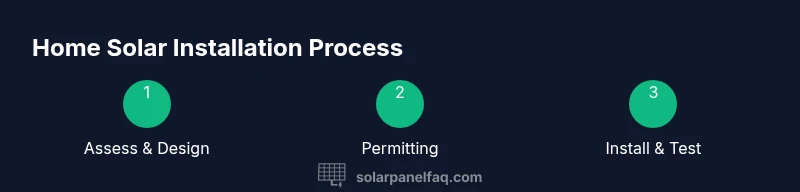
Estimated time: 1-2 days on-site (excluding permit lead times). Permitting times vary by jurisdiction.
- 1
Assess energy needs and site
Collect a full year of utility bills, identify daily usage, and note roof orientation, shading, and available space. This establishes the baseline for system sizing and layout.
Tip: Use a shading map tool or app to estimate sun exposure across seasons. - 2
Design the system and select components
Choose an inverter type (string or microinverters) and size the array to meet daytime consumption. Plan wiring routes, mounting method, and a safe disconnect strategy.
Tip: Oversize slightly for growth and efficiency losses; confirm compatibility with local codes. - 3
Secure permits and interconnection
Submit plans to the local building department and utility. Obtain electrical and roof permits, and sign interconnection agreements if grid-tied.
Tip: Prepare documentation in advance (schematics, product datasheets) to avoid delays. - 4
Prepare the site and mount hardware
Install roof mounts or ground mounts, ensuring level mounting and appropriate fasteners for wind loads. Verify roof integrity before mounting.
Tip: Use sealant and flashing where required to prevent leaks; test mounting tolerances. - 5
Install panels and wiring
Attach modules to racks, run DC wiring to the combiner, and route cables safely to the inverter area. Maintain clean, organized cable management.
Tip: Secure cables with clips and protect from sharp edges; avoid pedestrian paths under wiring. - 6
Install the inverter and connect to service panel
Mount the inverter, connect DC strings, and wire to the AC disconnect and main service panel per code. Double-check polarity and labeling.
Tip: Have a licensed electrician review connections before energizing. - 7
Perform commissioning and testing
Power up the system, verify voltage and current readings, and confirm proper net metering setup with the utility.
Tip: Document all readings and keep a log for future maintenance. - 8
Schedule inspections and monitor performance
Arrange final inspections and set up ongoing monitoring to ensure sustained performance and safety.
Tip: Set up an alert system for anomalies such as rapid output drop or unusual inverter temperature.
Frequently Asked Questions
What is the first step to powering a house with solar panels?
Begin with a thorough energy assessment and roof/site evaluation. This informs system sizing and layout, preventing oversights that affect performance.
Start with an energy assessment and site evaluation to size your system correctly and plan the layout.
Do I need permits to install solar panels at home?
Yes, most locations require building and electrical permits, plus interconnection approval if you connect to the grid. Check with your local authority early.
Permits are usually required; check with your local government and utility for specifics.
What is net metering and why is it important?
Net metering credits you for excess energy sent to the grid, reducing net electricity costs. It significantly affects payback and system economics.
Net metering credits excess solar energy, influencing payback and savings.
Can I install solar panels myself?
DIY installation is possible but risky. Electrical work should be performed by a licensed professional to ensure safety and code compliance.
It’s possible to DIY, but it’s safer and wiser to hire a licensed electrician for electrical work.
What maintenance does a home solar system require?
Keep panels clean, inspect mounting hardware, check wiring for wear, and monitor inverter health. Schedule periodic professional inspections.
Regular cleaning and inspections help maintain performance; consider periodic professional checks.
How much do solar systems cost and what about incentives?
Costs vary with system size, location, and incentives. Local rebates and tax credits can impact payback; consult a solar professional for a tailored estimate.
Costs vary; incentives can improve payback—consult a professional for a precise estimate.
Watch Video
Top Takeaways
- Size the system to cover daytime energy needs.
- Understand permitting, interconnection, and local incentives.
- Grid-tied with net metering is typical for homes.
- Safety and professional installation matter for reliability.
- Ongoing monitoring helps optimize performance and savings.