How to Install Solar Panels at Home: A Step-by-Step Guide
Comprehensive, practical guidance for homeowners on installing solar panels at home, including planning, permits, mounting, wiring, commissioning, and maintenance for reliable solar energy.


This guide shows you how to install solar panel in home safely and effectively, covering planning, permits, equipment selection, mounting options, wiring, and commissioning. It highlights safety, code compliance, and maintenance, plus how incentives and inspections fit into the process. With a solid plan, local permits, and the right tools, you can move from assessment to a working solar array.
Is Your Home a Viable Candidate for Solar?
Before diving into an installation, assess whether your home can efficiently host a solar panel system. Look at roof orientation, tilt, and shading across the day; a south- or west-facing roof often yields the best output in many regions. Check the existing electrical service capacity and whether your roof structure can support the нагрузки. If your home uses a lot of electricity or you have clear sun exposure for most of the day, solar is generally worth considering. The Solar Panel FAQ team emphasizes starting with a professional site assessment to identify any obstacles, from roof condition to shading from trees. The intuition is simple: a solid sun window, a durable structure, and a compliant electrical setup are the trifecta for a successful installation.
In addition to roof viability, consider whether a ground-mount option or a hybrid arrangement could better suit your property. For many homeowners, a well-planned system can reduce grid dependence and lower monthly bills, especially when paired with net metering. This introductory evaluation sets the stage for more detailed planning and ensures you invest in the right system size and mounting approach.
Planning and Permits: What You Need to Know
Planning is the backbone of a smooth installation. Start by identifying your objectives (maximal energy independence vs. cost savings), then map out the anticipated system size based on past energy usage. Obtain any required permits from the local building department and coordinate with your utility for interconnection and net metering rules. You will likely need a structural permit for mounting hardware and an electrical permit for wiring and inverters.
A critical step is arranging a professional assessment to confirm roof integrity, wire routing, and access to the electrical panel. The Solar Panel FAQ analysis highlights that early permit exploration can prevent last-minute red tape and delays. Collect quotes from licensed installers if you’re not doing the work yourself, ensuring they cover mounting, wiring, disconnects, and inspections. Finally, verify that your plans comply with local codes and fire safety requirements for rooftop installations.
System Design: Panels, Inverters, and Storage Options
System design involves selecting solar panels, inverters, and whether to include storage. Panels come in various wattages and efficiencies; higher-efficiency modules yield more energy on limited roof space but at a higher price per watt. Inverters can be string-type, microinverters, or power optimizers; each has pros and cons related to shading tolerance and maintenance. If you’re pursuing energy storage, batteries add resilience but also cost and maintenance considerations. The design should balance shade tolerance, wiring topology, and available roof area with your budget and energy goals. The goal is to maximize renewable production while ensuring safe, code-compliant electrical connections.
Roof vs Ground Mount: Choosing the Best Installation
Roof mounting is common and space-efficient but depends on roof condition and orientation. Ground mounts offer flexibility for optimal sun angles and easier maintenance, but require more yard space and a stable foundation. In both cases, ensure proper wind load ratings and corrosion-resistant hardware. For roofs, verify shingle health and roof age to avoid early leaks; for ground mounts, plan for corrosion-resistant steel or aluminum framing and consider snow weight and drainage. The choice influences system cost, maintenance, and long-term performance, so evaluate all factors with a qualified installer.
Sizing Your System: Calculating Power Needs
A practical sizing approach starts with your annual electricity consumption (kWh). Translate that into a daily average usage and then determine the system size needed to meet or offset that usage. Consider local sun hours, seasonal variations, and system losses (inverter efficiency, wiring, and temperature effects). A common rule is to target a system that covers a substantial portion of your annual usage while leaving headroom for future electricity needs. Use a reputable calculator or consult a licensed professional to avoid undersizing or oversizing the system.
Selecting Equipment: Panels, Inverters, Racking, and Connectors
Equipment selection blends performance, reliability, and cost. Choose panels with a solid track record, warranty coverage, and appropriate wattage for your roof space. Decide between microinverters and central/string inverters based on shading patterns and maintenance preferences. Racking and mounting hardware must be rated for your roof type and local wind loads, with proper sealing to prevent leaks. Cables, connectors, and combiner boxes should meet solar wiring standards. Budget for quality junction boxes, disconnects, and safety switches to ensure safe, compliant operation.
Installation Phases: Mounting, Wiring, and Electrical Work
The installation process occurs in logical phases: mount the racking first, then attach solar panels, route DC cables through weatherproof conduits, install the inverter(s), and connect the system to the electrical panel. Ensure all electrical work follows code requirements and uses properly rated components. The crucial moments are securing panels securely, keeping wiring tidy and protected, and installing a DC disconnect close to the main service panel. Schedule testing and commissioning once wiring is complete to verify safety and output.
Safety, Codes, and Inspections
Solar installations involve high voltages and roofwork; never skip safety procedures. Wear PPE, use fall protection, and follow ladder safety protocols. Electrical work typically requires licensing and inspections. Your local authority may require an electrical permit, inspection of mounting hardware, wiring, inverters, and interconnection with the grid. Any deviation from code compliance can void warranties and complicate insurance claims. Before signing a contract, confirm the installer’s adherence to safety standards and inspection schedules.
Commissioning, Monitoring, and Maintenance
Commissioning validates system performance and safety. After completion, verify that the system produces expected energy and that monitoring software is reporting correctly. Set up alerts for underperformance or faults and schedule periodic inspections of panels and wiring. Routine maintenance includes cleaning panels to remove dust or debris and inspecting mounting hardware for corrosion or loosening. With proper maintenance, a residential solar setup can deliver years of reliable energy and financial benefits.
Costs, Incentives, and Payback Considerations
Costs for solar installations vary with system size, equipment, and labor. Rather than focusing on a single price, evaluate total installed cost per watt, including mounting, wiring, inverters, and labor. Look for incentives that reduce net cost, such as tax credits, rebates, and utility programs, and consider long-term savings from reduced electricity bills. The Solar Panel FAQ analysis 2026 notes that incentives differ by region, so consult a local contractor and your utility to understand current opportunities and potential payback timelines.
Tools & Materials
- Roof or ground mounting kit(Includes rails, brackets, and fasteners compatible with roof type)
- Solar panels (modules)(Quantity based on system size)
- Inverter (string or microinverters)(DC to AC conversion; match with panel configuration)
- Junction box and conduit(Weatherproof, UL-listed for outdoor use)
- Combiner box (if using multiple strings)(Organizes DC wiring safely)
- Disconnect switch(Accessible per code, protects during service)
- Electrical wiring rated for solar(Cables, lugs, connectors meeting standards)
- Grounding equipment(Bonding straps and ground rods where needed)
- PPE: gloves, safety glasses, hard hat, fall protection(Safety first during heights and electrical work)
- Tools: drill, torque wrench, screwdrivers, multimeter(Essential for fastenings and testing)
- Sealant and weatherproofing materials(Prevent water intrusion at penetrations)
- Permits and inspection fees(Budget for local permit costs)
- Roof reinforcement materials (if needed)(Only if structural assessment indicates)
Steps
Estimated time: 1-3 days
- 1
Assess site and plan
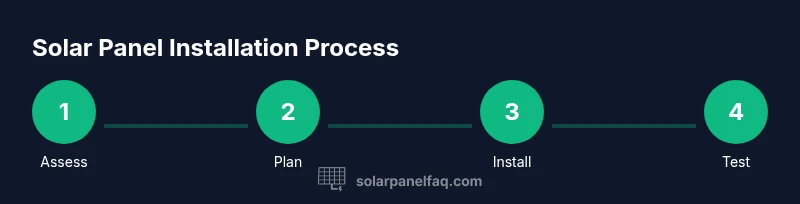
Conduct a thorough site inspection to confirm sun exposure, roof condition, and electrical capacity. Create a rough layout with panel counts and wiring routes to minimize shading and maximize output.
Tip: Take multiple measurements from different angles and note any obstructions. - 2
Obtain permits and schedule inspection
Contact the local building department and utility to determine required permits, interconnection agreements, and inspection timelines. Gather documentation from your installer if needed.
Tip: Ask about inspection windows and what documentation to prepare. - 3
Choose mounting style and install racking
Select roof or ground mounting based on space, structure, and accessibility. Install the mounting rails securely, ensuring proper alignment and wind load ratings.
Tip: Double-check level alignment before securing panels. - 4
Attach panels to the racking system
Mount the solar modules using appropriate clamps or rails, ensuring firm support and proper clearance for thermal expansion.
Tip: Leave space for expansion and thermal movement. - 5
Route ducts and wire DC circuits
Run DC cabling through weatherproof conduits, connect to the combiner box if used, and install a DC disconnect within reach of the main panel.
Tip: Keep cables away from heat sources and sharp edges. - 6
Install inverter and electrical connections
Mount the inverter in a cool, accessible location; wire PV strings to the inverter according to manufacturer instructions and code requirements.
Tip: Follow polarity and torque specs precisely. - 7
Connect to the building electrical panel
Interconnect the solar system with the main service panel per local code. Ensure proper labeling and a clear disconnect switch for technicians.
Tip: Coordinate with your utility for net-metering setup. - 8
Test, commission, and verify output
Power up the system, check voltage and current readings, and confirm production matches design expectations. Address any faults before final approval.
Tip: Run the system through a full daytime test. - 9
Set up monitoring and plan maintenance
Install monitoring software or hardware to track production and performance. Schedule periodic inspections and cleaning to sustain efficiency.
Tip: Create a maintenance calendar and alert reminders.
Frequently Asked Questions
Do I need a permit to install solar panels at home?
Yes, most jurisdictions require permits and inspections for solar installations. Check with your local building department and interconnection rules with your utility.
Yes. Most places require permits and inspections for solar panel installations; check with your local building department and utility for interconnection requirements.
Can I install solar panels myself, or should I hire a pro?
Some non-electrical tasks can be done by a capable homeowner, but electrical work and roof safety typically require licensed professionals. A pro ensures code compliance and warranty validity.
You can handle some tasks, but electrical work usually needs a licensed professional to stay compliant and protect warranties.
How long does a typical residential solar installation take?
Most residential installs span 1-3 days, depending on system size, roof type, and permitting timelines. Some planning and inspections may add extra days.
Usually, it takes about a day or two for installation, with a bit more time for permits and inspections.
What maintenance is required after installation?
Keep panels clean and free of debris; monitor inverters and performance. Schedule periodic inspections of mounting hardware and wiring for corrosion or looseness.
Clean the panels occasionally and monitor performance, with periodic checks on mounting and wiring.
Roof mounting or ground mounting—which is better?
Roof mounting saves space and is common, but depends on roof condition and shading. Ground mounts offer easier access and optimal sun angles but require more land.
Roof mounts are common and space-saving, while ground mounts offer flexibility—choose based on space and sun exposure.
Are there incentives for home solar installations?
Incentives vary by location and can include tax credits, rebates, and utility programs. Check local programs and consult a professional to maximize benefits.
Yes, many regions offer tax credits or rebates; check with local programs and your installer for current opportunities.
Watch Video
Top Takeaways
- Assess site viability before design.
- Plan permits and interconnection early.
- Choose mounting and inverter types based on shade and space.
- Size the system to meet usage while allowing for growth.
- Prioritize safety, codes, and ongoing maintenance.