House with Solar Panel: A Step-by-Step Guide for Homeowners
Learn how to evaluate, size, and install a solar panel system on your house. This guide covers roof suitability, permits, financing, and working with licensed installers for safe solar power.


This guide helps homeowners determine how a house with solar panel can be powered by solar energy. You’ll begin by assessing annual energy use and roof suitability, then size the system to meet demand, evaluate financing options, and secure permits. The final step is to hire a licensed installer to perform the electrical work and commissioning, ensuring safety and code compliance.
Why households pursue solar panels
According to Solar Panel FAQ, a house with solar panel is a practical upgrade for homeowners seeking lower energy bills, greater energy independence, and a smaller carbon footprint. Solar technology lets you convert sunlight into electricity that offsets daytime consumption and can reduce reliance on the grid during peak hours. The Solar Panel FAQ team notes that most households begin with clear objectives: lower utility costs, add resilience, and increase home value. Beyond the financial angle, solar panels contribute to predictable energy costs and long-term planning. In this section, we’ll explore the core benefits and upfront considerations homeowners should weigh before committing to a roof-mounted system. We’ll also outline what professionals look for during the initial site assessment so you can decide if a house with solar panel makes sense for your family.
Roof and shading assessment
Sun exposure is the primary driver of how much energy your system can generate. A south-facing or otherwise well-oriented roof with minimal shade typically yields the best results. The age and condition of your roof matters because panels mounted on a roof in poor condition may require replacement sooner than later. The Solar Panel FAQ analysis emphasizes roof safety, mounting options, and the need for a solid attachment to support long-term performance. During a site visit, expect the installer to inspect rafters, flashing, and potential shading from trees or nearby structures. If heavy shading is present, alternatives like microinverters or newer panel layouts may help optimize output. This step sets the foundation for an accurate system size and long-term reliability.
System sizing and energy planning
Sizing is about matching expected energy output to your household demand without overbuilding. Start with your twelve-month utility data to estimate daytime and nighttime usage, then discuss how much of that load you want to offset with solar. The goal is a system that covers a meaningful portion of energy use while leaving room for growth, such as an EV charger or battery storage. The Solar Panel FAQ team notes that incentives and utility rules can influence optimal sizing, so work with a skilled advisor to model different scenarios and choose a configuration that aligns with your budget and climate. You should also consider seasonal variation and how it affects the average daily production.
Panels, inverters, and mounting options
Modern solar systems comprise three core components: panels, inverters, and mounting hardware. Panels come in several crystalline types, each with trade-offs for efficiency, temperature tolerance, and cost. Inverters convert DC electricity to usable AC power and can be central, string, micro, or hybrid — the choice depends on roof layout and monitoring goals. Mounting options range from fixed rails on a sloped roof to ground-mounted systems on level terrain. The Solar Panel FAQ analysis highlights how different configurations affect maintenance needs and performance monitoring. Your installer will help you select a combination that matches your roof type, budget, and aesthetic preferences while ensuring a secure, code-compliant installation.
Financing, incentives, and ownership models
Outside of the upfront purchase price, the total cost of solar includes financing, maintenance, and potential tax credits or incentives. Owners typically benefit from higher long-term value and greater control, while lease or PPA arrangements can lower upfront costs at the expense of long-term savings and flexibility. Incentives vary by region, utility, and program availability, so it’s important to gather multiple financing options and read the fine print on warranties and performance guarantees. The Solar Panel FAQ team recommends modeling scenarios with and without incentives to understand true payback and ROI, and to factor in potential increases in home value alongside energy savings.
Permitting, safety, and local code compliance
Most jurisdictions require permits for roof work and electrical interconnection. The process often involves submitting plans, paying fees, and scheduling inspections with municipal or state authorities. Safety is non-negotiable: electrical work should be performed by a licensed electrician or solar installer, and roof work should follow fall-protection standards. Utility interconnection may require additional steps, such as net metering approval or feeder upgrades. Early coordination with your local building department helps prevent delays and ensures your system meets structural, electrical, fire-safety, and electrical code requirements. The Solar Panel FAQ team emphasizes following official guidelines to safeguard your home and neighbors.
Working with installers and contracts
Choosing a reputable installer is as important as selecting equipment. Look for licenses, insurance, and warranties; ask for a detailed written proposal that includes system size, layout, equipment brands, timeline, and warranties. Compare multiple bids and check references or past project photos. Sign contracts that clearly define performance guarantees, maintenance responsibilities, and what happens if output does not meet promised levels. The Solar Panel FAQ analysis suggests requesting model numbers, inspection checklists, and contact points for after-install support, so you know who to reach if issues arise.
Monitoring, maintenance, and warranties
After commissioning, your system should be monitored for performance and health. Many inverters and monitoring platforms provide real-time dashboards showing production, usage, and potential faults. Routine maintenance is minimal but important: keep panels clean on sunny days, inspect for debris or shading, and verify that wiring and disconnects are secure. Warranties typically cover panels and inverters for a defined period; keep documentation handy for future claims. The solar ecosystem evolves with firmware updates and new monitoring features, so maintain awareness of the latest options. Staying engaged with your system’s performance helps you catch issues early and protect your investment.
Real-world scenarios, myths, and next steps
Residential solar has become a practical option for many homes, but common myths persist. For example, some homeowners assume cloudy climates negate value; in reality, solar still produces power on overcast days, albeit at lower rates. Others expect immediate energy independence; in most cases grid connection remains essential, with solar providing daytime offset and backup options. A well-planned project becomes part of a broader home improvement strategy that includes energy efficiency and load management. If you’re ready, start by collecting your last year of energy bills, consult at least two qualified installers, and compare plans. The Solar Panel FAQ team recommends conducting a site assessment, reviewing contracts carefully, and choosing a configuration that aligns with your goals and budget while protecting your home’s value.
Tools & Materials
- Digital energy usage data source(Utility bill or usage history for 12 months)
- Roof assessment tools(Simplified tool or app for shading and orientation checks)
- Roof condition inspection checklist(Structural integrity, rafters, flashing condition)
- System sizing calculator(Spreadsheet or online tool to model production vs usage)
- Permitting guide or local code references(Local building codes and permit checklists)
- Licensed solar installer contact info(Phone and email of at least two qualified professionals)
- Contract and financing documents(Proposals, warranty terms, and insurance certificates)
- Safety gear(Helmet, non-slip footwear, fall protection)
- Basic site visit tools(Measuring tape and camera for documentation)
Steps
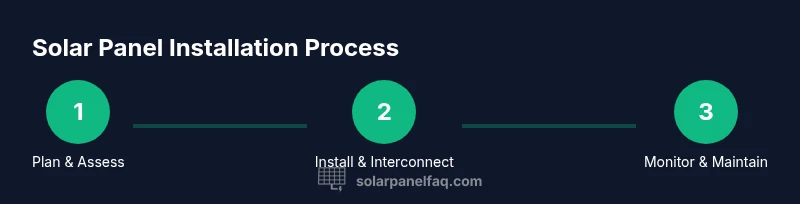
Estimated time: 6-12 weeks
- 1
Define goals and baseline usage
Collect a full year of energy bills and identify peak usage times. Establish goals for daytime offset and resilience to guide system sizing and financing decisions.
Tip: Grab latest bills and note any upcoming appliance upgrades that could change demand. - 2
Check roof orientation and shading
Assess roof direction, tilt, and shading from trees or nearby structures. Shade-free or minimal-shaded roofs maximize production.
Tip: Use a sun-path app or simple shade analysis around noon to map potential blockers. - 3
Estimate system size and components
Model expected production against usage to decide on panel count, inverter type, and mounting method. Consider future needs like a storage system or EV charging.
Tip: Run several scenarios to compare grid-only, grid-tied with storage, and storage-only options. - 4
Explore financing and incentives
Review ownership models and available incentives. Compare upfront costs, long-term savings, and warranty coverage across options.
Tip: Ask installers for side-by-side comparisons detailing ROI and maintenance requirements. - 5
Plan permits and select a contractor
Identify required permits and interconnection steps. Shortlist two or more licensed installers and request detailed written proposals.
Tip: Check references and confirm insurance coverage and warranty terms before signing. - 6
Prepare for electrical and roof work
Coordinate with your electrician and roofers to align schedules and access. Ensure safety protocols and fall protection are in place.
Tip: Insist on a written plan with sequencing and access routes to minimize roof wear. - 7
Complete installation and interconnection
Install mounting hardware, mount panels, and connect the inverter. The system is typically grid-tied and inspected by the local authority.
Tip: Only licensed professionals should perform electrical connections and interconnections. - 8
Commission and confirm performance
Attend the commissioning and verify production meets the modeled estimates. Confirm grid-tie and safety disconnects function correctly.
Tip: Request the as-built drawings and performance data for future service. - 9
Set up monitoring and plan maintenance
Enable system monitoring and review dashboards regularly. Schedule periodic cleaning and inspections as recommended by the manufacturer.
Tip: Create a maintenance calendar and keep warranty documents organized.
Frequently Asked Questions
Can my roof support solar?
Roof orientation, shading, and age affect performance. A professional assessment confirms suitability and mounting strategy.
Roof orientation, shading, and age affect performance. A professional assessment confirms suitability and mounting strategy.
Are permits required for solar installation?
Most areas require building and electrical permits and interconnection approvals. Your installer guides you through the process.
Most areas require building and electrical permits and interconnection approvals. Your installer guides you through the process.
What is net metering?
Net metering credits excess daytime production back to the grid. Availability and rules vary by utility and region.
Net metering credits excess daytime production back to the grid. Availability and rules vary by utility and region.
Buy vs lease solar panels?
Owning typically yields higher long-term value and control. Leasing lowers upfront costs but reduces long-term savings and flexibility.
Owning typically yields higher long-term value and control. Leasing lowers upfront costs but reduces long-term savings and flexibility.
How long does installation take?
Planning, permitting, and interconnection take weeks. Installation day itself is usually a few hours to a day depending on system size.
Planning, permitting, and interconnection take weeks. Installation day itself is usually a few hours to a day depending on system size.
What maintenance do solar panels require?
Maintenance is minimal: occasional cleaning, monitoring performance, and checking inverters and wiring for faults.
Maintenance is minimal: occasional cleaning, monitoring performance, and checking inverters and wiring for faults.
Top Takeaways
- Assess roof and energy needs before committing
- Choose components suited to climate and budget
- Leverage incentives and financing to improve ROI
- Work with licensed installers for safety and compliance