Solar Panel Installation Roof: A Step-by-Step Guide
Learn how to install rooftop solar panels with a clear, safety-first plan. From planning and permits to mounting, wiring, and maintenance, this step-by-step guide helps homeowners understand roof installations for sustainable energy.


You can install solar panel roofing by selecting a suitable roof, obtaining permits, and following a step-by-step installation plan. This guide covers assessment, material choices, mounting, wiring, and safety precautions. You’ll learn what tools you need, typical timelines, and essential safety checks. It is written for homeowners and aligns with Solar Panel FAQ guidance.
Why roof installation is the standard choice
Roof-mounted solar panels are the most common solution for residential power independence because they maximize sun exposure along the building's axis and minimize wiring length. For homeowners, a properly designed roof installation can blend with the home’s appearance while delivering steady, predictable energy generation. According to Solar Panel FAQ, roof installations often offer the best balance of performance, cost, and future maintenance, provided the roof is in good condition and structural support is adequate. This approach reduces ground-space needs and simplifies aesthetics, while keeping the system close to the existing electrical service panel. While ground mounts offer flexibility, roof installations typically yield quicker permits and easier maintenance access, especially in urban settings where space is at a premium. Plan for roof age, material, and possible warranty implications to avoid later setbacks.
Planning and site assessment
Successful rooftop solar installation starts with a thorough plan. Evaluate the roof’s age, material (asphalt shingle, metal, or tile), and current waterproofing condition. Map sun exposure across seasons using simple shadow analysis: identify nearby trees, chimneys, and vents that could cast shade. Confirm electrical service capacity and whether a permit is required by local authorities. Create a layout that favors south or southwest orientation where possible, while keeping modules unobstructed. Consider wind loads, snow risk, and access for future cleaning or repairs. Document any roof penetrations and seal any existing leaks before mounting.
Roof compatibility and structural checks
Not all roofs are equally suited for rooftop solar. Structural integrity matters: the roof deck must support the added weight of modules and racking, plus dynamic loads from wind and maintenance work. A professional assessment helps verify truss spacing, joist capacity, and roof slope compatibility with a chosen mounting method. If the roof is nearing the end of its life, some homeowners choose to replace the roof before installation to avoid repeated penetrations. Verify warranty terms: some manufacturers require specific mounting methods to preserve roof or product warranties. When in doubt, involve a licensed solar contractor or structural engineer to perform load calculations and provide documentation.
Module and racking options
Solar modules come in various efficiency levels and formats (monocrystalline, polycrystalline, and thin-film options are common). Module choice affects output, aesthetics, and warranty terms. Racking options include flush mounts, sloped-tilt systems, and ballasted configurations for flat or low-slope roofs. Choose a mounting system that minimizes roof penetrations while providing solid wind resistance and proper module spacing for cooling. Plan for conduit routing that keeps wiring tidy and accessible for inspections. Use certified components and verify compatibility with your inverter and electrical system to maximize performance and safety.
Tools, materials, and safety gear
Assemble a complete toolbox well before starting. You’ll need mounting rails, brackets, screws, and non-penetrating or penetrating attachment hardware depending on your roof type. Include an inverter, DC disconnect, AC breakers, conduit, MC4 connectors, and weatherproof junction boxes. Have safety gear on hand: fall protection, harness, non-slip footwear, gloves, hard hat, and eye protection. Keep a torque wrench calibrated to the mounting hardware specifications, a drill/driver with correct bits, and a insulated multimeter for electrical checks. Stock sealant and flashing materials appropriate for your roof surface to protect against leaks after installation. Document all steps with photos for permit inspections and future maintenance.
Step-by-step installation overview
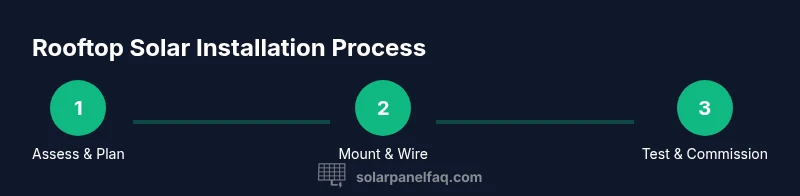
This section provides a high-level sequence you’ll follow in the field. Start with site verification and permit readiness, then move to mounting rails and brackets, attach panels, route wiring through approved conduits, install the inverter and DC/AC interconnections, perform safety and performance tests, and finally schedule the required inspections. Throughout, maintain clean labeling, ensure proper grounding, and keep a log of all components and serial numbers for future warranty claims. Remember that every roof and system layout is unique and may require adjustments to this outline.
Electrical wiring and grid interconnection
Wiring rooftop arrays involves both DC wiring from modules to the DC disconnect and AC wiring from the inverter to the service panel. Use appropriately rated conduit, weatherproof connectors, and separate circuits as required by code. A skilled electrician should handle the interconnection to the grid, perform insulation resistance checks, and coordinate with the utility for net metering or feed-in arrangements. Ensure proper grounding and install labeling on all disconnects, breakers, and junction boxes for safety and future maintenance. Always follow local code requirements and manufacturer installation manuals to prevent faults.
Inspection, permits, and commissioning
After installation, most jurisdictions require a building and electrical permit review, plus an inspection by the local authority. Have documentation ready that shows structural compliance, component certifications, and testing results. The commissioning process typically includes verifying production under standard conditions, confirming safety clearances, and ensuring that the system interfaced correctly with the existing electrical system. When inspections are complete, receive final approvals and start your monitoring system to track performance. Keep a copy of all permits, schematics, and warranty documents in a accessible place.
Maintenance and monitoring after installation
Rooftop solar requires periodic attention but is relatively low maintenance. Schedule regular cleanings to remove dust, leaves, or bird droppings that reduce shade-free exposure. Use monitoring software or inverters’ built-in dashboards to track energy production and detect anomalies early. Check for any roof penetrations, flashing seals, or mounting corrosion during annual inspections. If you notice a drop in performance, consult your installer or a licensed electrician to diagnose potential shading changes, inverter faults, or module degradation. Maintaining records promotes system longevity and supports warranty claims.
Cost considerations and long-term value
Cost considerations for rooftop solar vary with system size, roof orientation, module efficiency, and local incentives. While not a precise price tag, you can expect a range in rough terms based on typical configurations in many regions. Remember that higher-efficiency modules and optimal placement can improve payback periods by generating more energy over time. In the long run, rooftop installations can increase home value, reduce energy bills, and contribute to a more sustainable home energy profile. Factor in maintenance costs and potential roof resealing when calculating overall value.
Tools & Materials
- Solar panels (modules)(Certified photovoltaic modules sized for residential rooftops; consider warranty and efficiency)
- Roof mounting rails/tracks(Wear-resistant rails suitable for your roof type (shingles, metal, tile))
- Racking system and mounting hardware(Includes brackets, screws, and seam flashing as needed)
- DC disconnect switch(Weatherproof enclosure placed near the array for safety)
- Inverter (string or microinverters)(Converts DC to AC; choose based on system design)
- Combiner box and conduit(DC conduits and overcurrent protection as required by code)
- Electrical wiring (DC/AC cables)(Appropriately rated wires with proper insulation and jackets)
- Grounding equipment(Ground rods, clamps, and bonding conductors as needed)
- MC4 connectors and adapters(Weatherproof, code-compliant coupling for modules)
- Safety gear(Harness, helmet, gloves, non-slip shoes, eye protection)
- Tools (drill, torque wrench, screwdrivers)(Use torque values per mounting hardware specs)
- Sealant and flashing for roof penetrations(Roof-specific sealants to prevent leaks)
- Multimeter and insulation tester(For voltage checks and safety testing)
- Permitting paperwork(Building and electrical permits; keep copies for records)
- Monitoring system(Optional sensors or software to track performance)
Steps
Estimated time: 2-4 days
- 1
Assess site and permits
Review roof condition, orientation, and shading. Confirm permit requirements and utility interconnection rules. Create a layout that prioritizes southern exposure and minimizes shading. This foundational step sets the stage for safety and performance.
Tip: Engage a licensed professional for structural checks if the roof is older or damaged. - 2
Prepare safety plan and access
Establish fall protection, ladder safety, and a clear workspace on the roof and near the electrical panel. Verify access routes for equipment and staging. Prepare all tools and safety gear before climbing.
Tip: Always have a buddy on site during roof work and keep a first-aid kit handy. - 3
Install mounting rails and brackets
Attach rails to the roof using the selected mounting method. Ensure rails are level, parallel, and properly spaced to accommodate module size. Seal penetrations with appropriate flashing to prevent leaks.
Tip: Double-check alignment with a straightedge and verify load distribution on rafters. - 4
Attach solar panels to rails
Mount modules to rails with bolts or clamps, keeping consistent gaps for cooling and expansion. Tighten fasteners to specified torque values and avoid overtightening that could crack frames.
Tip: Work from the bottom row upward to maintain balance and safety. - 5
Route DC wiring and install disconnect
Connect panel strings with MC4 connectors; route wires through conduits to the DC disconnect. Install the disconnect in an accessible, weatherproof location near the array.
Tip: Label each string for easy troubleshooting and future maintenance. - 6
Install inverter and electrical components
Mount the inverter in a ventilated, shaded area close to the main service panel if possible. Wire DC side to the disconnect and AC side to the main panel, following local codes. Ground and bond all components as required.
Tip: Avoid placing the inverter in sealed spaces; ensure adequate airflow. - 7
Connect to service panel and grid
Coordinate with the utility for net metering or feed-in agreements. Ensure interconnection approval is documented and the main breaker accommodates additional load.
Tip: Have the utility account numbers and permit documents ready for fast processing. - 8
Label, test, and verify operation
Power up in a controlled sequence, perform voltage checks, and verify readings match expected production. Use monitoring tools to confirm string and inverter performance.
Tip: Document test results and comparison against baseline expectations. - 9
Schedule inspection and commissioning
Arrange the required inspections with local authorities and the utility. Complete any final adjustments requested by inspectors and finalize the commissioning paperwork.
Tip: Keep copies of all certifications and warranties for future reference. - 10
Finalize documentation and training
Provide homeowners with operation guides, maintenance schedules, and warranty details. Train household members on basic monitoring and safety considerations.
Tip: Create a simple maintenance calendar to stay on track.
Frequently Asked Questions
Do I need a permit for rooftop solar installation?
Most rooftops installations require a building and electrical permit. Local codes vary, so check with your city or county and involve a licensed professional to navigate approvals.
Most rooftop solar installations require permits. Check with your local authorities and hire a licensed professional to handle approvals.
Can I install solar panels myself on the roof?
DIY rooftop solar is possible for experienced homeowners, but it involves fall hazards and complex electrical work. Many jurisdictions require licensed electricians for grid connections.
DIY installation is risky and often requires a licensed electrician for the electrical work.
How long does rooftop solar installation take?
Time varies with system size and roof complexity; projects typically span several days from planning to commissioning.
It varies, usually several days depending on roof size and permitting.
What maintenance does rooftop solar require?
Rooftop solar generally requires periodic cleaning and inverter checks; monitor performance data for anomalies and schedule annual inspections.
Maintenance includes cleaning, inspections, and monitoring performance.
Will rooftop installation affect my roof warranty?
Installing panels can affect warranties; verify mounting methods and sealing with the roof manufacturer and installer.
It can; check with the manufacturer and installer about mounting and seals.
Do I need an electrician for grid connection?
Yes, for safety and code compliance a licensed electrician should handle AC wiring and grid interconnection.
Yes, a licensed electrician is essential for electrical work and interconnection.
Watch Video
Top Takeaways
- Plan roof suitability before starting.
- Choose mounting and inverter types early.
- Prioritize safety, permits, and labeling.
- Expect duration to vary with roof complexity.
- Monitor performance post-install for longevity.