How to Mount Solar Panels on Roof
Learn how to mount solar panels on your roof safely and efficiently with a homeowner-friendly, step-by-step approach. This guide covers planning, roof assessment, mounting rails, sealing, and wiring considerations to help you complete a compliant installation in 2026.


You will learn how to mount solar panel on roof safely and effectively, covering site assessment, mounting rail selection, panel placement, and final sealing. This quick guide outlines essential steps, safety checks, and tool requirements so homeowners can plan a successful installation while complying with local codes and warranty guidelines. Expect practical, hands-on instructions you can apply on a typical residential roof.
Why mounting a solar panel on your roof matters
Mounting on the roof is the standard approach for most homes, offering optimal sun exposure and a cleaner look than ground installations. A well-planned roof mount protects panels from wind uplift and ensures easier cleaning and maintenance. According to Solar Panel FAQ, the foundation of any successful roof-mounted system is thorough planning, an honest load assessment, and strict adherence to local codes. Start by outlining the roof section you’ll use, noting orientation, prevailing sun hours, and any potential shading from nearby trees or chimneys. Map out the required tilt (if any), rail length, and clearances around vents or skylights. A precise layout reduces waste, avoids unnecessary penetrations, and streamlines inspection and warranty procedures. By prioritizing safety and compatibility with your roof type, you minimize risks and optimize energy production. The Solar Panel FAQ team emphasizes that a robust plan saves time and protects the roof, the system, and your home.
Safety and compliance: staying on the right side of the code
Roof work brings unique hazards, including falls, weather changes, and electrical concerns. Before climbing, ensure you have fall protection equipment, a stable ladder setup, and a buddy system for supervision. Wear gloves, non-slip footwear, and a hard hat if your site requires it. Check the forecast for wind or rain and avoid roof work in these conditions. Many jurisdictions require permits or inspections for roof-mounted solar projects, so contact your local building department early in the process. Keep access clear for future servicing, and document all safety procedures for reference. Following manufacturer guidelines and local codes minimizes risk and helps preserve warranties. As you plan, remember that roof mounting is a long-term investment; safety today prevents costly repairs later, a point frequently highlighted by Solar Panel FAQ.
Roof assessment and mounting options
Not all roofs are created equal when it comes to solar mounting. Asphalt shingles, metal, clay, and concrete tiles each demand different flashing methods and fastener types. Evaluate roof age, structural integrity, and the underlying rafters or trusses. A common practice is to align rails with existing framing to maximize support and reduce leakage risk. Tilt and orientation affect energy capture; if your roof already has a favorable angle and minimal shading, you may opt for closer module spacing to enhance aesthetics and reduce wind load. If you have a complex roof with dormers or multiple planes, you may need more custom racking or multiple arrays. Regardless of roof type, plan for accessible wiring routes, roof penetrations, and proper sealing to prevent leaks and moisture buildup. The goal is a sturdy, weather-tight mounting that lasts for decades while maintaining optimal performance.
Planning, permits, and material readiness
A successful mount starts with organization. Create a detailed bill of materials based on your chosen mounting system and panel count. Obtain any required permits and verify HOAs or neighborhood rules to avoid delays. Gather essential tools: measuring tape, level, marker, drill, and safety gear, plus all mounting rails, clamps, end clamps, and fasteners suited to your roof material. Review manufacturer installation manuals and ensure compatibility with your solar modules and inverter. Check weatherproofing details such as flashing around vents and roof penetrations, and prepare sealants that are approved for outdoor use on your roof substrate. Having a clear procurement plan reduces last-minute trips to the hardware store and helps you stay on schedule as you move toward installation.
Installing the mounting system: alignment and sealing basics
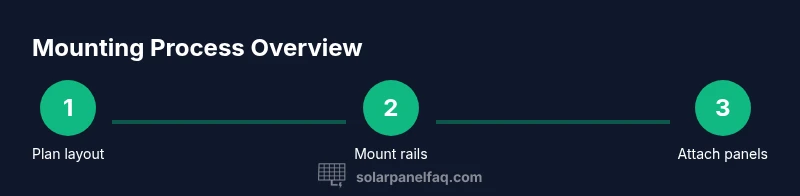
With layout confirmed, begin installing the mounting rails onto the roof following the manufacturer’s instructions. Use a level to confirm straight alignment and a string line to keep rails parallel across the whole array. Fasten securely into rafters or joists, not just into shingles or thin sheathing. Attach clamps and midpoints according to the panel count, and pre-drill where required to prevent cracking. When penetrations are necessary, apply the appropriate flashing and sealant to seal against leaks. After rails are anchored, mount the solar modules onto the rails, secure edge clamps, and ensure consistent gaps for thermal expansion and cleaning. Finally, perform a basic integrity check, re-check alignment, and verify that all connections align with local electrical codes.
Commissioning and long-term care
After mounting, verify that modules are clean, unobstructed, and properly connected to the junction box or combiner if used. If you’re handling DC wiring, follow code requirements and refer to the inverter and module documentation. In many regions, a licensed electrician must complete the wiring of the system into your electrical panel. Schedule a professional inspection to confirm compliance and warranty eligibility. Routine maintenance, such as cleaning panels and inspecting seals, helps sustain performance and extends the life of the system. Keep warranty documents and installation records in a safe place for future reference and service.
Tools & Materials
- Ladder and fall protection gear(Use a stable extension ladder rated for your height)
- Safety harness and lanyard(Anchor points installed per manufacturer guidelines)
- Roof mounting rails and brackets(Choose rail length to accommodate module count)
- End clamps and mid-clamps(For panel edge mounting)
- Fasteners compatible with roof type (screws/bolts)(Use corrosion-resistant hardware)
- Sealant/caulk for roof penetration sealing(Butyl sealant or manufacturer-approved sealant)
- Drill, driver bits, and wrench set(Phillips and Torx bits; cordless drill recommended)
- Measuring tape, marker, and chalk line(Accurate layout and alignment)
- Level or laser line tool(Ensure rails are perfectly flat)
- Roof anchors or standoff spacers(Optional for steep pitches)
- DC wiring components (junction box, MC4 connectors)(Only if performing electrical connections)
- Safety footwear and gloves(Protect hands and grip on slippery surfaces)
Steps
Estimated time: Estimated total time: 3-6 hours
- 1
Plan and verify roof structure
Confirm roof structure can support the intended load and locate potential rafters to anchor rails. Measure layout lines and verify that there is no obstruction. Document any special considerations for vents or skylights.
Tip: Check attic for access to rafters and ensure safe anchor points before climbing. - 2
Choose mounting system and layout
Select a rail system compatible with your roof type and decide on orientation, tilt, and spacing. Use a string line to confirm straight rails across the entire array.
Tip: Lay out panels on the ground first to confirm spacing before mounting. - 3
Attach mounting rails to the roof
Secure rails to rafters with approved fasteners, following the manufacturer’s torque specs. Avoid attaching to sheathing alone. Check for level alignment along the entire run.
Tip: Pre-drill holes to prevent shingle cracking and reduce wind uplift risk. - 4
Mount panels onto rails
Place panels onto rails, attach edge clamps and mid-clamps as per the plan. Ensure consistent gaps for thermal expansion and cleaning access.
Tip: Handle modules by edges, never by the frame corners to prevent micro-cracks. - 5
Wiring and electrical connections
If you are including DC wiring, route cables securely and keep them away from foot traffic areas. Follow local codes and have an electrician review main connections and the inverter interface.
Tip: In many areas, electrical work requires a licensed professional. - 6
Seal, inspect, and test
Seal penetrations with manufacturer-approved sealant and inspect for leaks. Perform a basic electrical test and verify output under sun exposure. Schedule a professional inspection if required by your local codes.
Tip: Document installation details and keep warranty packets accessible.
Frequently Asked Questions
Do I need permits to mount solar panels on my roof?
Permit requirements vary by location. Check with your local building department early, and plan for inspections if required. Solar Panel FAQ notes that following local rules helps ensure safety and warranty validity.
Permit needs vary by location; check with your local building department before starting the project.
Can I mount solar panels on a shingle roof?
Yes, many shingle roofs can support solar mounts with proper flashing and mounting hardware. Ensure you follow the manufacturer’s instructions and seal penetrations to prevent leaks.
Yes, but use correct flashing and seals to protect the roof.
Is electrical work required for rooftop mounting?
Most installations require electrical work beyond mounting the rails, including wiring to the inverter and connection to the electrical panel. In many regions, a licensed electrician must perform or approve wiring.
Wiring usually requires a licensed electrician and code compliance.
What about roof warranty after mounting?
Manufacturers often require professional installation to keep warranty coverage intact. Review your roof and panel warranties for any limitations related to DIY mounting.
Warranties may require professional installation—check specifics.
How long does a typical roof mount take?
Duration depends on roof type, layout, and who conducts the work. Expect several hours to a full day for a standard residential system, with longer timelines if wiring or permits add steps.
It usually takes several hours to a full day, depending on roof type and permits.
Watch Video
Top Takeaways
- Plan safely before starting and verify roof structure.
- Choose mounting hardware compatible with your roof type.
- Seal penetrations properly to prevent leaks and preserve warranty.
- Coordinate electrical work with a licensed professional when required.