Solar Panel Fitting: A Practical Home Installation Guide
Learn how to fit solar panels on a residential roof, from planning and mounting to wiring, permits, and maintenance. A practical, expert-led walkthrough by Solar Panel FAQ to help homeowners decide between DIY and professional installation.


This guide teaches homeowners how to fit solar panels on a roof or ground mount, covering planning, mounting, wiring, and safety. You’ll learn when to DIY vs hire a pro, what tools you’ll need, and common mistakes to avoid. By the end you’ll understand the essential steps to complete a compliant solar panel fitting.
What does solar panel fitting involve?
Solar panel fitting is the process of placing photovoltaic panels on a roof or ground-mounted frame, securing them, and wiring them into an electrical system with an inverter and safety disconnects. It combines mechanical mounting, weatherproof sealing, electrical connections, and performance monitoring. The Solar Panel FAQ team emphasizes that fitting is not just about placing panels; it requires planning for orientation, shading, and roof integrity, plus adherence to local codes and warranty conditions. Depending on roof type, mounting method, and energy goals, a portion of the work can be DIY-friendly, but most residential installations involve licensed electricians for the final electrical connections and inspections. This section sets the stage for design decisions, equipment choices, and project planning, so you can decide whether to tackle the work now or stage it for later.
Planning the install: goals, budget, and configuration
Effective solar panel fitting starts with clear goals: how much energy you want to offset, the roof area available, and whether you plan on future expansion. A practical budget considers hardware, labor, permits, and potential upgrades to your electrical panel. Configuration choices—string in series vs. parallel, microinverters vs. a central inverter, and whether to pursue grid-tied or off-grid operation—shape both performance and cost. Solar Panel FAQ emphasizes documenting assumptions (sun hours, orientation, shading) and validating them against local climate data and utility programs. A well-documented plan reduces surprises and helps you compare quotes more accurately. The overall approach should align with safety, warranty terms, and your long-term home-energy goals.
Roof assessment and mounting options
The viability of solar panel fitting depends on roof condition, orientation, and type. Roofs facing true south (in the northern hemisphere) or true north (in the southern hemisphere) maximize sun exposure; east/west façades yield lower but still viable production. Shading from trees, chimneys, or vents can dramatically reduce output, so a shade analysis is essential. Mounting options include roof-integrated rails, surface-mounted rails on flat roofs, or ground-mounted frames if space and zoning allow. Each option has trade-offs in cost, ease of access, and future maintenance. The goal is stable mounting with minimal penetrations, watertight seals, and a layout that minimizes shade and optimizes angle.
Ground-mount vs roof-mount: pros, cons, and costs
Ground-mounted systems offer flexible layout and easier maintenance but require more land, fencing, and permitting. Roof-mounted installations save space and often leverage existing structure but demand careful assessment of roof integrity and wind loads. In terms of cost, roof mounts typically incur lower labor for installation but may require more complex wiring and access planning. Wind resistance and snow load must be accounted for in any mounting plan. Solar Panel FAQ notes that a balanced approach—leveraging roof space where possible and adding a ground mount for expansion—can deliver the best long-term performance while keeping costs reasonable.
Electrical design: wiring, inverters, and safety disconnects
Electrical design translates the mechanical fit into a functioning solar system. Panels are wired into a combiner, then routed to an inverter, and finally connected to the home’s electrical panel or a dedicated subpanel. Choosing between string inverters, microinverters, or a hybrid solution affects performance under shading and partial failures. Safety devices such as AC disconnects, DC junction boxes, proper conduit, and weatherproof seals are essential. Compliance with local electrical codes and utility interconnection requirements is non-negotiable. If any step involves high voltages or unfamiliar configurations, a licensed electrician should handle or supervise the final wiring and inspection.
Permits, codes, and inspections
Most residential solar panel fitting projects require permits and an inspection to ensure electrical safety and code compliance. Begin by checking local planning and building departments for permit requirements, install weatherproofing standards, and confirm interconnection agreements with the utility. Documentation typically includes system diagrams, panel ratings, and safety clearances. Warranties often hinge on proper permitting and professional inspection. The Solar Panel FAQ team recommends budgeting time for approval processes and scheduling inspections early to avoid project delays. Following code requirements protects your home and preserves system performance over time.
The installation workflow: time, coordination, and roles
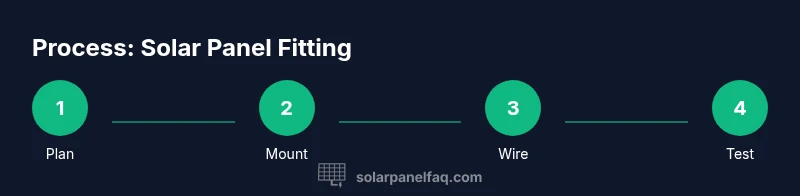
A typical solar panel fitting project follows a structured workflow: site assessment and design, material procurement, mounting installation, wiring and electrical connections, system testing, and final inspection. Coordination between roofing crews, electricians, and utility representatives is essential. Clear communication helps prevent rework and ensures safety on the roof and at the panel. Scheduling should align with favorable weather and permit timelines. By planning milestones and responsibilities, you reduce downtime and keep energy production on track from day one.
Maintenance, warranties, and monitoring
After fitting, ongoing maintenance focuses on keeping panels clean and free of debris, inspecting mounting hardware for corrosion or loosening, and verifying electrical connections. Monitoring systems provide data on energy production and performance trends, helping you detect anomalies early. Warranties typically cover panel efficiency, mounting hardware, and inverters for specified periods; be sure to register components and document installation details. A well-documented maintenance plan extends system life and preserves expected payback, especially in climate zones with heavy snowfall or wind.
Common mistakes and how to avoid them
Common mistakes in solar panel fitting include improper roof assessment, inadequate shading analysis, and insufficient waterproofing around mounts. Underestimating the importance of electrical separation or weak conduit routing can create dangerous conditions and reduce system reliability. Avoid choosing components solely on price; prioritize compatibility and warranties. Always verify that the interconnection with the utility is approved before energizing the system. By planning for weather, load, and future expansion, you minimize costly fixes later.
Final checks and optimization: post-install considerations
Once installed, conduct a thorough commissioning: verify angles and alignment, test electrical continuity and insulation resistance, and confirm monitoring data reflects expected production. Schedule a professional inspection if required by local code. Optimization strategies include adjusting panel tilt seasonally, reviewing shading changes from pruning nearby trees, and planning for future battery storage if desired. The goal is consistent, safe operation with predictable energy generation and a clear path to payback.
Tools & Materials
- Ladder and fall-protection gear(Stabilize ladder, use harness and rope for roof work)
- Roof anchors and mounting rails(Choose compatible rails for your roof type)
- Torquing tools and wrenches(Ensure proper bolt torque per manufacturer specs)
- Drill, bits, and sealant applicator(Seal penetrations to prevent leaks)
- Weatherproof sealant and flashing(Match roof material and climate)
- Conduit, clamps, and weatherproof connectors(Secure wiring and protect from moisture)
- DC/AC combiner box and disconnects(Meet electrical code and safety rules)
- Inverter and monitoring hardware(Choose centralized or microinverters depending on design)
- Multimeter and voltage tester(Check continuity and voltage levels safely)
- Safety gear: gloves, hard hat, eye protection(Essential for personal protection)
Steps
Estimated time: 4-8 hours
- 1
Assess site feasibility and finalize layout
Survey roof or ground space for orientation, shading, and access. Confirm the number of panels, mounting locations, and wiring routes. Document measurements and create a basic diagram.
Tip: Use a sun-path tool or mobile app to verify optimal tilt and azimuth. - 2
Secure mounting rails to structure
Attach rails to roof rafters or a ground frame, ensuring level alignment and proper bolt pattern. Seal penetrations to prevent leaks and corrosion.
Tip: Double-check that rails are plumb and evenly spaced before panel mounting. - 3
Attach mounting hardware to panels
Mount clamp kits or bolts to the panel frames and prepare for positioning on rails. Keep fasteners organized and within reach to speed up installation.
Tip: Tighten bolts to manufacturer torque spec to avoid panel movement. - 4
Mount panels on rails and secure
Place panels on rails, align gaps, and clamp or bolt them in place. Maintain proper clearance for airflow and roof venting.
Tip: Use anti-theft screws if required by location. - 5
Route wiring to inverter location
Run DC wiring from the panels to the combiner box, then to the inverter via weatherproof conduit. Keep wiring neat and protected from sharp edges.
Tip: Avoid kinks in cables and minimize bending radius to extend life. - 6
Install inverter and disconnects
Mount the inverter in a dry, ventilated space and connect to the DC input and AC output per schematic. Install protective disconnects as required by code.
Tip: Leave space around the inverter for heat dissipation. - 7
Connect to electrical panel and test
Tie the system into the main panel or dedicated subpanel, perform continuity tests, and verify reading on monitoring device.
Tip: Only energize a live system after all inspections pass. - 8
Schedule permits and inspections
Submit plan reviews and arrange a code-compliance inspection with local authorities and utility interconnection if needed.
Tip: Start permit process early to avoid project delays. - 9
Document system and set up monitoring
Archive diagrams, component specs, and warranty documents. Enable performance monitoring and set alerts for anomalies.
Tip: Regularly review production data and calibrate if necessary.
Frequently Asked Questions
Do I need a permit to fit solar panels on my home?
Most residential installations require permits and a final inspection to ensure safety and code compliance. Check with your city or county for exact requirements and timelines. A permit helps protect your investment and ensures the interconnection is approved by the utility.
Most homes require a permit and final inspection. Check local rules to avoid delays and ensure safe interconnection.
Can I install solar panels myself, or should I hire a professional?
DIY work may be feasible for mounting and non-electrical tasks, but most jurisdictions require a licensed electrician for the final wiring and interconnection. Always consider safety, warranty terms, and code compliance when deciding.
DIY mounting is sometimes possible, but wiring and interconnection usually require a licensed professional.
How long does solar panel fitting typically take?
Installation duration varies with roof type, system size, and permitting. A simple roof-mounted system can take a day, while complex or grid-tied projects may extend to several days, including inspections.
Most simple roof installs finish in a day, with inspections adding time for a few days in some areas.
What safety gear is essential for roof mounting?
Use fall protection, non-slip footwear, gloves, eye protection, and a hard hat. Ensure ladders are stable and secured, and never work alone on a roof.
Wear fall protection, gloves, eye protection, and a hard hat; never work on a roof alone.
Are all roof types compatible with solar panel fitting?
Most residential roofs can support solar panel fitting, but some materials and slopes require special mounting solutions or may limit output. A professional assessment helps determine feasibility and mounting approach.
Most roofs work, but some materials or angles need special mounting. A professional assessment is recommended.
What maintenance is required after fitting?
Regular cleaning, inspection of mounting hardware, and monitoring system output are standard. Address any loose fittings or corrosion promptly to maintain performance and safety.
Keep panels clean, check mounts, and monitor output; fix any loose parts quickly.
Top Takeaways
- Plan thoroughly before purchasing or mounting.
- Choose mounting and electrical configurations with future growth in mind.
- Prioritize safety, code compliance, and professional inspections.
- Maintain documentation for warranties and troubleshooting.
- Set up monitoring to optimize performance over time.