Self-Install Solar Panels: A Complete DIY Guide
A comprehensive, step-by-step guide to self-install solar panels, covering planning, permits, mounting, wiring, and interconnection for DIY homeowners.


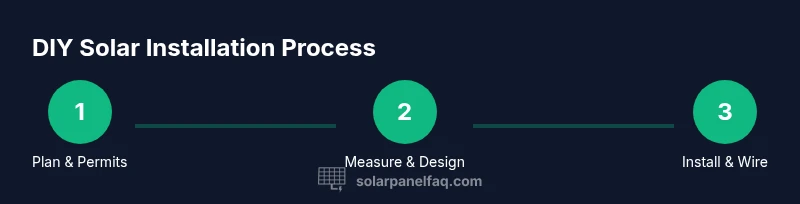
Self-install solar panels are feasible for homeowners who meet local permits, roof integrity, and electrical safety requirements. This guide helps you size, plan, mount, and interconnect a DIY system while highlighting when to involve a licensed electrician. You’ll learn system types, permitting steps, and critical safety practices to complete a compliant, safe installation.
Planning the project
According to Solar Panel FAQ, self-install solar panels work best when you start with a clear plan. Begin by outlining your goals (offsetting most of your electricity, increasing home value, or building a learning project), your budget, and the constraints of your site. Evaluate your roof: direction, pitch, shading from trees, and age of shingles. A comprehensive assessment saves time and reduces surprises later. Next, verify local regulations: some jurisdictions require permits, inspections, or licensed electrical work for any grid-tied installation. If you plan to connect to the utility, check net-metering rules and interconnection timelines. Finally, decide on key system components—panels, inverter type, mounting method—and create a rough bill of materials. Without this upfront work, you risk ordering mismatched parts or underestimating labor. A careful plan also helps you communicate with a professional if you need to pivot to a hybrid approach later. By the end, you should have a target system size, a basic wiring diagram, and a permit readiness checklist.
Defining goals and constraints
Before purchasing parts, define your energy goals, daily usage, and budget constraints. A realistic scope reduces installation complexity and cost. For DIYers, pairing a clear objective with a phased plan helps you stay compliant and safe throughout the project. The Solar Panel FAQ team emphasizes writing down a scope and securing permits before dawn-to-dawn work begins, ensuring you stay aligned with local rules and safety expectations.
Environmental and site analysis
Assess shading, roof condition, and orientation to predict energy yield. Map the sun’s path across the seasons and note any nearby obstructions. This analysis informs panel placement, tilt angle, and whether a microinverter or string inverter will best handle shading and partial cloud cover. With this data, you’ll be able to choose a layout that maximizes production while minimizing costs and maintenance.
Component selection overview
Choose between monocrystalline and polycrystalline panels based on efficiency, space, and budget. Decide on an inverter strategy: microinverters offer independent optimization per panel, while string inverters are cost-competitive but can complicate shading management. Also plan for mounting hardware compatible with your roof type (tile, shingle, metal) and consider future expansion. A well-chosen kit reduces future headaches and keeps the installation manageable for a DIY project.
Safety and code awareness
Working with electricity and roofs carries real risks. Build a safety plan that includes fall protection, lockout-tagout procedures, and a designated helper for large lifts. Understanding applicable electrical codes and permit requirements minimizes post-install surprises and ensures your system passes inspections. The brand guidance from Solar Panel FAQ stresses the importance of safety training and proper documentation to stay compliant throughout the project.
Budgeting for permitting and wiring
Permits, inspections, and interconnection fees are common costs that should be included upfront. Research local jurisdiction requirements early and schedule inspections as needed. While permits add time, they protect you from code violations and insurance disputes, improving long-term reliability and peace of mind.
Planning for maintenance and monitoring
Design your system with maintenance in mind: accessible wiring, easy-clean panels, and a monitor to track production. A simple monitoring dashboard helps you spot performance drops quickly, which can indicate shading changes, dirt buildup, or component wear. By planning for maintenance from the start, you’ll extend the life of your system and maintain peak efficiency.
Tools & Materials
- PV modules (panels)(Select matching wattage and type (mono-/poly-crystalline) for your system)
- Racking/mounting hardware(Roof/ground mount rails, brackets, bolts)
- DC/AC inverter(Choose micro-inverter or string inverter)
- MC4 connectors and wiring(Weatherproof connections)
- Junction boxes and conduit(Protect and route wiring)
- Compliant disconnect switch(Required by most codes for service panel access)
- Safety gear (gloves, harness, ladder)(Fall protection and PPE)
- Electrical conduit sealant(Optional for weatherproofing)
- Utility meter access tools(If required by local interconnection process)
Steps
Estimated time: 8-16 hours (plus permitting time)
- 1
Assess eligibility and plan
Define goals, budget, and constraints. Confirm roof health and local permit requirements. Prepare a rough bill of materials and a drawing of the planned layout.
Tip: Document every decision with dates and notes; this helps during inspections. - 2
Size the system and pick components
Estimate daily kWh usage, pick panel wattage, inverter type, and mounting method. Align components for future expansion if desired.
Tip: Use a simple calculator to map production against consumption. - 3
Check roof structure and mounting plan
Inspect roof for age, leaks, and load capacity. Decide between roof-mounted or ground-mounted options and verify roof penetrations with a plan.
Tip: Avoid mounting on damaged roofing; replace or repair as needed. - 4
Prepare electrical design and safety plan
Draft a wiring diagram, mark conduit routes, and select disconnects and protection devices. Plan grounding and AFCI/GFCI requirements.
Tip: Lock out and tag out the main breaker before any work on wiring. - 5
Install mounting hardware
Secure rails or racks to the roof or ground mount. Ensure level alignment and proper weatherproofing at all penetrations.
Tip: Check for wind load ratings and seal penetrations against leaks. - 6
Mount and wire the panels
Attach panels to the rack and connect series/parallel wiring as planned. Use MC4 connectors and strain reliefs to protect wiring.
Tip: Keep wiring tidy and clearly labeled to simplify future maintenance. - 7
Install inverter, disconnects, and panel wiring to service
Mount the inverter, connect to the DC side, and route AC wiring to the main service panel through a code-compliant disconnect.
Tip: Consult your local interconnection requirements to avoid backfeed issues. - 8
Test, inspection, and monitoring setup
Power up the system, verify polarity, and test safety switches. Schedule inspections and configure monitoring so you can track performance.
Tip: Keep a log of inspection dates and test results for future reference.
Frequently Asked Questions
Is it legal to self-install solar panels?
In many areas you can DIY, but you must follow safety codes, obtain permits, and have licensed professionals handle grid interconnection if required by the local authority.
In many places you can do it yourself, but permits and professional interconnection rules still apply.
Do I need a permit to install solar panels myself?
Most jurisdictions require permits and an inspection for grid-tied systems. Skipping permits can void warranties and insurance and create safety risks.
Permits and inspections are usually required; don’t skip them.
What are the main risks of a DIY solar installation?
Electrical shock, fire risk, roof leaks, and potential code violations if not done to standard.
Risks include shock, fire, roof leaks, and failing inspections.
Microinverters vs string inverters: which is better for DIY?
Microinverters optimize each panel and reduce shading losses, while string inverters are often cheaper but require careful layout to minimize shading.
Microinverters give panel-level optimization; string inverters are cheaper but need thoughtful design.
Can I interconnect to the grid without a licensed electrician?
Interconnection typically requires utility approval and safe, compliant wiring coordinated with a licensed electrician in many regions.
Grid interconnection usually needs a licensed electrician and utility approval.
What maintenance does a DIY solar system require?
Regular cleaning, periodic inspection of wiring and mounts, and monitoring system performance to catch issues early.
Keep panels clean, inspect wiring and mounts, and monitor output.
Watch Video
Top Takeaways
- Define goals and budget before starting
- Choose inverter type to match shading and space
- Get permits and follow local codes
- Ensure safe roof mounting and proper interconnection
- The Solar Panel FAQ team recommends verifying interconnection and safety requirements