Roof and Solar Panel Installation: A Comprehensive How-To
Learn how to plan, design, and install a roof-integrated solar panel system with safety and efficiency in mind. This guide covers planning, permits, components, and maintenance for homeowners.


According to Solar Panel FAQ, this guide helps homeowners plan and execute roof and solar panel installation with confidence. You’ll learn how to assess roof suitability, select components, obtain permits, and follow a safe, efficient installation path. Expect a practical, step-by-step approach that covers design choices, timing, and maintenance considerations to maximize system performance and savings.
Planning and Site Assessment
According to Solar Panel FAQ, the planning phase is the foundation of a successful roof and solar installation. Start with a thorough site assessment that combines a structural roof check, shading analysis, and an energy-use review. Gather information about your roof age, material, and current electrical panel capacity. Document orientation, typical sun exposure, and any nearby obstructions such as chimneys or vents. A well-done assessment reduces surprises during installation and helps tailor a system that matches your home’s needs and local conditions. Remember that this stage also sets expectations for permits, interconnection, and potential incentives. To keep momentum, create a checklist that tracks roof condition, space for panels, and the expected system size based on past energy bills.
- Conduct a roof-age and material check to avoid reinstalling on a fragile surface.
- Analyze shading across different times of day and seasons to optimize panel placement.
- Review past energy consumption to estimate system size and potential savings.
- Engage a licensed professional to review wiring needs and code compliance.
Roof Compatibility and Structural Readiness
Roof compatibility is a critical determinant of system viability. Not all roof types handle solar installations equally, so understanding your roof’s structure and material is essential. Asphalt shingles, metal panels, clay or concrete tiles, and flat roofs each have unique mounting needs and load considerations. A structural engineer or qualified installer can verify load-bearing capacity and determine appropriate racking systems and tilt angles. If your roof has limited unobstructed space or a steep pitch, you may explore microinverter or optimally placed mid-roof placements to maximize sun access while preserving roof integrity. The goal is to balance orientation, shading, and weight while keeping roof waterproofing intact. Consider future roof replacements and how they might affect system access or warranties. A proactive assessment helps prevent costly retrofits after installation.
- Confirm roof slope and material compatibility with mounting hardware.
- Plan panel layout to minimize shading and maximize exposure.
- Evaluate attic or crawlspace access for cabling and electrical routing.
- Schedule a professional inspection to avoid voiding warranties.
System Design Choices: Panels, Inverters, and Mounting
Choosing the right components profoundly affects performance and long-term maintenance. Decide between monocrystalline or polycrystalline panels, and select an inverter strategy that suits your site’s shading and connectivity. String inverters are common for uniform conditions, while microinverters or power optimizers perform better under partial shade. Mounting options include flush mounts for a sleek look or rail-based racks for easier cleaning and replacement. Racking should come with corrosion-resistant hardware and suitable sealing to maintain weatherproofing. Orientation and tilt angle should be optimized for your latitude; many homeowners aim for a slight tilt that aids self-cleaning and snow shedding. Consider future expansion and whether your electrical panel can accommodate additional circuits. The design phase also covers monitoring solutions so you can track production and detect anomalies quickly.
- Choose installers who offer a transparent design with a clear bill of materials.
- Consider performance warranties, not just product warranties.
- Factor in shading patterns and seasonal sun paths when placing modules.
- Plan for future storage or grid-tied upgrades if you’re thinking about energy independence.
Permits, Interconnection, and Codes
Permitting and interconnection are essential to legal and safe solar operation. Local jurisdictions vary, but most projects require building permits, electrical permits, and a utility interconnection agreement. Begin early by submitting roof plans, electrical diagrams, and equipment specs for review. Utilities may require inspections and a net-metering setup so you can receive credit for electricity you feed back to the grid. HOA rules can add another layer of review, so check guidelines well in advance. Delays often arise from incomplete documentation, so assemble a comprehensive package that includes product data sheets, system diagrams, and a statement of work. A proactive approach reduces the time from permit to production, helping you realize solar energy savings sooner.
- Gather permits and approvals before ordering major components to avoid storage delays.
- Include a detailed electrical diagram showing inverter connections, conduit runs, and disconnects.
- Confirm interconnection terms and any added metering requirements with the utility.
- Maintain a single point of contact with the installer for permit status updates.
The Installation Workflow: A High-Level Overview
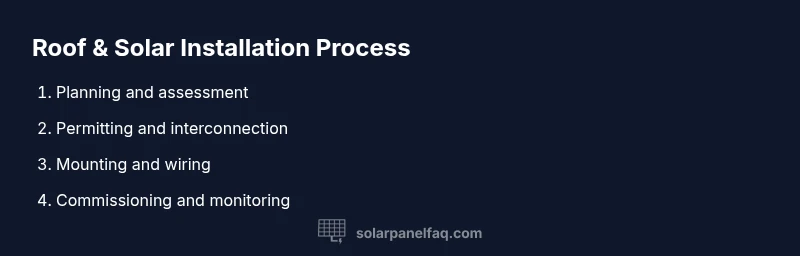
The installation workflow can be broadly divided into site prep, mounting, electrical work, and commissioning. On-site prep includes safety planning and arranging temporary barriers. Mounting involves attaching rails or racking to the roof, securing modules, and ensuring a watertight seal. Electrical work covers wiring panels, inverters, and service disconnects, followed by careful testing of continuity and insulation. Commissioning ensures the system is interconnected with the grid and producing as expected, with monitoring equipment set to track performance. Although many homeowners hire licensed pros for the electrical portion, understanding the sequence helps you coordinate with contractors and avoid delays. A clear project timeline, with milestones for permit approvals, equipment delivery, and inspection dates, keeps everyone aligned.
- Ensure fall protection and roof safety equipment are in place before any work.
- Coordinate delivery windows to align with permit clearance and crew availability.
- Verify the inverter and monitoring hardware are configured for your utility’s requirements.
- Keep detailed records of changes and as-built drawings for future maintenance.
Safety, Warranties, and Maintenance
Safety is non-negotiable in roof work and electrical installations. Work at heights requires fall protection and proper PPE, and electrical tasks demand lockout/tagout practices to prevent shock. Use roof anchors, harnesses, and non-slip footwear, and never work alone on a steep slope. Warranty coverage typically depends on installation quality and component manufacturers’ terms. Some warranties require professional installation to remain valid, while others offer limited coverage for specific failures. Regular maintenance includes periodic cleaning, inverter checks, and monitoring dashboard reviews to catch performance dips early. A simple yearly inspection by a qualified technician can prevent small problems from becoming costly repairs.
- Never bypass safety equipment or rush a rooftop task.
- Keep all documentation for warranty eligibility and service history.
- Schedule an annual system check to verify electrical safety and performance.
- Use monitoring data to identify inefficiencies or degraded modules.
Costs, Incentives, and Financing Basics
Cost considerations are central to decision-making. Solar installations involve upfront hardware, mounting, electrical work, and permitting, with final pricing varying by system size, materials, and labor. While exact numbers depend on your locale, expect a multi-factor range that includes modules, inverters, wiring, and an installation labor estimate. Keep in mind that incentives, such as tax credits or rebates, can significantly reduce net cost; however, incentive availability and eligibility rules change over time and differ by jurisdiction. Financing options, including loans, leases, or power purchase agreements, offer alternatives to paying upfront. An effective plan weighs total cost of ownership, estimated energy savings, maintenance needs, and the expected lifespan of the system. A careful analysis helps you compare offers and select the solution that matches your budget and sustainability goals.
- Gather multiple quotes to understand market variations.
- Explore available incentives and their timelines before committing to equipment choices.
- Assess long-term maintenance costs as part of the financial picture.
- Consider installation quality and warranty terms as part of total value, not just price.
Timeline, Scheduling, and Team Roles
Finally, a realistic project timeline reduces surprises and keeps momentum. From initial planning to grid interconnection, a typical roof and solar installation can span several weeks, depending on permits and weather. Create a project calendar with milestones for site survey, design approval, permit submission, equipment delivery, roof work, electrical connections, and final inspections. Roles should be clearly defined: a project manager coordinates all parties, licensed electricians handle electrical work, roofers manage mounting and waterproofing, and a system verifier runs tests and commissions the system. Having a single point of contact for updates minimizes miscommunication and helps you track progress. If you’re coordinating with multiple contractors, include buffer times for weather and supply delays. Professional project management helps you finish on schedule and ready for energy production.
- Build in a 1–2 week cushion for permit processing and weather delays.
- Confirm all technicians’ credentials and insurance before work begins.
- Maintain open lines of communication to adjust the plan as needed.
- Prepare for startup checks and training on monitoring dashboards.
Tools & Materials
- Ladder and fall-protection gear(Stabilized ladder with a partner for roof access)
- Safety harness and rope(Full-body harness, anchor points, and lanyards)
- Drill, bits, and impact driver(Torque settings appropriate for mounting hardware)
- Roofing sealant and caulk gun(Weatherproof sealant to protect flashing seams)
- Measuring tape, level, and chalk line(Accurate alignment and placement)
- Mounting rails, racking, and panels(Corrosion-resistant hardware, compatible with panels)
- Cable management and conduit(Secure routing and weatherproof connections)
- Electrical testing tools(Voltage tester, multimeter, and insulated tools)
- Wrench set and crimping tools(Terminate wiring and grounding connections)
Steps
Estimated time: 2-3 weeks
- 1
Assess site and plan layout
Perform a roof survey, check shading, and map panel placement. Confirm bearing capacity and select a mounting strategy.
Tip: Document measurements and capture photos for the permit package. - 2
Check roof structure and safety
Verify roof integrity with a professional if needed and set up fall protection before any access. Ensure weather conditions are suitable.
Tip: Never work on a wet or windy roof; wait for safe conditions. - 3
Design system and choose components
Decide on panel type, inverter strategy, and mounting hardware based on shade and orientation analysis.
Tip: Consider future expansion and monitoring options during design. - 4
Obtain permits and utility approvals
Prepare drawings, wiring diagrams, and equipment data; submit to authorities and the utility for interconnection.
Tip: Track submission milestones and respond quickly to requests. - 5
Install mounting and wiring
Attach rails, mount panels, and route conduits; install disconnects and inverter connections according to code.
Tip: Ensure watertight seals around flashings and inlets. - 6
Commission and verify performance
Power up, test continuity, perform insulation checks, and connect monitoring. Validate production against expected output.
Tip: Document all test results and compare with design specs.
Frequently Asked Questions
Do I need a permit to install solar panels on my roof?
Most installations require permits and electrical inspections. Check local codes and HOA rules early to avoid delays and ensure a compliant interconnection with the utility.
Most solar projects need permits and inspections. Check with your local authorities and HOA to stay compliant.
Can I install solar panels myself, or should I hire a pro?
Electrical work and roof mounting pose safety and liability risks. For most homeowners, hiring a licensed installer is strongly recommended to ensure safety and warranty validity.
Because of safety and warranty concerns, it's best to hire a licensed installer for solar and roof work.
What roof types are suitable for solar installation?
Most common residential roofs (asphalt shingle, metal, tile) can support solar. The key factors are roof age, structural capacity, and the ability to install a watertight mounting system.
Most standard roofs can take solar, but age and structure matter. An installer can confirm suitability.
How long does roof and solar installation take?
Timeline varies with permits, weather, and system size. A typical project spans several weeks from planning to commissioning.
It usually takes several weeks from planning to the final check.
What maintenance does a rooftop solar system require?
Regular cleaning to remove debris and periodic checks of wiring, inverters, and monitoring equipment help sustain performance.
Keep panels clean and inspect components periodically to maintain performance.
Are there financing options beyond paying upfront?
Yes. Loans, leases, or power purchase agreements are common paths to spread costs; compare total payments and incentives.
There are loans and other financing options to spread the cost and maximize value.
Watch Video
Top Takeaways
- Assess site comprehensively before design
- Choose components with future maintenance in mind
- Secure permits early to avoid delays
- Prioritize safety and proper waterproofing
- Compare total ownership costs, not just price