Replacement Inverter for Solar Panels: A Step-by-Step Guide
Learn how to select, replace, and test a replacement inverter for solar panels. This step-by-step guide covers compatibility, safety, permits, and post-install checks for homeowners.


According to Solar Panel FAQ, replacing the inverter is a common maintenance task that can restore energy production. This quick guide explains what a replacement inverter for solar panels is, when it’s needed, and the safety steps you should follow. You’ll learn about sizing, wiring, and testing so you can make an informed, safe replacement if you choose to do it yourself or hire a pro.
Why replacement inverter for solar panels matters
Every solar installation relies on an inverter to convert DC from panels to usable AC. When an inverter falters, energy production drops, system efficiency declines, and safety margins can shrink. The decision to pursue a replacement inverter for solar panels often comes after diagnostic checks show consistent underperformance or fault codes that point to the inverter as the bottleneck. According to Solar Panel FAQ, inverter reliability is a common reason homeowners face unexpected performance losses, and addressing it promptly can prevent longer downtime. The Solar Panel FAQ team found that many early inverter failures occur due to aging capacitors, thermal stress, or improper sizing during initial installation. This guide helps you assess whether a replacement is warranted, how to choose the right model, and the practical steps to perform the swap safely.
Understanding why an inverter might fail is the first step toward a durable solution. You’ll learn how to differentiate inverter issues from panel or wiring problems, which reduces the risk of swapping the wrong component. In many homes, a well-matched replacement inverter restores peak performance without requiring a full system overhaul. Clear documentation of the existing setup, including model numbers and wiring diagrams, speeds up troubleshooting and ensures a smoother replacement process.
Inverter basics and compatibility
Inverters come in several flavors, and each type serves different system designs. A traditional string inverter handles multiple panels connected in series, while microinverters or power optimizers attach to individual panels to maximize performance under shade or mismatch conditions. For a replacement inverter for solar panels, you must consider whether your system is grid-tied or off-grid, the total power rating, and how the inverter communicates with your monitoring equipment. Critical factors include matching the inverter’s electrical type to your system (grid-tied vs standalone), ensuring the DC input range covers your PV array, and confirming compatibility with your existing racking and conduit layouts. The goal is to preserve or improve efficiency while maintaining safety and warranty terms. Always consult the manufacturer datasheet for wiring diagrams, permissible input voltages, and mounting requirements. If you’re unsure, seek guidance from a qualified technician.
A good rule of thumb is to aim for a replacement inverter that aligns with your current system’s design and leaves room for modest future expansion. If your panels are aging or if shading patterns have changed, a more advanced inverter with better efficiency and control features may offer long-term gains. Remember that newer models often provide improved monitoring capabilities, remote diagnostics, and enhanced protection features against grid disturbances. Keeping a detailed record of your new inverter’s specifications will help with future maintenance and warranty claims.
When to replace vs repair
Deciding whether to repair or replace an inverter depends on the fault type and the condition of other system components. If the inverter displays persistent fault codes that do not clear with resets, or if it repeatedly shuts down during operation, replacement is often the practical route. Conversely, minor issues such as loose connections or degraded cables may be repairable without replacing the entire unit. A critical step is to perform a thorough diagnostic to rule out panel, wiring, or grounding problems—misdiagnosis can lead to unnecessary downtime and added costs. In many cases, a failed inverter is the most likely culprit if the panels show strong output during peak sun hours but the system still underperforms. Always verify that the problem isn’t caused by shading, poor DC wiring, or a damaged combiner box before committing to a replacement.
Sizing and selecting a replacement inverter
Selecting the right replacement inverter for solar panels involves matching the electrical design of your current installation and considering any planned upgrades. Start by noting the type of system (grid-tied or off-grid), then verify the inverter’s input and output specifications align with your PV array and electrical panel. If you anticipate panel aging or want better performance under variable conditions, choose a model with higher efficiency and improved heat management. It’s also important to check compatibility with any battery storage you may have or plan to add in the future. Warranty terms matter: ensure the replacement inverter’s warranty aligns with your system’s expectations and that the installer or manufacturer honors it in your region. Documentation from the previous installation, including wiring diagrams and labeling, will simplify this process and minimize the risk of miswiring during replacement.
Safety, permits, and warranties
Electrical safety is non-negotiable when performing a replacement inverter for solar panels. Always disconnect all sources of power and use proper lockout/tagout procedures if available. Wear protective gear and verify absence of voltage with a non-contact tester and a digital multimeter before touching any conductors. Some jurisdictions require permits for inverter replacements, and a utility interconnection agreement may be affected by changes to the system. Check whether your warranty remains valid after a replacement; some manufacturers require service by an authorized technician or installation by a certified professional. Keeping detailed records of the replacement, including model numbers and installation dates, helps preserve warranty coverage and eases future troubleshooting.
Preparation for replacement and next steps
Before you begin, gather the required tools and new inverter, confirm the replacement is compatible, and map out a step-by-step plan. Create a temporary shutdown plan for the roof or equipment space, arrange a safe working area, and have a helper present if possible. After installation, perform post-install tests: verify the system starts, monitor output under normal conditions, and compare performance with historical data. Finally, update your maintenance log and set up any remote monitoring to catch issues early. With careful preparation and methodical execution, a replacement inverter for solar panels can restore performance and extend the life of your solar investment.
Tools & Materials
- Digital multimeter(Voltage and continuity testing; ensure system is de-energized)
- Insulated gloves(Electrical safety; ensure appropriate voltage protection)
- Non-contact voltage tester(Check for live circuits before handling wiring)
- Screwdriver set (Phillips and flat)(For mounting brackets and terminal screws)
- Torque screwdriver(Recommended for proper connection torque)
- Wire strippers/crimpers(Disconnecting and reconnecting conductors)
- New replacement inverter(Must match system type (grid-tied or off-grid) and MPPT design)
- Safety glasses(Eye protection during all steps)
- Electrical tape and cable ties(Secure wiring and label connections)
- Manufacturer datasheet(Have model specs, wiring diagrams, and torque specs on hand)
Steps
Estimated time: Total time: 1-3 hours depending on accessibility and system complexity
- 1
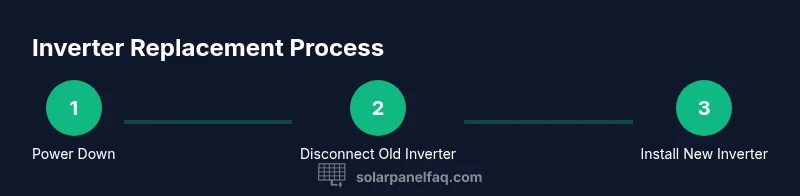
Power down and isolate
Shut off the AC output and any DC inputs, then lock out or tag the equipment if possible. Wait a few minutes to allow capacitors to discharge before touching anything.
Tip: Double-check with a non-contact tester to ensure no live energy is present. - 2
Verify safety and accessibility
Inspect the installation site for hazards, confirm stable access to the inverter, and remove any obstructions. Ensure PPE is worn and your helper is aware of the plan.
Tip: Keep a safety checklist handy and reference the inverter manual for removal cautions. - 3
Disconnect existing inverter
Document wiring (photos are helpful), then carefully detach AC and DC cables according to the manufacturer diagram. Label each connection for reassembly.
Tip: Use color-coded markers and note connector types to avoid mis-wiring. - 4
Prepare mounting location
Inspect mounting surface for stability, clean mounting area, and align the new inverter. Ensure adequate clearance for heat dissipation and any cooling features.
Tip: If mounting brackets are damaged, replace them to prevent vibration or misalignment. - 5
Install replacement inverter
Mount the new unit securely, connect DC strings and AC output following the wiring diagram, and torque screws to specification.
Tip: Cross-check connections against labels and datasheet before fastening. - 6
Reconnect PV strings and test
Reconnect panels, then perform static and live testing to confirm voltage, current, and communication with monitoring.
Tip: Begin with protective gear on and monitor for any warm spots or smells. - 7
Commission and monitor
Power up the system, observe startup, and compare performance with historical data. Update logs and warranty records.
Tip: Record serial numbers and update remote monitoring settings for ongoing checks.
Frequently Asked Questions
Do I need a professional to replace an inverter?
Replacing an inverter can be dangerous and complex. If you’re unfamiliar with electrical work or local codes, hire a licensed electrician. Some jurisdictions require permits or inspections for inverter changes.
Replacement can be dangerous; consider hiring a licensed electrician, especially if you’re unsure about wiring or permitting.
How do I know if my inverter actually needs replacement?
Look for persistent fault codes, sudden drops in energy production, or failure to start. If other components test fine, the inverter is a common failure point.
If you see fault codes or reduced output that doesn’t improve with resets, it’s often time to replace.
Can I replace an inverter myself if I have a DIY mindset?
Yes for some setups with grid-tied or off-grid configurations, but you must follow safety practices, local codes, and warranty terms. In many cases, professional service is advised.
It’s possible, but safety and codes matter; consider professional help if unsure.
How do I ensure the replacement inverter is compatible?
Match the inverter type to your system (grid-tied or off-grid), confirm input/output ratings align with your PV array and panel, and check monitoring compatibility. Review the datasheet for exact wiring.
Make sure the new inverter fits your system type and size and is wiring-compatible.
Will replacing the inverter affect my solar warranty?
Replacement can affect warranty terms. Check with the original installer or manufacturer and keep records of the new unit, installation date, and any parts changed.
Warranty terms may change; review the terms and document the replacement.
What about permits and inspections?
Some jurisdictions require permits for inverter replacements; consult local authority and your utility, and schedule inspections if required.
Permits may be required; check local rules before proceeding.
What is a typical cost range for a replacement inverter?
Costs vary with size and type; obtain quotes for the inverter and installation, and compare with the cost of a pro replacement.
Costs depend on the system and installer; get multiple quotes.
Watch Video
Top Takeaways
- Verify system compatibility before replacing the inverter.
- Power down completely and test for absence of voltage.
- Follow the manufacturer’s wiring diagrams precisely.
- Test performance after replacement and document results.
- Check warranty terms and local permitting requirements.