How to Install a Solar Panel Inverter: Step-by-Step Guide
Meta description: Learn how to install a solar panel inverter safely with our step-by-step guide, covering wiring, safety checks, and testing for homeowners.


You will learn how to install a solar panel inverter safely and efficiently, including selecting the right inverter type, mounting considerations, wiring, and basic safety checks. This quick guide outlines essential prerequisites and step-by-step actions to complete a standard home installation. Prepare your tools, follow local codes, and verify all connections before power-up.
Understanding Inverter Types
Solar inverters are the heart of a solar power system. They perform DC-to-AC conversion and ensure the produced energy is compatible with your home electrical panel. There are several inverter types commonly used in residential settings: string inverters, microinverters, and hybrid inverters. String inverters connect a series of panels to a single inverter, which keeps installation simple and cost-effective but can be sensitive to shading. Microinverters attach to each panel, improving performance under shade and enabling easier monitoring of individual panels. Hybrid inverters combine battery storage with PV conversion and are useful if you plan to store energy or create a backup power supply. When choosing, consider system goals, shading patterns, planned storage, and utility interconnection rules. According to Solar Panel FAQ, understanding these differences helps homeowners pick the right solution for long-term performance. You’ll need to verify compatibility with your existing panel, racking, and conduit setup, as well as the ability to meet local interconnection standards. In practice, many homes start with a basic string inverter and add storage later if needed. The Solar Panel FAQ team emphasizes starting with a reputable brand and confirming warranty terms and service availability.
Safety and Codes You Must Follow
Before touching any wiring, obtain the necessary permits for your location and inform your utility about the intended interconnection. Wear proper PPE such as insulated gloves, eye protection, and non-slip footwear. Ensure the main power to the PV system is isolated and all DC disconnects are accessible and clearly labeled. Local electrical codes typically require an approved disconnect, grounding electrode system, and compliant conduit routing. A licensed electrician or qualified installer should review your plan to confirm compatibility with your main service panel, back-fed breaker requirements, and load-center spacing. Remember that improper service panel connections can create fire hazards or shock risks. The Solar Panel FAQ team notes that adherence to code requirements reduces the likelihood of nuisance tripping and ensures your system interoperates safely with the grid.
Sizing the Inverter for Your System
Sizing is about matching the inverter’s capacity to your expected energy production and load. You’ll determine this by reviewing your daily energy use, the number of panels, and the system voltage you intend to manage. Avoid oversizing or undersizing, as both can reduce efficiency or trigger safety protections. If you plan to add batteries, factor storage and peak discharge rates into your sizing calculation. In general practice, homeowners optimize size by evaluating typical daytime loads and planning for reasonable growth. The Solar Panel FAQ analysis indicates sizing accuracy improves long-term performance and reduces maintenance calls. Always reference the inverter’s efficiency curve and compatibility with your chosen panel string configuration to ensure reliable operation.
Mounting Considerations and Placement
Choose a location with good airflow, minimal exposure to direct weathering, and convenient access for wiring and maintenance. Outdoor installations require weatherproof enclosures, corrosion-resistant hardware, and proper ventilation to avoid overheating. Indoor installations demand space near the electrical panel, along with ducting for cooling and reasonable cable lengths. Mounting height, tilt, and orientation affect thermal performance and ease of service. Use sturdy brackets or a rack system rated for your inverter’s weight and the mounting surface. The right mounting setup reduces vibration, protects cabling, and helps your system meet structural and electrical codes.
Wiring the Inverter: DC to AC Connections
Connect the DC side from the solar array to the inverter input using appropriately rated cables and fusing. Ensure polarity is correct and that all connections are clean and dry before energizing. On the AC side, route output conductors to a dedicated breaker in the main panel, or to a separate subpanel if required by local code. Use proper conduit fittings and weatherproofing where exposed to the elements. Grounding and bonding are essential; attach equipment grounding conductors to the inverter chassis and bond to the building grounding system as specified by the manufacturer and code. Follow the inverter’s wiring diagram precisely to avoid accidental shutoffs or dangerous arc paths. The Solar Panel FAQ team reminds readers to verify all terminations with a multimeter and to respect the inverter’s protection features during commissioning.
Grounding, Bonding, and Safety Tests
Grounding the system provides a safe return path for fault currents and minimizes shock risk. Bond the inverter frame to the building grounding system and verify continuity to the main ground electrode. After wiring, perform safety tests such as insulation resistance checks and continuity tests on metallic enclosures. Verify that the AC output is properly grounded and that breaker protections are correctly sized. Don’t skip a final voltage and polarity check on all connectors before applying any power. If a test fails, re-inspect every connection and consult the manual before re-energizing. The goal is to ensure a safe, code-compliant system that won’t pose hazards during normal operation.
Commissioning and Maintenance
Commissioning involves powering up the system in stages, monitoring inverter diagnostics, and confirming that the PV array feeds the grid or loads as intended. Record serial numbers, firmware versions, and performance baselines for future maintenance. Schedule regular inspections to inspect wiring, seals, and venting; clean any dust buildup after extended exposure to the elements. Keep a maintenance log and set up alerts for anomalies like sudden power loss or unusual temperatures. Consistent checks help extend inverter life, sustain performance, and support warranty terms. The Solar Panel FAQ team emphasizes documenting every step for future troubleshooting and compliance.
Common Mistakes and Troubleshooting
Common errors include mis-sizing, skipping permits, improper grounding, and overlooking cooling requirements. When troubleshooting, start with basic checks: confirm power isolation, verify interconnections, and check for physical damage or corrosion. If the inverter reports fault codes, consult the user manual for code definitions and recommended actions. Avoid replacing components based on guesswork; instead, follow the manufacturer’s diagnostic steps. The Solar Panel FAQ analysis highlights that systematic testing and documentation prevent recurring issues and improve long-term reliability.
Tools & Materials
- Inverter (string or central)(Choose according to system size and type (string, micro, or hybrid) and ensure compatibility with panels and battery (if used).)
- DC disconnect switch(Required by many codes; keep accessible and clearly labeled.)
- AC disconnect switch(Facilitates safe isolation of inverter from the main panel.)
- Mounting hardware (brackets, rails, screws)(Weatherproof and rated for outdoor installation if applicable.)
- Conduit and fittings(To route wiring safely and protect from physical damage.)
- Appropriate DC cables(Use cables rated for PV circuits and applicable voltage/current.)
- AC cables(Match inverter output to panel input requirements.)
- Grounding equipment (GEC, bonding straps)(Ensure proper grounding per code and manufacturer.)
- Multimeter/voltage tester(For verifying voltages, continuity, and isolation.)
- Personal protective equipment(Gloves, goggles, non-slip footwear, and insulated tools.)
- Manufacturer wiring diagrams/manuals(Follow exact wiring guidance provided by the inverter maker.)
- Weatherproof sealant/enclosures(Optional for outdoor installations to protect connections.)
Steps
Estimated time: Estimated total time: 2-6 hours
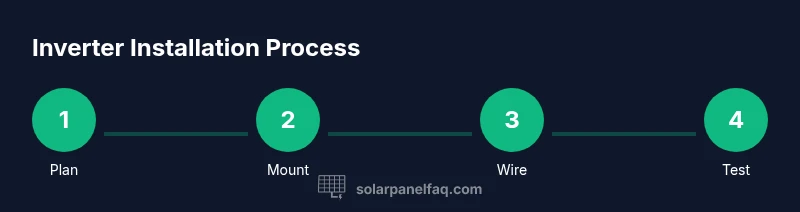
- 1
Prepare and verify prerequisites
Review system design, confirm inverter type, and gather all tools. Check local permits and utility interconnection requirements before starting. Ensure you have a clear workspace and a plan to isolate all sources of energy.
Tip: Double-check that you’re working with the correct system diagram and that the main service panel is accessible. - 2
Size and select the inverter
Validate that the chosen inverter matches your expected load, panel strings, and storage plans if any. Confirm compatibility with your PV array and battery configuration. Reference the manufacturer’s specifications for efficiency and safety limits.
Tip: When in doubt, consult a professional or the brand’s technical support. - 3
Mount the inverter safely
Install the inverter in a well-ventilated location with adequate clearance. Secure mounting brackets to a sturdy surface, ensuring minimal vibration. Leave space for cooling and future maintenance.
Tip: Avoid enclosing the unit in closed spaces with restricted airflow. - 4
Connect the DC side
Attach PV cables to the inverter input following polarity and color coding. Install fuses or a DC disconnect as required by code. Ensure all terminations are clean, dry, and tight.
Tip: Use strain reliefs and secure wiring to prevent movement. - 5
Wire the AC output to the distribution
Run AC output from the inverter to an appropriate breaker in the main panel or a dedicated subpanel. Follow the wiring diagram precisely and maintain proper clearance from other conductors.
Tip: Label the circuit and ensure it is coordinated with existing protection devices. - 6
Ground and bond the system
Connect the inverter frame and metal components to the building grounding system. Verify continuity and bond to the main grounding electrode system according to code.
Tip: Keep grounding paths short and avoid loose connections. - 7
Perform initial testing
Power up in stages, verify voltage and frequency at the output, and confirm that the inverter detects panel input correctly. Check for fault codes and refer to the manual for remediation steps.
Tip: Document baseline measurements for future reference. - 8
Documentation and maintenance
Record serial numbers, firmware versions, and warranty terms. Create a maintenance schedule and check periodically for dust, corrosion, and loose connections. Update logs after any service or adjustment.
Tip: Keep digital copies of manuals and wiring diagrams accessible.
Frequently Asked Questions
What is the purpose of a solar inverter?
A solar inverter converts DC from panels into AC power for home use, and it enables grid interaction and monitoring of system performance.
The inverter converts DC to AC and helps you monitor performance.
Do I need a permit to install a solar inverter?
Permit requirements vary by location. Check with your local building department and utility to determine whether an permit is required and what inspections will be needed.
Permit rules vary by location; check with your local authority.
Can I install an inverter myself
DIY installation is possible for experienced electricians or knowledgeable homeowners with electrical training; otherwise, hire a licensed professional to ensure safety and code compliance.
It’s possible if you’re comfortable with electrical work; otherwise, hire a pro.
What safety tools are essential when installing an inverter?
Essential tools include insulated gloves, safety glasses, insulated screwdrivers, voltage tester, and proper PPE. Create a safe work zone and de-energize everything before wiring.
Wear PPE and ensure circuits are de-energized before wiring.
How do I know what inverter size I need?
Size based on your expected energy use, panel output, and whether you plan to add storage. Review the inverter’s efficiency range and ensure compatibility with your panel configuration.
Size based on usage and storage plans, then check the inverter specs.
What maintenance does an inverter require?
Regularly inspect wiring and connections, keep vents clear, monitor performance, and note any fault codes. Replace components as recommended by the manufacturer.
Keep it clean, check connections, and monitor performance.
Watch Video
Top Takeaways
- Size inverter to match load and goals
- Follow safety protocols and code requirements
- Verify all connections with a test before connection to loads
- Document installation details for future maintenance
- Choose reputable brands and maintain warranties