Project Solar Panel: A Step-by-Step Home Guide for Beginners
Learn how to plan, size, and install a home solar panel project. This step-by-step guide covers goals, site readiness, permitting, financing, DIY vs pro installs, and maintenance for a reliable, long-lasting solar system.


Goal: Plan and execute a home solar project that matches your energy needs, roof type, and budget. You’ll learn how to estimate output, size the system, compare installation options (DIY vs. professional), understand permits and incentives, and create a realistic timeline. This guide centers on practical steps you can start today for your project solar panel.
What is a project solar panel and why homeowners pursue it
A project solar panel refers to a deliberate, end-to-end effort to design, size, install, and maintain a residential solar energy system. For homeowners, it usually starts with clear goals, an assessment of roof suitability, and a realistic budget. According to Solar Panel FAQ, this type of project emphasizes practical planning, compliance with codes, and long-term reliability. By framing your plan as a project, you can track milestones, manage risks, and optimize performance over the system’s lifetime. In this guide we explore the key phases—from goal setting to commissioning—and highlight decision points that affect cost, output, and satisfaction with your installation. Whether your aim is to lower bills, reduce carbon footprint, or increase home value, a well-structured project solar panel increases your odds of success.
In addition to energy outcomes, consider non-financial benefits such as energy independence, resilience during outages, and the educational value of monitoring performance. A well-executed project also helps protect your investment with proper warranties, maintenance plans, and documentation that can simplify future upgrades. The emphasis here is practical steps you can take now, with checklists and real-world considerations tailored to typical residential roofs and climates.
Before you start: defining goals and constraints
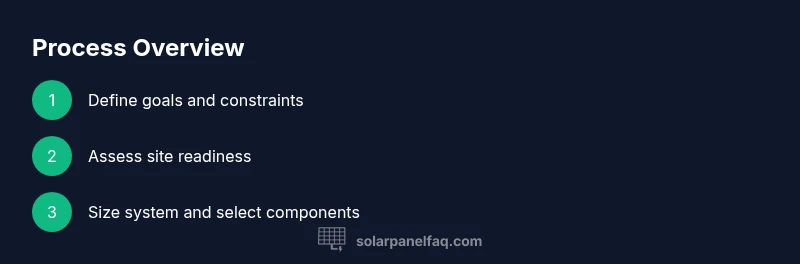
A successful project solar panel begins with precise goals and constraints. Start by outlining your primary objective (e.g., reduce monthly bills by a target percentage, or achieve a specific solar fraction of your energy use). Then assess roof orientation, shading, structural condition, and local climate. Gather baseline data: your last 12 months of electricity bills, roof age, and any planned home improvements that could affect roof space. Consider budget limits, installation timelines, and whether you prefer a DIY approach or a professional install. By writing these factors down, you create a framework for the rest of the planning process. According to Solar Panel FAQ analysis, most homeowners who define clear goals and constraints move more smoothly through sizing, permitting, and procurement steps. The goal-setting phase also helps you identify critical risks, such as tree shade, roof leaks, or panel warranties that don’t align with your timeline. Keep a living document that you update as you learn more. In short, a well-scoped project solar panel reduces surprises and accelerates decision-making when you encounter trade-offs between cost, performance, and aesthetics.
Sizing the system: estimating energy needs and panel count
Sizing is the heart of a project solar panel. It starts with calculating your annual energy consumption and translating that into a target solar output. Gather 12 months of utility bills and note your total kilowatt-hours (kWh) used. Then define your site parameters: available roof area, typical sun hours in your region, and system efficiency. A common method is to compute required DC wattage by dividing annual energy use by (average sun hours per day × days in a year × derating factors). This yields a rough system size in kilowatts (kW). From there, you’ll choose panel wattage (e.g., 320–400W modules) and determine how many panels fit into your space. Remember to account for shading, orientation, and future expansion. The goal is a realistic balance between desired output and space constraints, not simply chasing the highest rated panels. In practice, most homeowners find that a well-sized project solar panel offers meaningful energy savings without overbuilding the roof layout.
Choosing technology: panel types, inverters, mounting
The technology trio for a project solar panel includes modules, inverters, and mounting hardware. Panels are typically mono-crystalline for higher efficiency, though polycrystalline options offer cost advantages. Inverters can be string, microinverters, or optimizers; microinverters are advantageous on roofs with shading or complex layouts. Mounting decisions depend on roof type and local codes: roof-mounted systems are common, while ground mounts offer flexibility but require more space and structural support. Consider temperature coefficients, warranty terms, and the availability of monitoring software. This section helps you compare trade-offs, such as higher upfront costs for microinverters versus potential gains in performance under partial shade. As you select components, factor in compatibility, warranty duration, serviceability, and the expected lifetime. For many homeowners, the right mix of panels, inverters, and mounting maximizes reliability and minimizes maintenance needs over the system’s life.
Financials and incentives: costs, savings, payback
Understanding the economics of a project solar panel is essential. Costs vary by system size, component quality, labor, and regional permitting fees. Financing options, tax incentives, and utility rebates can significantly reduce upfront costs and affect the overall payback period. Solar Panel FAQ analysis shows that incentives and electricity rates strongly influence payback timelines, which can range from a few years to more than a decade depending on location and program availability. To evaluate economics, create a simple cash-flow model that factors in installed cost, ongoing maintenance, estimated savings, and potential sticker-price reductions from incentives. Don’t forget to include possible increases in electricity rates over time, as these affect long-term savings. A careful financial plan helps you decide whether the project solar panel is worth pursuing now or waiting for better incentives.
Installation options: DIY vs professional install, timelines
Installation approach determines both cost and complexity. A DIY-oriented plan may save labor costs but requires skill in electrical work, roof safety, and code compliance. For most homeowners, hiring a licensed installer ensures adherence to local electrical codes and safety standards, and it often comes with warranties that cover workmanship. Timeline considerations include obtaining quotes, scheduling inspections, and coordinating material delivery. Build a realistic schedule with buffer times for weather, permits, and potential rewrites. Whether you choose DIY or professional services, your project solar panel should have a detailed installation plan, material lists, and contingency steps to keep the project on track and minimize downtime for your home.
Permits, codes, and safety considerations
Permits are a critical component of any project solar panel. Electrical and structural permits may be required, along with inspections at key milestones. Codes ensure safety, system performance, and compatibility with your utility grid. Before you start, contact your city or county building department to confirm required permits and any roof-load assessments. Electrical work typically requires a licensed electrician or certified installer to handle wiring, disconnects, and interconnection with the grid. Safety should be your top priority: use fall-protection gear when working on roofs, and follow lockout/tagout procedures during maintenance. Proper permitting and compliance help protect your investment and avoid costly delays during commissioning.
In this phase, document all permit numbers, inspection dates, and warranties. Having complete paperwork makes future resale smoother and supports warranty claims if needed.
Maintenance and performance monitoring
Once commissioned, a project solar panel benefits from regular maintenance and continuous monitoring. Schedule periodic cleaning to remove dust, leaves, or bird droppings that reduce output. Inspect wiring for signs of wear, check racking for corrosion or looseness, and verify inverter status and string voltages. Many systems include online monitoring dashboards that alert you to performance deviations. Early detection of performance drops can prevent cascading issues and maximize long-term energy production. Establish a simple routine for seasonal checks and keep a log of maintenance activities and performance data to track trends over the years.
Common pitfalls and how to avoid them
New solar projects often stumble on overestimating output, underestimating roof space, or ignoring shading from nearby trees. A frequent pitfall is delaying permit applications until late in the process, which causes schedule slippage. Another is choosing equipment without ensuring compatibility with your electrical service or utility interconnection requirements. To mitigate these risks, use a formal site assessment, collect multiple quotes, verify roof condition, and review manufacturer compatibility charts before purchase. By planning for contingencies and keeping your goals flexible, you can navigate surprises and keep your project solar panel on track.
Tools & Materials
- Measuring tape(At least 5-10m length for roof layout and space planning)
- Safety equipment (gloves, goggles, non-slip footwear)(Personal protective gear for climbing and handling equipment)
- Pen, notebook, and digital planning tool(Document goals, site measurements, and decisions)
- Solar planning calculator or spreadsheet(Forecast output, costs, and payback scenarios)
- Basic hand tools (screwdrivers, pliers, drill)(Assemble components and mount hardware if DIY)
- Multimeter or voltage tester(Helpful for checking circuits during planning and commissioning)
Steps
Estimated time: 6-12 hours
- 1
Define goals and constraints
Clearly state your energy targets, budget, and timeline. Gather six to twelve months of energy bills to understand baseline usage. Create a simple goals document that can be revisited as decisions unfold.
Tip: Keep your goals specific (e.g., percentage of usage offset, decommissioning date) to guide component choices. - 2
Assess site readiness and roof health
Evaluate roof orientation, shading, and structural condition. Document roof material, age, and any upcoming maintenance that could affect mounting. If in doubt, consult a professional for a roof integrity check.
Tip: Shade analysis should be done using an app or a sun-path diagram for the worst month of the year. - 3
Estimate energy needs and size the system
Compute annual energy use and translate it into an estimated system size. Factor in location sun hours, system losses, and potential future consumption changes. Use this to choose a panel count and wattage that fits your space.
Tip: Plan for a small margin to accommodate efficiency declines over time. - 4
Choose technology and components
Compare panel types, inverters, and mounting options. Consider warranties, monitoring, and local service availability. Ensure components are rated for your climate and installation type.
Tip: Prefer components with widely available replacement parts and clear interconnection documentation. - 5
Create a preliminary budget and incentives plan
Estimate installed costs and potential incentives or rebates. Build a cash-flow model that includes maintenance and potential rate increases. Identify financing options if needed.
Tip: Document all incentive programs and application deadlines to avoid missing opportunities. - 6
Plan permits and contractor selection
Identify required permits, inspectors, and utility interconnection steps. Request multiple quotes and check warranties and workmanship coverage. Decide whether to pursue DIY or hire a licensed installer.
Tip: Ask for prior project references and warranty terms as part of the selection process. - 7
Develop an installation and commissioning plan
Create a step-by-step schedule, including material delivery, on-site assembly, wiring, and final inspections. Build in buffers for weather and permit delays. Prepare a commissioning checklist.
Tip: Schedule inspections early to avoid last-minute delays at the end.
Frequently Asked Questions
What is a project solar panel and why do I need one?
A project solar panel refers to a planned, end-to-end effort to install solar energy for a home, from goal setting to maintenance. It helps ensure the system fits your energy needs, roof, and budget while meeting codes.
A solar project is a planned home solar install, covering goals, permits, and maintenance for reliable performance.
Do I need permits for a home solar project?
Most jurisdictions require electrical and roofing permits, along with inspections. Permits ensure safety and code compliance for the interconnection with the grid.
Yes—permits are typically required for electrical work and roof mounting; check your local rules.
Can I install solar panels myself, or should I hire a pro?
DIY is possible for planning and some mounting tasks, but most residential installs require licensed electricians for wiring and code compliance. A pro can simplify interconnection and warranty coverage.
DIY can work for planning and some on-roof tasks, but wiring usually needs a licensed pro.
What factors affect payback and total cost?
Costs vary with system size, panel quality, labor, and incentives. Payback depends on electricity rates, climate, and local credits. A thorough cash-flow model helps compare scenarios.
Payback depends on cost, incentives, and your local energy prices.
What maintenance should I expect after installation?
Regular cleaning, visual checks on wiring, inverter status, and performance monitoring are typical maintenance tasks. Keep a log of inspections and performance metrics.
Regular cleanings and occasional checks keep performance optimal.
Grid-tied vs off-grid: which is better for a home project solar panel?
Grid-tied systems are the common choice for homes and use the utility for surplus energy and credits. Off-grid requires storage and more equipment, which increases cost and maintenance complexity.
Grid-tied is usually best for homes; off-grid needs batteries and higher upfront costs.
Watch Video
Top Takeaways
- Define clear goals and constraints before starting.
- Size the system based on actual energy use and site conditions.
- Choose components with solid warranties and service options.
- Budget for permits, inspections, and potential delays.