New York Solar Panel Guide: Install, Save, and Maintain at Home
A comprehensive, step-by-step guide for New York homeowners on selecting, sizing, financing, permitting, and maintaining solar panels. Learn how to navigate NY incentives, interconnection, and installation with expert insights from Solar Panel FAQ.


Using this guide, you will learn how to evaluate, size, install, and maintain a solar panel system for a New York home. You’ll cover site assessment, permits, interconnection, and incentives, plus practical steps for choosing an installer and budgeting for the project. This quick path identifies essential requirements, timeframes, and common pitfalls so you can start confidently.
Why New York Solar Panels Matter in 2026
For homeowners in New York, a solar panel system can reduce electricity bills, increase home value, and contribute to local energy resilience—especially in a climate with cold winters, sunny summers, and significant seasonal variability. If you search for practical solar guidance, you’ll find that New York's energy market favors customers who plan ahead and select equipment suited to local conditions. According to Solar Panel FAQ, the best results come from a careful evaluation of roof orientation, shading, and seasonal energy needs before buying panels or committing to a contract. In 2026, many NY residents gain access to incentives and interconnection pathways that simplify the path from proposal to power on the meter. This is not a one-size-fits-all choice; it requires aligning a system’s size, mounting approach, and inverter type with your home’s energy use, the roof’s structure, and the local climate. The information here draws on real-world NY installations and common planning practices to set you on the right track without overwhelming you with jargon.
Key Considerations for NY Roofs and Climates
New York’s weather patterns—ranging from heavy winter snowfall to hot, sunny days—shape how you design and install a solar system. Roof orientation, tilt, and shading from nearby trees or structures determine annual energy production and system reliability. In snowy seasons, a steeper tilt can help snow shed more quickly, while shade from chimneys or neighboring buildings must be accounted for in the layout. Modern systems with microinverters or power optimizers can mitigate shading issues by letting each panel operate independently. When you plan, consider roof condition and age, as a new solar install should align with roof life to avoid extra work down the line. This section helps you translate weather realities into a practical, install-ready plan for your NY home.
Permits, Regulations, and Incentives in NY
Interfacing with the grid requires permits and an interconnection agreement with your utility. In New York, homeowners typically work through local building departments and your utility to ensure compliance with safety rules and electrical codes. NYSERDA and federal programs offer incentives and guidance, while interconnection standards ensure your system can safely feed power back to the grid. The exact incentives and processes can vary by municipality and program year, so it’s wise to start early and document your site assessment, system design, and expected energy production. This section provides a framework to approach permits and incentives without getting lost in bureaucratic detail.
Designing Your NY System: Sizing, Tilt, and Mounting
Sizing a NY solar system starts with understanding your current energy use and future needs. A typical approach is to estimate daily kWh consumption and map it to a system that can offset a sizable portion of that use. Tilt angle and mounting choice should reflect your latitude and roof type; a tilt near the latitude of your location often offers a good balance between winter and summer production. When mounting, consider roof integrity, wind load, and potential snow drift areas. A well-designed layout reduces losses and ensures reliable performance over decades. This section translates home energy data into a practical design path for your NY installation.
Financing Options and Incentives You'll Encounter
Financing options range from cash purchases to solar loans, leases, and power purchase agreements (PPAs). National programs and NY-specific incentives influence total project cost and payback timelines, so it’s important to understand eligibility, application steps, and contract terms. The Investment Tax Credit (ITC) and state-level programs are commonly referenced in NY solar projects, but exact benefits can vary by year and policy changes. This section helps you compare total costs, potential savings, and contract terms so you can choose a plan that fits your budget and goals.
Finding the Right Installer and Avoiding Scams in NY
Choosing a licensed, insured installer is critical for safety and long-term performance. Look for certifications, prior NY projects, and transparent proposals that include equipment specs, warranty details, and a clear interconnection plan. Ask for references and verify installer credentials with local licensing boards. This section provides practical vetting steps to help you avoid common scams and select a partner who can deliver on design, installation, and aftercare.
Maintenance, Snow, and Long-Term Performance in Snowy Climates
A NY solar system requires periodic maintenance to sustain peak performance. Regular cleaning to remove dust and snow buildup, plus monitoring of inverter and performance metrics, helps catch issues early. In snowy regions, plan for snow clearing safety and the potential need for a roof-access plan during winter months. This section outlines routine checks, practical winter considerations, and monitoring strategies to keep your system performing well year-round.
Tools & Materials
- Safety gear (helmet, gloves, eye protection)(Fall protection when working on a roof; adhere to local regulations)
- Ladder with roof anchors(Sturdy, appropriately rated for rooftop elevation)
- Impact driver / drill and bits(Phillips and Torx bits; appropriate for mounting hardware)
- Torque wrench(Ensures mounting rails are fastened to spec)
- MC4 connectors and crimping tool(For panel-to-inverter wiring and modular connections)
- Mounting rails and racking kit(Structurally compatible with your roof type)
- Solar panels and inverter(Select model and type based on system design)
- DC disconnect switch and electrical tools(Safety interlock for service and maintenance)
- Cable clips and conduits(Secure routing from panels to inverter)
- Net meter/Smart meter coordination(Coordinate with utility for interconnection)
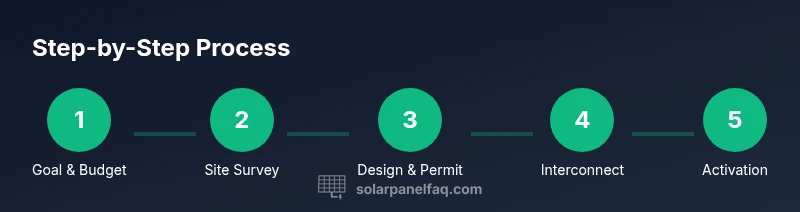
Steps
Estimated time: 6-12 weeks
- 1
Define goals and budget
Clarify why you’re going solar (save money, increase value, energy independence) and set a budget with a contingency. This helps determine system size and financing options before you contact installers.
Tip: Document your current electricity bill and any rate plans to estimate potential savings. - 2
Conduct a site assessment
Review roof condition, orientation, shading, and available space for panels and mounting. Note any obstacles such as vents, skylights, or chimneys that could affect placement.
Tip: Take photos and make rough sketches of roof layout to share with installers. - 3
Size the system
Use your energy use data to approximate an offset target (e.g., offset a substantial portion of usage). Convert daily kWh to a panel count with the chosen technology.
Tip: Aim for realistic energy offsets to avoid overbuilding or underutilization. - 4
Design and permits planning
Draft a system layout with mounting location, hardware, and interconnection approach. Initiate permit inquiries with the local building department and your utility.
Tip: Ask installers for permit checklists and a timeline aligned with city processing times. - 5
Solicit quotes and verify equipment
Request detailed proposals that include equipment specs, warranties, and interconnection terms. Compare modules, inverters, and mounting systems across vendors.
Tip: Check for performance warranties and panel efficiency under NY climate conditions. - 6
Schedule installation
Coordinate a start date with the installer, ensuring readiness of site access and required permits. Expect a multi-day process for roof work and electrical connections.
Tip: Plan for weather windows; rain or heavy snow can delay work. - 7
Interconnection and inspection
Submit interconnection paperwork to the utility and arrange the final inspection. The system goes live after approval and commissioning.
Tip: Keep digital copies of all permits and inspection approvals for future maintenance. - 8
Activate and monitor
Power up the system and verify performance through monitoring software. Compare actual production to forecast and address any anomalies.
Tip: Set up alerts for performance dips to catch issues early. - 9
Ongoing maintenance
Schedule periodic cleaning and checks of wiring, inverters, and mounting. Snow removal and freeze-thaw cycles require attention to ensure continued output.
Tip: Follow safety protocols when removing snow; never climb on wet or icy surfaces without protection.
Frequently Asked Questions
Do I need permits to install solar panels in New York?
Most NY installations require permits from the local building department and an interconnection agreement with the utility. Your installer typically handles much of the paperwork, but you should verify required steps for your municipality.
In New York, you’ll usually need a permit and utility interconnection agreement; your installer can help with the paperwork.
Is net metering available in New York for solar customers?
Net metering allows you to offset your consumption with solar production. Availability and terms vary by utility and program year, so review the latest NYSERDA guidance and your utility policy.
Net metering offsets your usage with solar output, but check current NYSERDA guidance and your utility policy.
What financing options exist for NY solar installations?
Options include cash purchases, solar loans, leases, and power purchase agreements. Compare total costs, warranties, and any contract terms to find the best fit for your budget.
You can buy outright, take a loan, or lease; compare costs and warranties to choose what fits your budget.
How long does installation typically take in NY?
Installation duration depends on roof type, system size, and permits. Expect planning time before work begins, with actual rooftop and electrical work completed over a few days.
Timing depends on size and permits; you’ll usually have a multi-day installation window.
What should I look for when hiring an NY solar installer?
Verify licenses and insurance, request recent local projects, and read warranty terms. Ask for a detailed proposal with equipment specs and a clear interconnection plan.
Check licenses, insurance, references, and warranties; get a detailed proposal.
What maintenance does a NY solar system require?
Keep panels clean from debris, monitor performance, and ensure inverters and wiring remain intact. Snow and freeze-thaw cycles can affect output, so plan seasonal checks.
Regular cleaning and monitoring keep performance up; watch for snow-related output drops.
Watch Video
Top Takeaways
- Assess NY-specific conditions before buying.
- Understand permits, interconnection, and incentives early.
- Size and design for your energy use and roof layout.
- Choose licensed installers and verify warranties.
- Plan for winter conditions and ongoing maintenance.