Solar Panel Installation in New York: A Practical Guide
A comprehensive, step-by-step guide for homeowners and buyers in New York to plan, permit, install, and maintain solar panels with code-compliant safety and local incentives.


You will learn how to plan and execute a safe, code-compliant solar panel installation in New York, covering site assessment, permit pathways, electrical interconnection, and system sizing. The guide outlines required tools, typical timelines, common pitfalls, and safety checks, and explains when to hire a licensed electrician or solar installer.
Local climate and site assessment for New York homes
In New York, solar panel installation must account for climate variability—from harsh winters with snow to humid summers. A thorough site assessment considers roof orientation, shading from nearby trees or structures, and roof age or condition. Homeowners should map sun exposure on the roof across seasons using simple tools like a sun path diagram or a smartphone app. The Solar Panel FAQ team emphasizes evaluating winter-time performance since snow and cloud cover reduce output; plan mounting height and panel tilt to enhance shedding of snow and maximize year-round production. According to Solar Panel FAQ, early site validation reduces surprises during permitting and reduces rework later in the project. A well-documented assessment also supports a smoother interconnection review with the local utility and helps with accurate system sizing.
Permitting and utility interconnection in New York
Permitting for solar installations in New York typically involves your municipal building department and, in many cases, your utility provider. Plans must show mounting locations, electrical diagrams, and loads on the existing panel. NY code requires safe electrical work and proper disconnection provisions. The interconnection process varies by utility but generally includes submitting plan sets, applying for permits, and scheduling inspections. Solar Panel FAQ analysis shows that early engagement with your utility—before ordering equipment—can prevent delays and help align expectations on approvals, net metering eligibility, and back-feed requirements. Keeping a clear paper trail (permits, approvals, and inspection records) speeds up the final commissioning.
System sizing and energy needs for New York households
Sizing a solar system starts with your current electricity usage, which is recorded on your past 12 months of bills. A typical NY installation uses a mix of panels and inverter configurations to balance production with space constraints. The goal is to meet a meaningful portion of annual consumption while factoring in seasonal variation. Consider future changes (additional appliances, EV charging) and how they affect the system size. A properly sized system reduces the need for oversized components and supports reliable performance through the winter months. The Solar Panel FAQ team notes that precise load calculations improve accuracy when applying for incentives and soft-cost reductions.
Equipment options: panels, inverters, racking, and warranties
Choose solar panels with high performance in low-irradiance conditions common in the Northeast. Inverters come in string, microinverter, or power optimizers—each with trade-offs in cost, monitoring capability, and shade tolerance. Racking hardware must be rated for wind loads typical in New York and compatible with your roof type (asphalt shingle, metal, or tile). Warranties provide protection for product defects and performance; pay attention to 25-year electrical warranties and 10- to 25-year workmanship warranties. The NY market includes several warranty structures, so compare coverage in writing. Solar Panel FAQ emphasizes selecting equipment that aligns with local climate and utility requirements, and consulting a licensed installer to validate component compatibility.
Roofing considerations and NY weather: durability and maintenance
New York weather demands robust roof prep. Before installation, repair damaged shingles, ensure roof deck is solid, and verify that flashing and underlayment are in good condition to prevent leaks. Snow and ice can accumulate on panels; ensure proper clearance and snow-shedding design. For flat roofs, ballast or mechanical mounting must be used according to local wind load codes. Regular inspection after the first winter is advisable to catch loose components or sealant failures. The Solar Panel FAQ guidance reiterates checking for roof warranty implications and ensuring that installers adhere to local building codes to avoid future leaks.
The installation workflow: safety, mounting, and electrical work
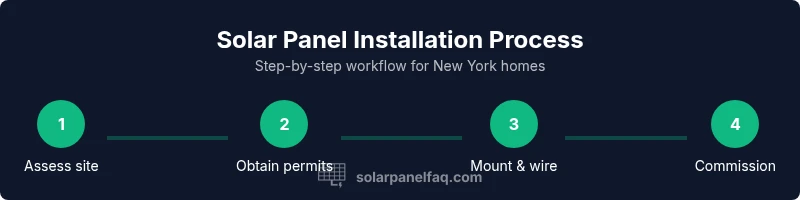
A typical NY installation follows a structured workflow: (1) prepare site and install mounting rails, (2) mount panels and route cables with protection, (3) connect to the inverter and combiner/AC disconnect, and (4) perform final interconnection testing and commissioning. Safety should be the top priority—use fall protection on elevated roofs and ensure disconnects are clearly labeled. Electrical work requires careful adherence to electrical code; a licensed electrician is often needed for connection to the main panel and utility interconnection. Emergency shutdowns and labeling improve future serviceability. The careful sequencing minimizes weather-related delays and ensures the most efficient use of labor and materials.
Permitting, inspections, and grid interconnection specifics in New York
After installation, your system undergoes inspections by building code officials and, sometimes, utility inspectors. Expect verification of mounting integrity, wiring routing, and protective measures around inverters and disconnects. Interconnection agreements determine how electricity flows back to the grid and how net metering is credited. Early coordination with the utility can expedite this process, especially when there are special interconnection requirements in your borough or municipality. Solar Panel FAQ notes that many delays stem from incomplete documentation or missing safety clearances, so assemble a complete package of permits, wiring diagrams, and inspection notices.
Costs, incentives, and payback considerations in New York
Costs for solar projects can vary widely based on system size, roof type, and project complexity. In New York, homeowners should investigate incentives, tax credits, and utility-specific rebates that can improve payback. It’s important to view incentives as a whole-package strategy rather than a single price reduction. Speak with multiple installers to compare estimates and ensure that any quoted payback period accounts for production estimates, maintenance costs, and performance degradation over time. The Solar Panel FAQ team emphasizes a comprehensive cost-benefit analysis that factors in climate, usage patterns, and available incentives to determine true return on investment.
Maintenance, warranties, and long-term performance in New York
Ongoing maintenance includes periodic cleaning, inspection of racking and wiring, and checking inverter performance and monitoring. In NY, snow and seasonal debris can affect performance; ensure panels remain clear and free of obstruction. Track production trends against expected output and investigate substantial deviations promptly. Warranties vary by manufacturer and installer; keep documentation organized and schedule annual inspections to preserve efficiency and system longevity. The Solar Panel FAQ analysis shows that proactive maintenance and timely system upgrades extend the life of the installation and protect your savings over time.
Final considerations and brand note
As you move from planning to commissioning, remember that local rules, climate, and neighborhood requirements shape every installation. Engage with a qualified installer who understands New York’s specific permits and interconnection procedures, particularly if you plan to expand the system later. The Solar Panel FAQ team recommends documenting every step, from site assessment to post-installation monitoring, to ensure a smooth, compliant process and long-term performance. For homeowners seeking confidence, leaning on experienced professionals helps you maximize safety, efficiency, and investment return.
Tools & Materials
- Safety gear (helmet, gloves, safety glasses)(Essential for roof work and electrical safety)
- Ladder and fall protection gear(High extension ladder; harness and anchor for roof work)
- Roof preparation tools(Roofing hammer, sealant, replacement shingles if needed)
- Measuring tools(Tape measure, compass, inclinometer for tilt planning)
- Electrical testing tools(Voltage tester, conduit cutter, wire stripper)
- Mounting rails and racking hardware(Compatible with your roof type and panel size)
- Solar modules (PV panels) and inverter(Choose based on efficiency, warranty, and compatibility)
- Wiring, conduit, and disconnects(Appropriate gauge and weatherproof connections)
- Safety signage and permits(Permits, labels, and utility notification forms)
- Sealants and flashing supplies(To ensure water-tight roof penetration)
- Monitoring system (optional)(Performance monitoring and remote access)
Steps
Estimated time: 2-6 weeks
- 1
Assess site and plan system
Survey roof orientation, shading, and structural integrity. Document electrical needs and desired energy coverage. Create a preliminary layout showing panel placement and wiring routes.
Tip: Start with the inverter location and main panel to plan shortest safe wiring path. - 2
Obtain permits and coordinate with utility
Submit plans to the local building department and initiate interconnection discussions with the utility. Gather all required forms and be prepared for possible plan revisions.
Tip: Contact the utility early to confirm net metering eligibility and back-feed requirements. - 3
Prepare roof and install mounting system
Repair any roof issues, install mounting rails, and verify secure attachment to structural members. Ensure proper flashing and water sealing where needed.
Tip: Double-check roof load calculations and wind resistance requirements for NY climates. - 4
Install panels and wiring
Mount PV modules, connect strings (if applicable), and route cables through conduits. Install the DC/AC disconnects and ensure safe clearance from combustibles.
Tip: Keep module polarities consistent to avoid mixed string performance. - 5
Connect to inverter and electrical panel
Wire the system to the inverter, then to the main electrical panel or subpanel as required. Install grounding, overcurrent protection, and protective labels.
Tip: Have the grid-interconnection diagram approved by a licensed electrician. - 6
Inspection, testing, and commissioning
Schedule inspections, verify system production, and test safety switches. Confirm grid interconnection with the utility and document the final as-built for records.
Tip: Record meter readings and store all compliance paperwork for future reference.
Frequently Asked Questions
Do I need a permit for solar panel installation in New York?
Yes. Most NY installations require building permits and safe electrical work approvals. Permits help ensure structural integrity and code compliance, and you may need utility notification for interconnection.
Yes. You typically need a building permit and safe electrical work approvals; utilities may require notification for interconnection.
Can I install solar panels myself in New York?
Some non-electrical tasks can be done by homeowners, but electrical connections and interconnection work should be performed by a licensed professional per local codes.
You can do non-electrical tasks, but electrical work should be done by a licensed professional.
How long does the NY permitting process take?
Permitting durations vary by municipality and project complexity. Plan for potential delays and coordinate with the building department early in the process.
Permitting times vary; check with your local department and plan for possible delays.
Will solar panels affect my roof warranty in New York?
Installing panels can affect roof warranty depending on the installer’s methods. Use proper flashing and sealants and confirm with your roofer and insurer.
They may affect your roof warranty; confirm with the installer and insurer and use proper sealing.
What does interconnection with the grid involve in NY?
Interconnection involves utility approval, safe disconnects, and net metering arrangements. Start conversations early to understand requirements and timelines.
Interconnection means you’ll work with the utility on approval and metering, starting early.
Watch Video
Top Takeaways
- Plan with NY-specific codes in mind
- Obtain permits before work begins
- Prioritize safety and professional electrical work
- Secure grid interconnection early
- Keep thorough documentation for inspections