Sun Panels: A Practical Home Solar Guide
Learn how to plan, size, and safely install sun panels with this practical, step-by-step guide for homeowners. Includes permits, incentives, maintenance, and budgeting tips.


By the end of this guide, you’ll be able to plan, size, and begin a sun panels project for your home with safety in mind. You’ll learn how to evaluate site readiness, choose panel types, estimate system size, and navigate permits and basic financing. This step-by-step guide prioritizes practical checks and professional guidance.
Why sun panels matter for homeowners
According to Solar Panel FAQ, home energy independence starts with informed planning. Sun panels convert daylight into electricity, reducing monthly bills and buffering you against rising utility rates. This section explains why investing in sun panels can make sense for most households, even when upfront costs seem intimidating. You’ll learn how a well-scoped plan boosts long-term value, improves resilience during outages, and aligns with environmental goals. We’ll address common myths, compare scenarios, and show practical steps to move from curiosity to a concrete, budget-conscious plan.
Understanding sun panel basics
Sun panels, or photovoltaic (PV) modules, capture photons from the sun and emit electrons to generate DC electricity. An inverter then changes that DC into AC usable by home appliances. The most common types are monocrystalline, polycrystalline, and thin-film. Monocrystalline panels typically deliver higher efficiency per square foot, while polycrystalline panels offer solid performance at lower cost; thin-film panels can cover large areas and tolerate shading differently. In this section, we demystify key components—PV cells, inverters, mounting hardware, and wiring—so you can compare products without jargon and focus on what matters most for your space and budget.
How to size your solar system for your home
Start by reviewing your past electricity bills to estimate daily energy use in kilowatt-hours (kWh). Then calculate how many sun hours your site receives on an average day; this helps determine panel count and inverter capacity. A practical approach targets a system that covers 70–100% of annual usage, with room to expand if needed. We’ll walk through a simple formula and show how to factor in seasonal variation, shading, and potential battery storage in a future upgrade. This planning step sets the foundation for realistic performance and cost expectations.
Panel types and where they fit
Here we compare monocrystalline, polycrystalline, and thin-film sun panels in practical terms: efficiency, cost, aesthetics, and durability. Monocrystalline offers streamlined efficiency for limited roof space, while polycrystalline provides strong performance at lower prices. Thin-film can be advantageous on large, flat roofs or façades and can work better in diffuse light. Your choice will depend on roof area, climate, and your long-term goals, including whether you plan for storage or grid-tied operation.
Efficiency and performance: what actually matters
Solar panel efficiency tells you how much sunlight becomes usable electricity. Real-world performance also depends on temperature, angle, shading, and wiring losses. We compare common efficiency ratings with expected energy yield for typical roof orientations. Practical steps include maximizing tilt, minimizing shading from trees, and ensuring the inverter’s optimization matches the panel set. This helps you read datasheets beyond marketing claims and translate numbers into real savings on your electric bill.
Costs, incentives, and financing options
Costs for sun panels vary by system size, location, and installer expertise, with price ranges widely across markets. Incentives—such as tax credits, rebates, and net metering—can significantly reduce upfront burden. We outline financing paths from outright purchase to loans and lease options that suit different budgets. The goal is a realistic plan that aligns with your cash flow while acknowledging maintenance and performance expectations over time.
Roof readiness and orientation: setting up for success
The roof is the stage for your solar array. Favorable orientation (often south-facing in the northern hemisphere) and a clear area maximize energy production. We discuss roof type compatibility, wind and snow loads, and the importance of a solid mounting surface. If shade from nearby trees or buildings is chronic, pruning or layout adjustment may be needed. This section also covers roof age and potential reinforcement needs before installation to avoid future leaks or structural issues.
Permits, codes, and inspections you should expect
Solar installations must comply with local electrical codes and building permits. Start by checking with your city or county planning department and your electric utility about interconnection requirements. A licensed installer can handle most paperwork, but understanding the process helps you track progress and avoid delays. We spell out typical steps, common documents, and how to prepare for inspections so your project remains on schedule and compliant.
Step-by-step project overview (high-level)
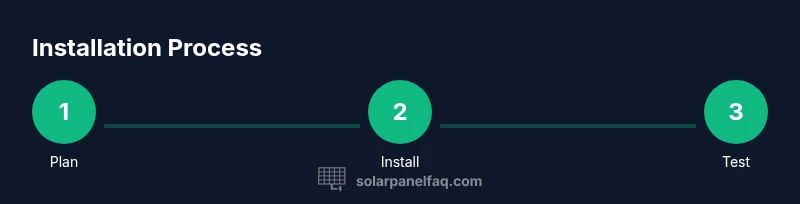
This section presents a practical, high-level sequence that a professional team would follow, without getting into dangerous DIY detail. Plan, design, and obtain approvals; prepare the roof and mounting area; install racking and panels; connect inverter and safety switches; complete commissioning and monitoring. Remember, electrical work on a live system can be hazardous, so always defer to licensed professionals for critical connections. Use this as a checklist to communicate clearly with your installer.
Maintenance, cleaning, and monitoring
Solar panels require minimal maintenance, but regular checks help sustain performance. Clean panels if dust, pollen, or bird droppings accumulate—use water and a soft brush, avoiding abrasive cleaners. Monitor performance with the inverter dashboard or a solar monitoring app to catch anomalies early. Scheduling a professional inspection every few years is wise, especially after severe weather. Proper maintenance preserves efficiency and can extend system life.
Troubleshooting common issues you may encounter
Low production can stem from shading, dirty panels, or a failing inverter. Start with a quick self-check: inspect for loose connections, ensure the inverter displays a healthy LED, and verify the array isn’t blocked by new shade. If production remains low, consult your installer for a formal diagnostic because some issues require specialized testing equipment and safety precautions.
Environmental impact and long-term savings
Solar panels reduce greenhouse gas emissions by displacing fossil-fuel electricity, and they contribute to energy resilience. The environmental footprint of your system is influenced by manufacturing processes, module waste, and recycling options. Over time, energy savings accumulate, potentially offsetting installation costs while supporting a cleaner grid. We’ll help you weigh environmental benefits alongside practical financial considerations.
Next steps: decision checklist and how to proceed
Review your energy goals, roof viability, and local incentives. Obtain quotes from reputable installers, ask about warranties, and verify interconnection timelines. Use the decision checklist to compare options side by side, and don’t hesitate to request a site assessment. The Solar Panel FAQ team recommends a conservative, safety-first approach while planning your solar journey.
Tools & Materials
- Solar panels (sun panels)(Quantity depends on system size (see sizing guide).)
- Utility-grade inverter(Choose string or microinverters based on shading and layout.)
- Racking/mounting hardware(Rails, clamps, and mounting feet rated for your roof type.)
- DC disconnect switch(Required by code; ensures safe de-energization.)
- Combiner box and conduit(Weatherproof wiring for safe connections.)
- AC disconnect near meter(Per code; for service personnel safety.)
- Safety gear and tools(Gloves, harness, eye protection, ladder, PPE.)
- Electrical cables and MC4 connectors(Weather-rated; match system voltage and layouts.)
- Sealant and flashing for roof penetrations(Keeps water out and maintains roof integrity.)
- Battery storage (optional)(If you plan to add storage later; check compatibility.)
- Monitoring hardware (optional)(Smart meters or Wi-Fi dongle for remote monitoring.)
Steps
Estimated time: 2-6 weeks (permit and inspections vary by locality).
- 1
Assess energy needs and site viability
Review last 12 months of utility bills to estimate daily kWh; inspect roof exposure, shading, and structural integrity. Note any planned energy upgrades and climate considerations.
Tip: Before proceeding, consult a licensed electrician or solar designer to confirm roof capacity and safety requirements. - 2
Size your system based on usage and sun
Calculate target daily energy and translate into panel count. Consider future expansion and the option of adding storage later.
Tip: Use a simple online sizing calculator as a starting point, but verify with a professional. - 3
Check permits and interconnection requirements
Identify local permit steps, utility interconnection rules, and required inspections.
Tip: Start early with your local building department to avoid delays. - 4
Select panel type and inverter configuration
Choose mono/poly/thin-film and decide on string vs microinverters based on shading and roof layout.
Tip: Take home samples or datasheet comparisons to review efficiency and warranty. - 5
Develop mounting and wiring plan
Draft layout, wire routing, setbacks from edges, and safety clearances.
Tip: Consider future expansion and battery readiness if you plan storage. - 6
Prepare roof and install mounting hardware
Ensure roof is structurally sound, seal penetrations, and install mounting rails.
Tip: Protect existing shingles and use proper flashing to prevent leaks. - 7
Mount panels and route wiring safely
Secure panels, connect wiring, and label circuits. Maintain clearances and avoid walking on panels.
Tip: Use proper PPE and adhere to lockout-tagout procedures during installation. - 8
Connect inverter, storage, and grid interconnection
Install inverter, connect to DC side, and route AC output to home or grid tie.
Tip: Only licensed electricians should perform live electrical connections. - 9
Complete commissioning and monitoring setup
Test system, verify production and safety interlocks, and configure monitoring tools.
Tip: Document test results and keep warranty paperwork organized. - 10
Create maintenance plan and schedule
Set cleanings, inspections, and performance reviews.
Tip: Record performance data monthly to catch anomalies early. - 11
Review and finalize permits and documentation
Ensure all inspections passed and interconnection approved.
Tip: Keep digital copies of all permits and warranties.
Frequently Asked Questions
What are sun panels?
Sun panels are solar photovoltaic modules that convert sunlight into electricity. They’re typically connected to an inverter to power home appliances.
Sun panels are solar panels that convert sunlight into electricity and connect to an inverter to run your home.
Do I need a permit to install sun panels?
Most jurisdictions require a building permit and interconnection approval. Check with your local building department and utility.
Most places require a permit and interconnection approval.
How many sun panels do I need for a typical home?
System size depends on energy use, roof space, and budget. An on-site assessment provides a precise recommendation.
The number depends on your energy use and space; an on-site assessment gives a solid estimate.
What does sun panel installation cost?
Costs vary with system size, equipment, and labor. Expect quotes from multiple installers and consider incentives that reduce upfront costs.
Prices vary by system size and incentives; ask for quotes from multiple installers.
How long do sun panels last?
Most panels are designed to last several decades with warranties typically covering 20–25 years.
Most panels last several decades, with warranties often around twenty years.
Is professional installation required?
Professional installation is strongly advised for safety, performance, and code compliance. Many regions require licensed electricians for critical connections.
It's wise to hire a professional for safety and code compliance.
Watch Video
Top Takeaways
- Plan energy goals early and map incentives.
- Size, orientation, and shading drive output.
- Professional installation reduces risk and ensures code compliance.
- Monitor performance to catch issues early.
- Maintenance extends system life and savings.