How to Remove a Solar Panel Safely: Step-by-Step
A practical, safety-first guide for homeowners on removing a solar panel from mounting hardware, including planning, disconnection, lifting, storage, and next steps while preserving roof integrity.


By the end, you will know how to safely remove a solar panel from its mounting, whether DIY is appropriate, and how to minimize roof damage. This guide covers pre-inspection, safety gear, electrical isolation, removing fasteners, lifting the panel, and proper handling for storage or reuse. It emphasizes following local codes and manufacturer warranties.
Scope: When to Remove a Solar Panel
Removing a solar panel is not always the right move. You might need to remove a panel to replace a faulty module, service the mounting hardware, repair roofing, or upgrade an entire array. Before you begin, identify whether removal is truly necessary, or if a repair at the module level could be sufficient. In this guide on how to remove a solar panel, we focus on safety, proper handling, and preservation of mounting hardware and roof integrity. For homeowners, consult your system manual and the installer’s documentation. If your system is under warranty or installed by a professional, check warranty terms; some manufacturers require a certified technician for any removal or reinstallation to avoid voiding coverage. The goal is to minimize roof penetrations, protect electrical components, and ensure future reinstallation is straightforward. The guidance here emphasizes conservative planning, labeled fasteners, and stepwise execution to reduce the risk of damage to panels, wiring, or roofing.
Safety First: Structural and Electrical Risks
Removing a solar panel involves both roof safety risks and electrical hazards. Falls from height, slipping on wet surfaces, and improper ladder use can cause serious injuries. Electrical risks include exposed conductors, live DC circuits, and the potential for arc flash if panels or wiring are disturbed improperly. Always wear a full set of PPE: a hard hat, non-slip boots, gloves rated for electrical work, eye protection, and a fall-arrest system if you are working on a pitched roof. Keep children and pets away, and ensure the work area below is clear. If you are ever uncertain about your ability to perform any step safely, pause and seek professional help.
Planning Your Removal: Permissions and Weather
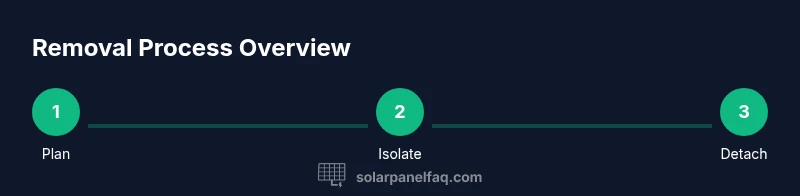
A successful removal starts with a plan. Check local weather, ensure daylight for visibility, and prepare a clear workspace on the roof or ground near the mounting. Confirm accessibility, along with any homeowner or building codes that might apply to roof work. If your system is under warranty, review the terms to understand what a DIY removal may affect or void. Gather all manuals, wiring diagrams, and manufacturer recommendations ahead of time so you know exactly where to disconnect and how to reassemble if you plan to reuse the panel or re-install later.
Handling and Staging: Panel Orientation and Support
Panels are delicate and heavy; improper handling can cause cracks or microfractures that reduce output. Always support the panel from the sides, avoid vertical bending, and keep the face parallel to the ground whenever possible. Use soft blankets or foam to cushion corners and place a temporary rack or stand nearby to keep the panel off the roof surface. Label all components as you go to simplify future reinstallation or disposal. If you are removing multiple panels, consider creating a simple staging line on a safe, dry surface to minimize movement and accidental contact with roofing materials.
Step: Isolate Power and Verify De-Energization (High-Level)
Before touching any wiring, verify that the system is de-energized. This typically means switching off the main DC disconnect, any string inverters, and isolators specific to each panel or string. Use a voltage tester to confirm there is no residual voltage on exposed conductors. Do not rely on a single check—test both ends of the circuit where feasible. If you cannot safely confirm de-energization, stop and contact a licensed electrician or solar technician. De-energizing protects you from shock and reduces the risk of arc faults during removal.
Detaching Electrical Connections (High-Level)
Carefully locate and disconnect the panel’s electrical connections. This usually involves unplugging connectors, loosening clamps, and ensuring that any DC wiring is isolated from the metal mounting hardware. Take photos before disconnecting so you have a reference for reinstallation. If your system uses through-rods or busbars, treat them with care to avoid bending or damaging insulation. Place connectors in labeled, insulated bags or containers to prevent accidental contact or shorting during relocation.
Remove Panel Mounting Hardware
With the electrical side secured, begin detaching mounting hardware from the rail or rack. Start from the outer edges and work toward the center, keeping the panel supported as you release each fastener. Use non-conductive tools when possible to minimize the risk of arcing. Keep screws and brackets organized in labeled bags, and document the order in which you removed them to simplify reinstallation. Do not force anything that resists removal; if a fastener is seized, apply penetrating oil and allow it to sit, or call a professional if you suspect structural damage to the mounting system.
Lowering and Moving Panels to a Safe Storage Area
Lower panels slowly to a ground-based staging area or onto a padded cart designed for heavy equipment. Have a helper assist to guide the panel away from the roof edge and away from edge damage. Maintain a low, stable center of gravity and avoid twisting the panel during lowering. Place the panel on a soft surface and cover it to prevent scratches. If you plan to transport the panel, use corner protectors and secure it with straps to prevent movement during transit.
Post-Removal Care: Inspection, Documentation, and Disposal
Inspect the removed panel, rails, and mounting hardware for signs of damage such as cracks, corrosion, or bent connectors. Photograph key components for warranty or resale purposes and label everything for future reinstallation. Decide whether to reuse the hardware or replace components based on wear and warranty terms. If the panel is damaged or end-of-life, follow local e-waste guidelines for disposal or recycling; never discard electrical components with household waste. Keep a record of the removal process for future maintenance or retrofits.
Tools & Materials
- Safety harness and fall protection(Full-body harness with lanyard; anchor to roof points)
- Non-conductive ladder(Certified ladder with slip-resistant feet)
- Voltage tester / multimeter(DC-rated and suitable for solar systems)
- Insulated screwdriver set(Flat and Phillips; insulated grips)
- DC-rated wire cutters/pliers(For safe connector release)
- Electrical tape and label tape(Seal and label connectors and cables)
- Soft blankets or foam padding(Protect panel faces during handling)
- Storage bags or labeled containers(Keep hardware organized)
- Camera or notepad(Document wiring and order for reinstallation)
- Helper or panel cart(Assists with safe handling and lowering)
Steps
Estimated time: 60-120 minutes
- 1
Prepare the work area
Clear the workspace around the panel and ensure stable footing on the roof or ground. Check weather and choose daylight with good visibility. Gather tools and confirm everyone involved understands the plan.
Tip: Have a clear signal for communication with your helper. - 2
Shut down and verify de-energization
Turn off the main DC disconnect and any local inverters or isolation switches. Use the multimeter to verify there is no voltage on exposed conductors. Do not proceed if voltage is detected.
Tip: Double-check both ends of each circuit. - 3
Access and secure the panel
Position yourself to access the panel safely; secure ladders and clear any loose debris. If needed, place a temporary work platform. Ensure the panel face is not exposed to potential impact during removal.
Tip: Protect the panel face with blankets during handling. - 4
Disconnect electrical connections
Disconnect connectors at the panel or string combiner as applicable. Keep wiring organized and labeled for reinstallation. Avoid pulling on cables; disconnect at the appropriate junctions.
Tip: Photograph connections before removal for reference. - 5
Release mounting hardware
Loosen and remove fasteners from the outer rails first, then work toward the center. Maintain support under the panel to prevent it from sagging or tipping.
Tip: Use non-conductive tools to reduce arcing risk. - 6
Lower the panel safely
With a helper, guide the panel downward and away from the roof edge, keeping it level and supported. Lower onto a padded surface or a panel cart.
Tip: Never lower alone if the panel is heavy. - 7
Inspect and label hardware
Check each component for damage and label hardware for future reinstallation. Take photos to document the condition and layout.
Tip: Store hardware in labeled containers to prevent loss. - 8
Store or transport the panel
Place the panel on a soft surface, cover to prevent scratches, and secure for transport. If you plan to reinstall later, keep all mounting components with the panel.
Tip: Avoid stacking panels; use proper supports.
Frequently Asked Questions
Is it safe to remove a solar panel myself, or should I hire a professional?
Removal involves electrical and roof safety hazards. If you lack proper training and equipment, hire a licensed professional to minimize risk and protect warranties.
Removal can be dangerous without training. If you're not sure, hire a licensed solar technician.
What safety gear do I need for removing a solar panel?
Wear a hard hat, non-slip boots, fall protection, insulated gloves, and eye protection. Ensure ladders are stable and the work area is clear.
Put on a helmet, gloves, and fall protection before you start.
Will removing a panel affect the warranty?
Removing panels can affect warranty terms. Check the original installer’s documentation and manufacturer guidance before proceeding.
Check warranty terms first; removals can affect coverage.
Can I reuse mounting hardware after removal?
If hardware shows no signs of damage and remains within spec, reuse may be possible. Inspect for corrosion or fatigue and replace anything compromised.
Inspect and only reuse if components are undamaged.
What should I do with a panel after removal?
Store in a dry, level area, protected from impacts. Keep panels facing up on a padded surface to prevent scratches.
Store it carefully to avoid scratches or damage.
How do I dispose of damaged solar panels?
Follow local e-waste guidelines and recycle when possible. Do not discard panels with household waste.
Recycle damaged panels per local rules.
Watch Video
Top Takeaways
- Plan and verify de-energization before touching any wiring.
- Use proper PPE and fall protection to mitigate height risks.
- Label hardware and document wiring for easier reinstallation.
- Handle panels gently and store on a padded surface.
- Consult manufacturer guidelines and local codes if any doubt arises.