How to Remove Solar Panels: A Safe, Legal Guide
A homeowner-ready guide covering planning, permits, safety, disposal, and contractor options to remove solar panels responsibly.


If you're wondering how to get rid of solar panels, this guide provides a clear, safe path for removal. It covers safety checks, when to hire licensed electricians, permit requirements, disposal or recycling options, and how to protect your roof and warranty during decommissioning. It also outlines cost ranges and timelines.
Why removal is sometimes necessary
When homeowners ask how to get rid of solar panels, they usually want a plan that protects safety, roof integrity, and future options. Removal becomes necessary when a roof needs replacement, when panels are outdated or failing, when a home is being sold and decommissioning is required, or when the system must be relocated for improvements. Keeping panels in place during these processes can complicate repairs, void warranties, or create safety hazards for occupants and workers. A deliberate removal plan minimizes roof damage, preserves electrical safety, and ensures proper disposal or reuse of components. By approaching the task with a clear checklist and professional guidance, homeowners can manage decommissioning responsibly while maintaining the home’s value and safety. Planning ahead also helps identify lead times for permits, recycling options, and any needed repairs to flashing or underlayment. After removal, patch penetrations, inspect the roof for water intrusion, and restore any flashing. Coordinate with the installer and utility to close permits and update electrical records.
Planning and permits
A successful removal starts with careful planning. Begin by inventorying all components (panels, rails, connectors, and any mounting brackets) and noting the location of electrical disconnects. Check local zoning and building codes for permit requirements; many jurisdictions require a permit for decommissioning a PV array and for any roof work. Contact your utility to confirm de-energization procedures and any meter-related steps. Obtain written instructions from your installer for reinstallation or disposal, and determine whether a licensed electrician must handle electrical work. If you’re selling the home, coordinate with the buyer’s agent to document the decommissioning in the closing package. Solar Panel FAQ emphasizes planning as the foundation of a safe, compliant removal. Document your plan with photos and notes to simplify inspections and future maintenance.
Safety considerations and hazards
Removal involves electrical risks and fall hazards. DC voltage from PV modules can remain present even when the system is appearing quiet. Always wear proper PPE, use fall protection when working on a roof, and never work alone. Ensure controls are locked out and tagged out where applicable, and verify that all power sources are disconnected before touching wiring. Weather conditions and roof material add extra risk; plan around dry days, avoid high wind, and keep weather eye on forecasts. If you detect damage to flashing, shingles, or the roof structure during removal, pause work and consult a roofing professional before continuing. A conservative approach to safety reduces the chance of shocks, burns, or accidental panel drops that could cause injury or property damage.
Preparation steps before removal
Before you touch any equipment, gather your tools, verify permissions, and prepare a staging area. Notify household members about the work schedule and create a clear plan for lifting panels. Turn off DC and AC power at the appropriate disconnects, and verify with a voltage tester that circuits are de-energized. Label every connector and take photos from multiple angles to document original wiring. Clear the roof path of debris and protect surfaces with non-slip mats. Finally, arrange two-person lifting for panels and plan for temporary storage in a safe area away from traffic.
Disposal, recycling, and paperwork after removal
Disposal options for solar panels are evolving. Many panels can be recycled through specialized e-waste facilities or manufacturer take-back programs; some components such as mounting rails and brackets may be recycled as metal. Contact local recyclers to understand accepted materials and drop-off requirements. Keep records of the decommissioning, including permits, photos, and disposal receipts. If you plan to reinstall panels later, store components in labeled containers and preserve labeling for a smoother reinstallation. Carry out a final roof inspection to ensure no leaks and address flashing or sealant as needed.
Costs, timelines, and hiring decisions
Costs and timelines for removing solar panels vary based on system size, mounting type, roof access, and disposal requirements. In most cases, labor is a major portion of the job, and permitting or utility coordination can add to the timeline. The decision to hire a licensed professional versus attempting DIY removal depends on your comfort with electrical work, roof safety, and warranty terms. If the system is under contract, review the decommissioning process with the installer to ensure compliance and avoid penalties. Request written estimates that itemize disconnect wiring, panel removal, rail/attachment removal, waste handling, and any final inspections. Use the estimates to compare options and choose the safest, most cost-effective path.
Alternatives to full removal
For some homeowners, full panel removal is not immediately necessary. Deactivating the system, switching to a non-exporting mode, or partially decommissioning by removing only affected sections can reduce ongoing maintenance while preserving future options. In cases where a move or home sale is involved, decommissioning with proper documentation may be sufficient. If you plan to relocate panels later, consider staged removal to minimize exposure and roof exposure. Always verify disposal options for any removed components and discuss recycling or resale possibilities with the installer or manufacturer.
Tools & Materials
- Safety gear (gloves, goggles, hard hat)(EN-certified, non-slip gloves)
- Voltage detector / multimeter(to verify no live DC on panels)
- Insulated tools(insulated screwdrivers, pliers)
- Fall protection equipment(harness, lanyard, roof anchors)
- Ladder or lift equipment(reach the roof safely)
- Labeling supplies(mark connectors and circuits)
- Waste containers for components(collect panels, brackets, cabling for disposal)
Steps
Estimated time: 4-8 hours
- 1
Prepare the site and safety plan
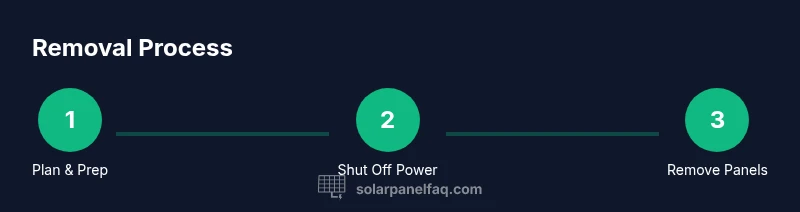
Assess the roof access, weather conditions, and the need for a helper. Set up a clear safety plan that includes PPE and fall-protection measures. Confirm all relevant permits are identified before touching any equipment.
Tip: Have a second person available to assist with handling panels. - 2
Shut off power and verify de-energization
Turn off the DC disconnect near the array and the main service disconnect for the building. Use a voltage detector to confirm there is no live voltage before touching wiring.
Tip: Double-check with a multimeter at the panel connectors to prevent shocks. - 3
Detach panels from rails and mountings
Loosen clamps along the racking and carefully lift each panel from the edge. Move panels to a safe staging area with two-person handling and supported edges to prevent cracks.
Tip: Never grip panels by the center; support both edges. - 4
Disconnect wiring at connectors and combiner box
Label all wires and take photos of connections before disconnecting. Unplug connectors or unscrew terminal blocks per manufacturer instructions.
Tip: Maintain a clear labeling scheme so reinstallation or disposal is straightforward. - 5
Remove mounting rails and hardware
Unbolt or unclip rails from the roof or mounting brackets. Inspect for any roof damage and store hardware in labeled containers.
Tip: Keep bolts and nuts organized to simplify future reinstallation. - 6
Inspect roof, clean up, and arrange disposal
Check flashing and roof penetrations for signs of water intrusion. Patch as needed and arrange recycling/disposal for panels and hardware with an approved facility.
Tip: Document the removal with photos for permits and disposal records.
Frequently Asked Questions
Do I need a permit to remove solar panels?
Most jurisdictions require some form of permit for decommissioning a PV array and for any roof work. Check with your city or county building department and your utility for exact requirements and inspection steps.
Most places require a permit for decommissioning a PV system and any roof work—check with your local building department and utility.
Can I remove solar panels myself?
Removal involves electrical work and roof safety risks. It is commonly recommended to hire a licensed professional to handle electrical disconnects and mounting removal, especially if the system is still under warranty.
Removal involves electrical work and roof safety risks; consider hiring a licensed professional.
What happens to solar panels after removal?
Panels are recyclable and may be recycled through specialized facilities or manufacturer take-back programs. Check local e-waste programs and recycling centers for acceptable drop-off options.
Solar panels are recyclable through specialized facilities or take-back programs.
Will removal affect roof warranty?
Removing components can affect roof warranties if done by non-approved workers or if flashing and underlayment are damaged. Review terms with the original installer and the warranty provider before starting.
Removing parts can affect roof warranties; check terms with the installer and warranty provider.
How long does removal take?
Duration depends on system size and site conditions. A typical removal can range from several hours to a full day, especially if access is limited or permits are involved.
Removal can take several hours to a full day depending on size and site conditions.
Watch Video
Top Takeaways
- Plan thoroughly before removal
- Hire licensed professionals for electrical work
- Dispose of panels responsibly through recycling channels
- Obtain permits and document the process
- Inspect the roof and document final conditions