How to Get Out of Solar Panels: A Homeowner's Exit Guide
Practical, step-by-step guidance to exit or decommission solar panels, covering contract terms, removal steps, safety considerations, and post-removal energy planning for homeowners.


You can exit or remove solar panels by reviewing your contract, understanding the ownership model, and coordinating removal with a licensed professional. Start with a written notice, explore transfer options, and ensure permits are handled properly. The exact path depends on whether you own the system, lease it, or have a power purchase agreement.
Why you might want to exit solar panels
Many homeowners reach a point where they want to exit a solar panel installation. You may move to a new home, experience higher-than-expected bills, or discover that your system no longer fits your roof or energy goals. Before you proceed, it's important to identify whether you own the system or lease it, and which contract terms apply. According to Solar Panel FAQ, the path to exiting depends largely on the contract type and local regulations. The first step is to clarify your objective: end the agreement, remove the panels, or transfer ownership to the new homeowner. This article walks through practical steps and safety considerations to help you navigate the exit with confidence. We'll cover owner-operator versus financing-backed arrangements, common termination clauses, and how to avoid penalties while protecting your home and energy needs.
Ownership models and exit implications
Solar panels can be owned outright, financed, leased, or covered under a power purchase agreement (PPA). Each model changes who pays for removal, who bears risk if there are roof or warranty issues, and who can authorize decommissioning. For an owned system, you typically have more control over removal and may be able to sell the system with your home; but you also shoulder disposal costs. For leases and PPAs, there are contract-based exit routes, buyouts, or transfer provisions. In practice, the installer or lender may require a move-out inspection, a credit check, or a replacement agreement with the new homeowner. The Solar Panel FAQ team notes that understanding your specific agreement is essential before negotiating anything. If you anticipate a move or a change in plans, map out your preferred outcome (transfer, buyout, or removal) and align that with the contract language and possible penalties.
Understand contract terms and termination options
Terminating a solar contract depends on the exact language in your agreement. Common provisions include early termination fees, buyout options, transfer rights, and notice periods. Some contracts allow a straightforward buyout after a set number of years, while others prohibit removal until the loan is paid or the lease term ends. Solar Panel FAQ analysis shows that many contracts require written notice within a specific window and may impose charges for decommissioning or equipment removal. Before you contact the installer, gather your contract, any loan documents, and your warranty papers. Having a clear file helps you request the least costly exit path and avoids misunderstandings during negotiations. If a transfer is possible, you’ll need to coordinate with the new homeowner and ensure the paperwork reflects the assignment correctly.
Gather documents and plan the exit
Start by collecting all documents: the original purchase agreement, loan or lease contracts, service records, warranty information, and any communication with the installer about termination. Create a simple timeline with key dates: warranty expiration, lease end, notice deadlines, and removal permit windows. Next, confirm your roof's status and structural health. If removal requires a permit, contact your city or county building department to learn the process and fees. Consult a licensed professional for a preliminary assessment of the removal requirements and potential impacts on the roof structure, attic access, and electrical system. Having a professional opinion early reduces the risk of surprises and helps you budget accurately for both removal and any needed repairs.
The removal process: safety, permits, and coordination
Removal should be performed by a licensed solar contractor or electrician who can safely disconnect the system and avoid damage to the roof and electrical lines. Expect steps like: schedule downtime, shut down the system, disconnect wiring, and physically detach panels. Ensure you obtain required permits and inform your utility provider if necessary. The process may include weather delays and site access constraints; plan for a few weeks of scheduling time. A careful, documented removal minimizes complications when you sell your home and preserves your roof integrity. Also discuss disposal options for the panels and warranty transfers on any remaining equipment.
Negotiating with installers, lenders, and warranty holders
Approach negotiations professionally with a clear exit goal, documented timelines, and a willingness to transfer responsibilities. Request written confirmations of any fees, required actions, and the final disposition of the panels. If you’re transferring ownership, prepare a formal assignment of agreement and ensure the buyer meets any credit criteria. When dealing with lenders or leasing companies, ask about buyout options that minimize penalties and confirm whether removal voids any existing warranties and who covers post-removal maintenance costs. Throughout, maintain a calm, factual tone and keep all communications in writing.
Financial implications and post-removal planning
Exiting a solar contract or removing a system has financial consequences. You may face early termination fees, removal costs, and potential increases in monthly energy bills if you revert to the grid. It’s important to compare the total cost of removal with the remaining value of the system, any tax credits you are forgoing, and the post-removal energy plan. Consider working with a solar-smart advisor or a local energy counselor to model your post-exit energy costs. If you plan to sell your home, note that removing a system can affect home value and may require disclosures to potential buyers. The Solar Panel FAQ team emphasizes accounting for all costs and benefits before proceeding.
AUTHORITY SOURCES
- https://www.energy.gov/eere/solar
- https://www.nrel.gov
- https://www.consumer.ftc.gov/articles/0242-solar-power-purchasing-and-installation
What to expect after removal and next steps
After removal, ensure all electrical connections are safely terminated, and the roof is sealed to prevent leaks. Update your energy records and inform your utility of the change in status. If you had a lease or PPA, confirm that the contract is closed or assigned and that all lien releases are documented. Finally, review whether you need a new home energy plan, a different solar arrangement at a new property, or continued grid reliance. By staying organized and documenting every step, you can avoid missed deadlines and penalties.
Tools & Materials
- Climbing safety harness(For roof access; ensure proper fit)
- Ladder rated for roof access(Extendable, non-slip feet)
- Safety glasses(ANSI Z87.1 compliant)
- Insulated gloves(Electrical rated if handling wiring)
- Voltage tester / multimeter(To confirm circuits are de-energized)
- Non-conductive tool handles(Plastic or fiberglass tools)
- Documentation folder(Keep contracts, permits, and receipts)
- Removal permit forms(If your locality requires permits)
Steps
Estimated time: Estimated total time: 2-8 weeks
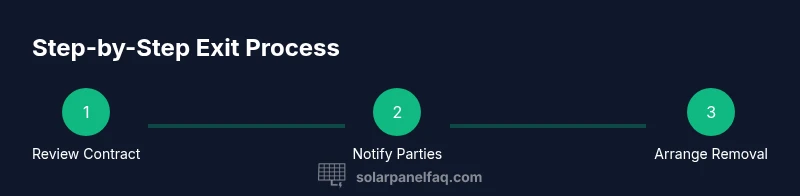
- 1
Review contract and exit options
Read the original agreement to identify termination clauses, transfer rights, and potential penalties. Note any notice periods and required forms. This step anchors your whole exit plan and helps you choose the least costly path.
Tip: Mark key dates in a calendar and keep a copy of the contract on your device. - 2
Notify parties in writing
Prepare a formal notice to the installer, lender, or PPA provider outlining your desired exit path (transfer, buyout, or removal). Request written acknowledgment and any fee schedules. This creates an official record of your intent.
Tip: Send by tracked mail or email with read receipt; save confirmations. - 3
Consult a licensed professional for assessment
Have a qualified contractor evaluate removal scope, roof condition, and electrical considerations. A formal assessment helps you budget accurately and avoids surprise costs later on.
Tip: Get a written scope of work and quote before starting any removal. - 4
Secure permits and coordinate removal
If permits are required, apply promptly. Schedule the removal with a licensed solar contractor, align timelines with utility de-energization, and arrange site access. Permits reduce the risk of non-compliance penalties.
Tip: Lock in permit approvals early to avoid delays. - 5
Oversee removal and inspect the roof
Watch the process to ensure panels are detached safely and the roof is protected against leaks. Document the condition with photos and verify any warranty terms related to the roof or remaining equipment.
Tip: Take before-and-after photos for records and potential resale disclosure. - 6
Finalize paperwork and update status
Obtain final confirmations of contract termination or transfer, remove utility accounts if applicable, and keep all documents organized for future reference.
Tip: Store all documents digitally and physically in a single folder.
Frequently Asked Questions
Can I cancel my solar contract early?
Early cancellation depends on your contract's termination clauses, fees, and any transfer options. Review the agreement and consult the provider for acceptable exit paths.
Yes, but it depends on the contract terms and any fees involved; review and ask for a clear exit option.
Is removal allowed if I own the system?
If you own the system, you usually can remove it, but you may need permits, disposal arrangements, and potential warranty considerations.
Yes, ownership generally allows removal with proper permits and disposal plans.
Will removing solar panels affect warranties?
Removal can impact warranties on the panels or roof. Check warranty terms and involve the installer to understand what is covered after decommissioning.
Warranties may be affected; check terms and coordinate with the installer.
What about transfer to a new homeowner?
Transfers are common in leases or PPAs. Ensure the new owner meets credit terms and that paperwork reflects the assignment properly.
Transfers can simplify the exit if allowed by the contract; ensure proper assignment.
What costs should I expect for removal?
Costs vary by system size and roof, but you should budget for removal, permits, labor, and any disposal fees.
Removal costs depend on the system and location; budget for labor and permits.
Can I sell the system with my home?
Selling with a system is possible if the agreement allows transfer or buyout to the buyer. Ensure all contracts and payments are assigned properly.
Yes, you may sell with the system if the contract allows transfer.
Watch Video
Top Takeaways
- Identify contract type before negotiating exit.
- Get written confirmations of fees and timelines.
- Hire licensed professionals for removal.
- Document every step for future reference.
- Consider transfer options to minimize penalties.