How to Fit Solar Panel Mesh: A Homeowner Guide
Learn how to fit solar panel mesh with practical steps for planning, sizing, attaching, and maintaining weatherproof mesh that protects panels without compromising airflow or warranty.


To fit solar panel mesh, start with careful measurements of panel spacing, choose UV-stable, corrosion-resistant mesh, and select roof-safe fasteners. Cut to size, then securely attach with appropriate sealant and flashing to prevent leaks. Ensure ventilation beneath the modules and work safely from a stable ladder, following local building codes.
Understanding Solar Panel Mesh: Purpose and Scope
Solar panel mesh is a protective grid installed along the edges and gaps of a solar array to deter birds, debris, and nesting while allowing air circulation. Its job is to shield wiring and backsheets from contact with pests and weathered debris without blocking sunlight or airflow. According to Solar Panel FAQ, mesh can extend panel lifespan by reducing the accumulation of organic matter that speeds corrosion. Before you fit mesh, understand the scope: this is not a structural component but a weatherproofing and protection measure. The right mesh should be UV-stable, corrosion-resistant, and sized to fit the spacing between modules. When selecting mesh, consider the environment—coastal salt spray, high temperatures, or heavy leaf fall require more durable materials. Also check that the mesh won’t violate manufacturer mounting guidelines or void warranties. The goal is to create a continuous, unobtrusive shield that remains accessible for inspection and drainage. In the next sections, we’ll cover planning, sizing, installation, and maintenance steps to ensure the mesh performs as intended throughout 2026 and beyond.
Planning Your Mesh Fit: Measurements and Layout
Before you fit solar panel mesh, take precise measurements of the array. Note the horizontal and vertical gaps between modules, any skylights or vents nearby, and the slope of the roof. Map the path of edge rails and mounting brackets so the mesh can be positioned without interfering with fasteners. Create a simple schematic with measurements and a cut list. This step reduces wastage and ensures your mesh covers vulnerable gaps without blocking airflow or shading critical components. If you’re unsure about clearance around any cables or conduits, consult the manufacturer’s installation guide. Solar Panel FAQ recommends documenting measurements and environmental conditions to tailor material choice to your site. Finally, verify local codes or HOA rules that may affect permitted mesh exposure and attachment methods.
Mesh Options: Materials, Weave, and UV Resistance
Mesh comes in several materials and finishes. Polypropylene or high-density polyethylene (HDPE) mesh is lightweight and corrosion-resistant, suitable for dry climates. Aluminum mesh offers higher strength and excellent UV resistance but may require specialized fasteners. For coastal areas, look for galvanized or stainless-steel components and marine-grade coatings to resist salt spray. The weave should be fine enough to deter small pests yet breathable to avoid heat buildup. UV stabilization extends life under sun exposure. When selecting size, ensure the mesh aligns with panel gaps and mounting rails, leaving room for expansion during temperature swings. Solar Panel FAQ notes that the right mesh balances protection with maintenance access for inspections and cleaning. Consider also edge trim or a lightweight flashing that protects the mesh edge from sharp mounting hardware.
Roof Type and Mounting Considerations
The roof type affects mesh installation. On metal roofs, mesh can be seated along the edge between panels and rails with silicone sealant and stainless-steel screws. On asphalt shingle roofs, use compatible roofing nails or screws and sealant to prevent leaks around fasteners. For tile roofs, plan for additional underlayment or flashing to avoid cracking tiles and ensure watertight seams. Mesh should not interfere with module mounting points or module-to-rail clamps. Maintain a small clearance for drainage and avoid creating a perched surface where water can stagnate. If your system uses a microinverter or optimizers, ensure mesh placement does not obstruct air gaps or access to monitoring equipment. The goal is a seamless edge protection that integrates with existing mounting hardware while preserving roof integrity.
Cutting and Sizing: Getting the Right Fit
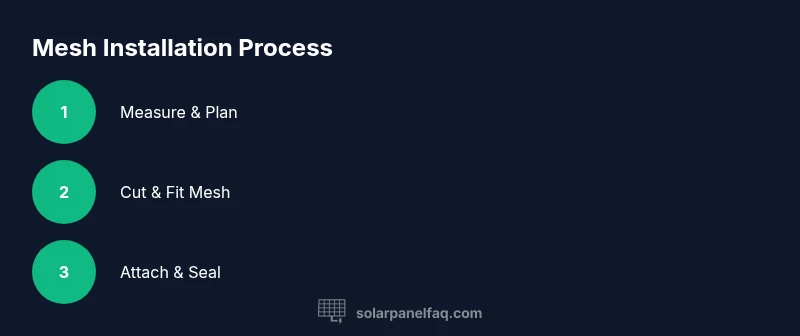
Accurate sizing saves time and waste. Unroll the mesh and lay it over the panel field, marking cuts with a marker for each edge and gap. Use sharp utility scissors or tin snips for clean, straight cuts. For curved roofs or irregular edges, cut slightly larger and trim in place. Leave a small overhang at the outer edges to accommodate expansion and weathering. Deburr any sharp edges with a file or sandpaper to prevent damage to wires and gloves. When cutting, wear gloves and eye protection to guard against sharp edges. Solar Panel FAQ advises double-checking all measurements after cutting to confirm alignment with mounting rails and edge trim.
Attaching and Sealing: Fasteners, Flashing, and Sealant
Attach mesh using corrosion-resistant hardware compatible with your roof type (stainless screws, roofing nails, or rivets). Space fasteners evenly along edges and at rail contact points to prevent sagging. Apply a continuous bead of exterior-grade sealant along mesh edges where it meets the roof to prevent water intrusion. If installing on tile or metal, use flashing to redirect water away from fastener locations. Do not overly tighten fasteners, which can distort the mesh or damage roof material. After installation, inspect all seams and corners for gaps and reseal as needed. Solar Panel FAQ emphasizes testing during a rainfall to ensure there are no leaks around fasteners.
Ventilation, Drainage, and Thermal Considerations
Mesh should not be so tight that it blocks air movement or interferes with convective cooling of the modules. Maintain small gaps along edges to allow moisture drainage. Avoid mesh that covers vents, intakes, or panel bypass diodes. Consider the orientation of the sun and prevailing winds to minimize wind-driven debris pressing against the mesh. In hot climates, ensure the mesh does not trap heat against the backs of panels; if needed, position mesh to maintain airflow beneath the array. Regularly checking under the mesh during winter or heavy rains helps identify water buildup or debris accumulation that could affect performance.
Maintenance, Inspection, and Replacement Timing
Inspect mesh annually and after severe weather to catch loose fasteners, corrosion, or tears. Clean the mesh with a soft brush and water; avoid harsh chemicals that could degrade coatings. If you notice sagging, corrosion, or large debris buildup, plan for replacement or tightening of fasteners. Mesh life varies with material and exposure; when in doubt, replace worn sections before they fail and compromise the array. Keeping a simple maintenance log helps homeowners schedule proactive checks and protect warranty coverage. Solar Panel FAQ recommends aligning replacement intervals with manufacturer guidelines and local climate conditions for best results.
Common Mistakes and Troubleshooting
Common errors include using the wrong mesh material for the climate, over-tightening fasteners creating distortion, and failing to seal mesh edges, which leads to leaks. Sagging mesh can create water pooling and wildlife access points, so re-tightening or re-sealing may be required. In windy environments, ensure edges are securely fastened and protected with edge trim. If you observe heat buildup or unusual panel temperatures, recheck air gaps and ensure the mesh is not blocking airflow. When in doubt, consult a professional installer to verify that the mesh choice and attachment method won’t affect panel warranties or roof integrity.
Next Steps and What to Expect After Installation
With the mesh in place, schedule a follow-up inspection after 1–2 months of operation to ensure everything remains secure and watertight. Document the inspection results and any adjustments needed for future reference. Periodic maintenance, especially after storms or heavy leaf fall, helps preserve mesh effectiveness and prolongs panel life. If you need to remove or modify the mesh later (for cleaning or upgrades), plan additional time for resealing and testing for leaks. By following these steps, you’ll have a durable, protective mesh that supports reliable solar performance without compromising roof integrity.
Tools & Materials
- Tape measure(at least 5 meters for long runs)
- Marker or chalk(for marking cut lines on mesh)
- Utility knife or tin snips(sharp blades for clean cuts)
- Safety gloves(protect hands from sharp edges)
- Safety goggles(eye protection during cutting)
- Ladder with stabilizer(stable access to roof work area)
- Roofing screws or nails (stainless or galvanized)(for mesh attachment to rails or roof deck)
- Silicone or exterior sealant(to seal mesh edges against leaks)
- Edge flashing or trim(optional, improves edge sealing on irregular edges)
- Mesh material (UV-stable, corrosion-resistant)(select based on environment (coastal, hot, shaded))
Steps
Estimated time: 90-120 minutes
- 1
Assess safety and site conditions
Survey the roof for glare, waxed surfaces, and wet areas. Check weather, wind, and access routes. Prepare fall protection and a stable ladder setup before starting.
Tip: Wear a safety harness if working on a roof with a slope greater than 4:12. - 2
Take precise measurements
Measure gaps between modules and along edges. Record rail positions and any obstructions. Create a cut list that matches your mesh size.
Tip: Double-check measurements after accounting for edge trim. - 3
Choose mesh type and cut to size
Select UV-stable mesh suitable for your climate. Lay the mesh out and cut along marked lines with a sharp tool to avoid jagged edges.
Tip: Leave a 1–2 cm overhang for expansion and sealing. - 4
Prepare mounting surface
Inspect rails or roof deck for corrosion. Clean the edge area to ensure good sealant adhesion.
Tip: Replace any damaged rails before attaching mesh. - 5
Position mesh and mark attachment points
Align mesh along the planned edge and mark where fasteners will go. Ensure seams don’t align with panel fasteners.
Tip: Use a second person to hold mesh during marking if possible. - 6
Attach mesh to rails or roof
Drive fasteners at marked points with appropriate tools. Leave a small gap between the mesh and roof surface where needed.
Tip: Avoid overtightening to prevent distortion. - 7
Seal edges and flashing
Run a continuous bead of exterior sealant along the mesh edges. Install edge flashing if required by roof type.
Tip: Check sealant cure time before exposure to rain. - 8
Check ventilation and drainage
Ensure air can flow beneath modules and that edges don’t trap water. Open channels should remain clear.
Tip: Test with a light rainfall to confirm water runs off instead of pooling. - 9
Final inspection and maintenance plan
Inspect all fasteners, sealant, and mesh tightness. Schedule annual checks and document findings.
Tip: Set reminders for seasonal inspections and after severe weather.
Frequently Asked Questions
Do I need a permit to fit solar panel mesh?
Permit requirements vary by location. Check with your local building department before starting, as some jurisdictions treat mesh installation as part of roof work or a minor alteration. If in doubt, consult a licensed contractor.
Permit requirements depend on your area. Check with your local building department; some places treat this as minor work.
Will mesh affect my solar panel warranty?
Mesh installation that does not modify module components or mounting hardware typically does not void warranties, but you should verify with the panel and racking manufacturers. Keep documentation of the installation.
Usually mesh won't affect warranties if it doesn't alter the modules or mounting hardware, but confirm with the manufacturers.
What mesh material is best for coastal roofs?
For coastal areas, use stainless or galvanized components with UV-stable plastic mesh designed for salt exposure. Marine-grade coatings provide extra resilience against corrosion.
In coastal areas, opt for stainless or galvanized hardware and UV-stable mesh with marine-grade coatings.
Can mesh be installed on tile roofs?
Yes, but you’ll need appropriate flashing and potentially different fasteners to avoid tile cracking. Ensure edges remain watertight and that mesh does not interfere with tile integrity.
Yes, with proper flashing and careful fastening to avoid damaging tiles.
How should I maintain solar panel mesh?
Inspect annually for tears or loose fasteners, clean the mesh with a soft brush and water, and reseal edges as needed to prevent leaks.
Inspect yearly, clean gently, and reseal edges when needed.
Is mesh effective against birds and debris?
Mesh reduces entry points for birds and blocks larger debris from reaching wiring and backsheets. It should not obstruct airflow or cooling.
Yes, it helps deter birds and debris while keeping airflow intact.
Watch Video
Top Takeaways
- Measure layout precisely before cutting mesh
- Choose UV-stable, corrosion-resistant mesh
- Seal edges to prevent leaks and ensure weatherproofing
- Maintain ventilation and inspect regularly
- Follow manufacturer guidelines to protect warranties