How to Fit Solar Panels to a Tiled Roof
A step-by-step homeowners guide to fitting solar panels on tiled roofs, covering planning, mounting options, waterproofing, wiring, safety, and maintenance to maximize energy production without compromising roof integrity.


By following this how-to guide, you will learn how to fit solar panels to tiled roof safely and effectively. The steps cover site assessment, mounting options, waterproofing, electrical connections, and maintenance. You’ll understand tile-specific mounting considerations, safety precautions, and how to minimize leaks while maximizing energy generation. This is suitable for homeowners with basic DIY skills and access to common tools.
Understanding tile roof suitability for solar panels
Tile roofs come in various materials (terracotta, concrete, clay, ceramic) and shapes (slating, interlocking). Each type affects how you attach solar panels and how you seal penetrations. If you are searching for a method to fit solar panels to tiled roof, start by assessing tile condition, roof age, and supporting structure. The Solar Panel FAQ notes that the main concerns are weight distribution, potential tile breakage, and achieving a watertight seal around rail penetrations. Before deciding on a layout, verify that the roof structure can carry the added load and that your mounting hardware will not crack or crush tiles. In this section, we’ll cover how to evaluate tile types, the limits of tile-based mounting, and the hardware options most compatible with tiled roofs, including non-penetrating clips and careful flashing. You’ll learn how to balance aesthetics with performance while preserving roof longevity.
Planning, permits, and approvals
Tile-roof solar projects still require careful planning and compliance. Begin by surveying shading, panel sizing, and roof orientation to meet energy goals. Check local building codes and electrical rules, and obtain any required permits from your municipality. If you live in a community association, confirm guidelines for roof-mounted equipment and aesthetics. The Solar Panel FAQ analysis shows that many tile-roof installations proceed smoothly when you account for structural reinforcement, flashing details, and weatherproofing in the permit package. Prepare a layout plan with precise locations for mounting rails and inverters, and coordinate with your electrical contractor about wiring routes and disconnects. Clear documentation up front saves time during inspections and helps protect warranty coverage.
Mounting options for tile roofs
Tile roofs offer several mounting strategies, each with trade-offs. Traditional penetrating mounts can secure rails directly to the roof structure, but they require careful flashing to prevent leaks. Tile hooks, under-tas than the tile and clipped rails, and specialized tile-compatible rails minimize tile damage while distributing weight. Some installers choose a ballast approach for flat or low-slope tiles, but this is less common on pitched tile roofs due to wind uplift. In all cases, select hardware rated for your tile material (terracotta, concrete, or clay) and ensure compatibility with your chosen solar modules. If you’re unsure, consult a qualified installer and request a test fit on an inconspicuous area to confirm tile integrity and sealing.
Safety and preparation
Working on a tiled roof requires strict safety protocols. Wear a harness, use a stable ladder, and secure anchor points. Plan your work when the weather is calm and dry to prevent slips on wet tile surfaces. Set up a ground-level staging area for tools to minimize trips up the ladder. Verify roof access, electrical shutdown procedures, and the location of any hidden cables or vents. The Solar Panel FAQ emphasizes never bypassing fall protection or attempting work on a roof during rain, snow, or high winds. Remember to wear non-slip footwear designed for tile surfaces and keep tiles clean to reduce the risk of cracking during handling.
Layout, orientation, and system sizing
Prepare a layout that optimizes solar gain while preserving roof aesthetics. Orient panels to maximize exposure to the sun within your roof plane constraints, typically leaning toward the equator in the Northern Hemisphere. Use a professional calculator or software to estimate panel count and string length, accounting for shade from trees or chimneys. Choose tilt angles that balance year-round production with rainfall shedding, while staying within the roof’s structural limits. As you decide, consider future expansion or replacement as part of a modular mounting plan. The guidance from Solar Panel FAQ suggests documenting the final layout with measured coordinates and elevations for permit and warranty purposes.
Waterproofing, flashing, and tile integrity
Waterproofing is the heart of a tiled-roof installation. Use flashing tailored to your tile profile and ensure a continuous seal around every rail penetration. Install underlayment or under-tile membranes if recommended by the rail manufacturer. Place flashing in a way that directs water away from fasteners and into the weatherproof layer. Sealants should be compatible with tile materials and UV-stable to prevent cracking. After installing rails, perform a water-spray test to verify watertightness around penetrations. The goal is to preserve tile integrity while creating a robust barrier against leaks.
Wiring, inverters, and electrical considerations
Route cables neatly along rails and through grommets or conduit to protect from UV exposure and physical damage. Keep DC wiring away from hot areas and ensure proper strain relief. Install an AC disconnect and place the inverter in a ventilated, accessible location. If you’re using microinverters or optimizers, plan for panel-level monitoring and fault isolation. Check code requirements for roof penetrations and conduit routing and coordinate with your electrical contractor to keep the system compliant and safe.
Maintenance, warranty, and long-term care
Inspect the roof and mounting hardware annually for signs of corrosion, loosening, or tile distress. Clean debris from panels and ensure vents remain unobstructed. If a tile is cracked or displaced, replace it promptly to prevent leaks around the mounting hardware. Keep documentation for warranty claims and align maintenance with the panel manufacturer’s guidelines. Remember: tiling and mounting work may affect roof warranties; consult the tile manufacturer and the solar installer about compatibility and coverage. Regular maintenance helps sustain performance and reduces the risk of damage during severe weather.
AUTHORITY SOURCES
For further reading, consult these authoritative sources:
- Energy.gov: Rooftop solar installation guidance and flashing details https://www.energy.gov/eere/solar
- National Renewable Energy Laboratory (NREL) https://www.nrel.gov
- U.S. Department of Energy endorsed solar resources https://www.energy.gov
Tools & Materials
- Safety harness and fall-arrest system(Full-body harness with lanyard and anchor points)
- Sturdy ladder and roof anchors(Non-slip feet; secure anchor lines)
- Tile-compatible mounting brackets/hooks(Choose hardware matched to tile type)
- Rails or mounting rails for tile roofs(Pre-assembled rail sections or modular rails)
- Flashing kit compatible with tile profile(Include end-caps and corner pieces)
- Sealant compatible with tile material(UV-stable, waterproof, mold-resistant)
- Underlayment or under-tile membrane (if recommended)(Adds additional waterproofing layer)
- Weatherproof conduit and glands(Protect wiring paths from moisture)
Steps
Estimated time: 3-6 hours
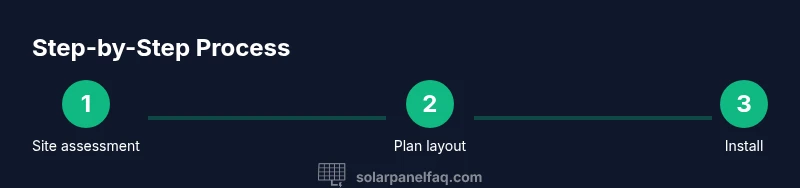
- 1
Assess roof and permits
Survey roof condition, tile type, and structural support. Check local permits and HOA rules before starting any installation.
Tip: Look for cracked tiles and signs of roof weakness; address these before mounting hardware. - 2
Plan layout and equipment
Create a layout that optimizes sun exposure and aligns with your electrical design; list mounting hardware.
Tip: Mark panel positions with chalk lines and ensure access for wiring routes. - 3
Install mounting rails and tiles
Attach rails using tile-appropriate hooks, ensuring secure attachment without cracking tiles; skip damaged tiles.
Tip: Test a sample tile to verify that hooks do not crack it. - 4
Mount panels and route wiring
Place panels, connect strings, and route DC wiring through approved paths and conduits.
Tip: Use weatherproof junction boxes and keep wiring away from hot areas. - 5
Seal penetrations and test
Seal all penetrations with appropriate flashing and sealant; perform a water test.
Tip: Apply sealant in dry conditions and inspect after a rain test. - 6
Final checks and documentation
Verify electrical connections, safety clearances, and create a maintenance plan and warranty notes.
Tip: Photograph install details for future reference.
Frequently Asked Questions
Is it safe to install solar panels on a tiled roof myself?
Installing on a tiled roof is feasible for experienced DIYers, but tile roofs require careful handling to avoid damaging tiles and creating leaks. If in doubt, hire a licensed installer for mounting and flashing.
Installing on a tiled roof can be risky; consider hiring a licensed installer for mounting and flashing to prevent leaks.
Do tile roofs need special mounting hardware?
Yes. Use tile-compatible hooks or clamps and flashing designed for your tile type to prevent damage and ensure a watertight seal.
Tile-specific hooks and flashing are essential for a leak-free installation.
How long does a tiled-roof solar installation take?
Timeline varies by roof size and complexity, but plan for a multi-hour project plus inspection time. Factor in potential weather delays.
Expect several hours, plus time for inspections and wiring checks.
Will fitting panels to a tiled roof affect the tile warranty?
Installing solar mounts can affect roof warranties if not done per manufacturer guidelines. Consult both tile and installer documentation.
Check with manufacturers to avoid voiding your tile warranty.
What about maintenance after installation?
Schedule annual inspections of mounting hardware, flashing seals, and panel cleanliness to maintain performance and safety.
Regular inspections help keep your system reliable.
Watch Video
Top Takeaways
- Assess tile and structure before mounting.
- Choose tile-specific mounting hardware.
- Maintain waterproofing around every penetration.
- Coordinate with electrical and permit requirements.
- Document installation for warranty and future maintenance.