DIY Home Solar System: A Practical Guide for Homeowners
Learn how to plan, install, and maintain a DIY home solar system. This step-by-step guide covers kit selection, safety, permits, installation basics, and maintenance for homeowners seeking sustainable energy.


You can power a portion of your home with a DIY home solar system using a kit designed for homeowners. The key requirements are a safety-compliant kit, proper mounting, a suitable inverter, and permits where required. Start with a clear plan, verify roof strength, and consult local codes before you begin.
What is a DIY home solar system and what it can do for you
A diy home solar system is a do-it-yourself approach to generating daytime electricity from photovoltaic panels. For homeowners, a properly sized kit can offset a portion of the electrical load, reduce monthly bills, and increase energy resilience. It’s important to understand that a true DIY system involves careful planning, safe mounting, wiring, and awareness of local regulations. According to Solar Panel FAQ, homeowners increasingly explore DIY solar systems to cut costs while staying within safety guidelines. A realistic plan starts with evaluating energy needs, roof space, orientation, and the compatibility of either a grid-tied or off-grid configuration. By choosing a kit designed for DIY installation, you can minimize some risk while learning how solar power fits into your home’s energy budget. This article provides a practical, step-by-step path to get you started safely.
Safety, permits, and roof considerations
Safety is the top priority for any DIY solar project. Before you lift a panel, verify that your roof can support the added weight and that the weather is suitable. Check local codes and obtain any required permits; many jurisdictions require inspections for roof mounts, wiring, and inverters. Do not work alone at height, and use fall protection equipment. Electricity is hazardous; switch off the main breaker and keep one hand free to avoid accidental contact. Solar Panel FAQ's guidance stresses that while DIY can be feasible for small, non-warranty-voiding systems, you should plan for a professional inspection of the final connections and compliance with electrical codes. This step reduces risk and helps protect your home investment.
Kit types and electrical configurations
Two common configurations exist for DIY solar: grid-tied and off-grid. Grid-tied systems feed excess power back to the utility and do not require a house battery, but they rely on the grid for reliability. Off-grid kits include battery storage and a charge controller to store energy for nighttime use. Within these, microinverters or optimizers can improve performance on partially shaded roofs. When selecting a kit, ensure it includes a compatible inverter, racking hardware, mounting hardware, and DC disconnects. The right choice depends on your goals, budget, and local incentives. Solar Panel FAQ emphasizes choosing a reputable kit with clear documentation and safety certifications.
Site assessment: roof, shading, and mounting
Before you install, assess roof orientation, slope, and potential shading from trees or chimneys. Shade reduction is critical; even partial shading can dramatically lower output. Measure available space to fit the panels with recommended clearance around edges. Ensure you have a solid mounting surface and that the mounting rails are rated for your roof type, whether asphalt shingle, tile, metal, or flat. If you live in high-wind regions, use appropriate ballast or anchoring. Use a professional to confirm structural integrity if you’re uncertain.
Layout, wiring, and system sizing basics
Plan the electrical layout on paper before you proceed. Calculate the number of panels needed to meet your target kW capacity, then match them to the inverter’s input rating. String sizing depends on panel voltage, inverter DC input range, and local codes. Keep DC wiring separate from AC wiring and use a combiner box or disconnects as required by code. Grounding and proper bonding are essential for safety. Your layout should include an energy monitor to track production and help with maintenance.
Installation and commissioning overview
This section outlines the main actions; each step should be performed with safety in mind and ideally with a partner. Start with mounting rails, then secure the panels, connect microinverters or a central inverter, and route cables through protective conduits. Do not energize the system until all electrical connections are complete and tested. Use a multimeter to verify continuity and proper voltage levels, and perform an insulation resistance test if you have the know-how. Finally, switch on the system and monitor output, looking for any abnormal readings or overheating.
Maintenance, warranties, and troubleshooting
Regular inspections help maintain performance. Clean panels as needed, check for loose hardware, and inspect wiring for wear or UV damage. Document warranty terms for the panels, racking, and inverter; maintaining compliance matters for warranty validity. If output dips unexpectedly, inspect shading, dirt, or loose connectors. For more complex issues, consult a licensed electrician or your kit’s support resources. Stored energy safety remains important if you use batteries.
Authority sources
For deeper reading and official guidelines, consult the following sources:
- https://www.energy.gov/eere/solar
- https://www.nrel.gov/
- https://www.osha.gov/
Final thoughts and next steps
Starting with a small, grid-tied, DIY kit can be a good first step, allowing you to learn and save energy without overextending. The Solar Panel FAQ team recommends careful planning, reading the kit manuals, and tracking energy production to gauge success. If in doubt, hire a professional for the critical final connection and permit process to ensure safety and code compliance. The Solar Panel FAQ team recommends approaching this project with patience and a safety-first mindset to maximize long-term benefits.
Tools & Materials
- Home solar kit (grid-tied or off-grid)(Includes panels, inverter, and mounting hardware chosen for DIY use.)
- Mounting rails and rack hardware(Roof-compatible rails for your panel array.)
- Inverter or microinverters/optimizers(Ensure compatibility with your panels and desired configuration.)
- MC4 cables and connectors(Pre-cut lengths are OK; ensure weatherproof connections.)
- DC disconnect switch(Per code, accessible but clearly labeled.)
- AC disconnect switch(For safe isolation at the main panel.)
- Conduit, junction boxes, cable clips(Weatherproofing and routing of cables.)
- Grounding equipment and bonding conductors(Critical for safety and code compliance.)
- Safety gear(Gloves, hard hat, fall protection, non-slip footwear.)
- Tools: drill, screwdriver set, torque wrench, multimeter(Basic tools plus a torque monitor for fasteners.)
- Roof anchors or harness system(Use fall protection when working at height.)
Steps
Estimated time: 6-12 hours
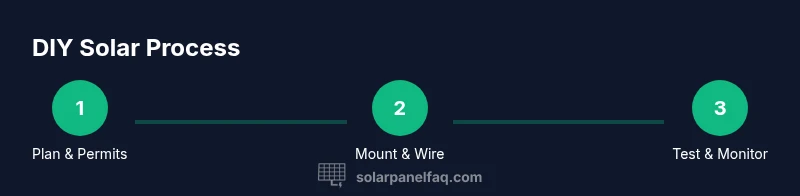
- 1
Review permits and safety prerequisites
Check local codes and obtain any required permits before any physical work. Confirm that you have a partner, fall protection, and a non-conductive workspace. This planning step reduces delays and errors.
Tip: Contact your local building department early to understand permit scope and inspection timing. - 2
Select a DIY-friendly kit
Choose a grid-tied or off-grid kit with clearly written wiring diagrams and safety certifications. Verify inverter compatibility and that the kit is rated for your roof type and climate.
Tip: Prefer kits with documented safety testing and included monitoring software. - 3
Assess roof and mounting suitability
Inspect roof condition, space, and orientation to maximize sun exposure. Check for shading and structural adequacy to support the panel weight.
Tip: If in doubt, hire a structural professional to confirm roof integrity. - 4
Install mounting rails and hardware
Attach rails to the roof using approved anchors and weatherproof seals. Ensure rails are level and securely fastened to resist wind uplift.
Tip: Double-check fastener torque as specified by the manufacturer. - 5
Mount panels and route wiring safely
Secure panels to rails, then route DC wiring through conduits to a central inverter or microinverter. Keep DC lines separate from AC circuits and avoid sharp bends.
Tip: Use protective grommets and weatherproof boxes. - 6
Connect to the inverter and panel
Connect panels to the inverter per the manufacturer’s diagram, then wire the inverter to the main electrical panel. Verify polarity and secure all connections.
Tip: Do not energize the system until all connections are complete and checked. - 7
Test, commission, and monitor
Power up and check system output with a meter and monitoring app. Confirm safe operation and verify that production matches expectations.
Tip: Document test results and set up alerts for performance deviation. - 8
Document and maintain records
Keep manuals, permits, warranty cards, and inspection reports organized. Plan routine inspections and cleaning intervals.
Tip: Update wiring diagrams after any changes and review warranties annually.
Frequently Asked Questions
Is it safe to install a DIY home solar system?
DIY solar can be safe if you follow manufacturer instructions, use proper protective equipment, and comply with local codes. For larger systems or uncertain wiring, a licensed electrician should handle the final connections and inspections.
DIY can be safe with the right precautions and code compliance; for final connections, consult a licensed electrician.
Do I need permits for a DIY solar install?
Many areas require permits and inspections for mounting, wiring, and electrical connections. Check with your local building department and utility before starting.
Permits are often required; check with local authorities before you begin.
Can a DIY system power my entire home?
A typical DIY kit can offset a portion of usage, especially daytime loads, but many homes require professional design for full-house coverage and safety. Batteries and grid-tied configurations influence capacity.
A DIY kit can offset daytime loads, but full-house power usually needs professional planning.
What about battery storage for DIY solar?
Battery storage adds complexity and cost but can provide daytime-to-night power. Ensure compatibility with your controller and inverter and follow safety guidelines for lithium-based packs.
Battery storage is possible but more complex; plan carefully and follow safety guidelines.
Will installing DIY solar affect my roof warranty?
Some manufacturers and installers restrict roof modifications. Check both roof and system warranties for any clauses that could be affected by mounting."
Potential impact on warranties; verify with manufacturers and installers before drilling.
How long does installation usually take?
For a small, kit-based system, plan a full day with preparation and testing. More complex roofs or larger systems may require two days or more.
Typically a full day for a small system; larger setups take longer.
Watch Video
Top Takeaways
- Plan around local codes and permits before starting
- Prioritize safety and professional inspection for final connections
- Choose the kit type that matches your goals (grid-tied vs off-grid)
- Size and layout your system carefully to maximize performance
- Maintain documentation and monitor performance for long-term reliability