Bad Solar Panel Installation: Quick Fix and Long-Term Solutions
Urgent guide for homeowners to identify, diagnose, and fix bad solar panel installation issues with safe steps, professional thresholds, and prevention tips.


Bad solar panel installation is most often caused by improper mounting, wiring, or shading that reduces performance and can create safety hazards. The quickest first steps are to stop unsafe activity, recheck mounts for looseness, inspect for shading, and have a licensed electrician verify wiring and inverter configuration. According to Solar Panel FAQ, addressing installation quality early protects your system and home.
What makes a bad solar panel installation dangerous and costly
When solar panels are installed incorrectly, the system may underperform, degrade faster, or pose safety risks. A bad install often traces to improper mounting, wiring mistakes, or neglecting site conditions like shading and roof orientation. Homeowners can notice higher-than-expected bills, odd inverter readings, or visible damage. Beyond lost energy, there are risks of roof leaks, electrical fires from loose wiring, and electric shock if components are exposed. Addressing installation quality promptly matters for safety and long-term performance. According to Solar Panel FAQ, many safety and performance issues stem from corners cut during mounting or inadequate wire management. Understanding common failure points lets you prioritize inspections, save money, and avoid costly repairs later.
Common installation mistakes to watch for
Mistakes fall into mounting, shading, wiring, and protection categories. In mounting, installers may use undersized brackets, skip wind-rated fasteners, or fail to seal penetrations, inviting leaks and corrosion. Shading issues arise when panels sit too close to vents, chimneys, or tall trees without proper sun-path analysis. Wiring mistakes include mismatched conductors, unsecured cables, or circuits exceeding design limits. Protection oversights cover missing or mislabeled DC disconnects, inadequate conduit protection, and failing to implement proper grounding. When reviewing an existing install, look for loose hardware, gaps around roof penetrations, scorched components, and exposed cables. Early fixes restore efficiency and extend system life.
How improper mounting affects performance
Mounting quality directly impacts airflow, panel angle, and shading footprint. If racking is misaligned, panels may sit too close or too far from the roof edge, reducing sun exposure and causing uneven wear. Loose bolts let panels flex in wind, risking micro-cracks at panel edges and broken seals. Poor mounting can also create small gaps that permit water intrusion and accelerate corrosion on aluminum frames. All these factors lower energy production and can complicate warranty coverage. A professional evaluation confirms structural integrity and ensures the array is level, properly spaced, and optimized for the site.
Wiring and electrical hazards to inspect
Wiring should be neat, protected, and labeled. Look for loose connectors at combiner boxes, damaged insulation, or exposed conductors. Incorrect DC wiring can cause voltage drops, overheating, or nuisance breaker trips. Check that safety disconnects, conduit entries, and grounding comply with codes. Scorch marks on cables or enclosures demand urgent attention. Never touch live wiring; have a licensed electrician probe circuits, test insulation, and verify the inverter is set correctly for the array design.
Inverter configuration and performance checks
Inverter settings determine how DC power is converted to AC and how the system reports production. A mis-sized string, wrong MPPT setting, or incorrect total panel count can push the inverter beyond its efficient operating range. Look for abnormal temperature readings, fault codes, or indicators on the inverter. Compare actual production with site conditions and manufacturer specs. If readings seem off, wiring, panel health, or array layout may require adjustment. A professional should verify string configuration and firmware versions to restore reliable performance.
Step-by-step homeowner checks you can do safely
- Power down the system at the main disconnect to begin. 2) Inspect mounting hardware for looseness or corrosion and reseal penetrations as needed. 3) Check shading and orientation; trim branches or relocate obstacles if feasible. 4) Inspect wires and connectors for wear or damage; ensure protected routing. 5) Verify inverter display status and note any fault codes. 6) Compare real-time production with expectations using your monitoring app or meter. 7) Document anomalies with clear photos and notes for your service visit. 8) If you suspect electrical faults, stop and call a professional immediately. Tip: wear PPE and follow lockout/tagout procedures when near live circuits.
Preventive maintenance to avoid future issues
Develop a routine that includes annual visual inspections, cleaning dust from panels without water jets, and checking for new shade caused by growing trees or new structures. Keep a maintenance log with dates and any observed changes in performance. Replace damaged components promptly and ensure all penetrations are properly sealed. Schedule professional inspections after extreme weather events to catch hidden damage early. Keeping up with these steps helps preserve efficiency and protects your investment.
When to call a licensed professional
If you observe persistent underproduction, unusual smells or smoke near components, visible wiring damage, or uncertain inverter behavior, contact a licensed solar installer or electrician. A qualified professional can safely diagnose electrical faults, verify compliance with local codes, and conduct performance testing that requires specialized tools. Do not attempt major electrical repairs yourself if you are not trained. Timely professional assessment minimizes risk and preserves warranty coverage.
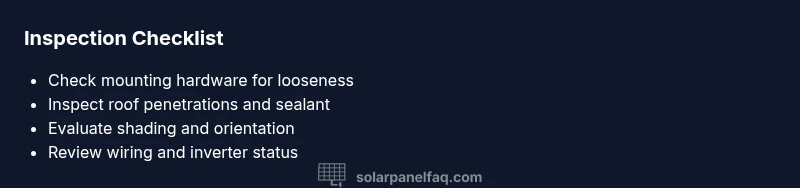
Quick-reference checklist for inspection day
- Inspect mounting hardware for looseness and corrosion
- Check roof penetrations for leaks and proper sealing
- Review shading from nearby objects and trim as needed
- Examine wiring for wear, damage, and protected routing
- Verify inverter indicators and fault codes
- Compare production with expectations for your site
- Document issues with photos and notes for your pro visit
Steps
Estimated time: 1-2 hours
- 1
Power down and confirm safety
Begin by turning off the main DC disconnect and the AC breaker to isolate the array. Wear protective gear and avoid touching exposed conductors. This step reduces the risk of shock while you inspect components.
Tip: Lockout/tagout the disconnect if possible and verify no voltage is present with a multimeter before touching anything. - 2
Inspect mounting hardware
Check all mounting rails, brackets, and fasteners for looseness, corrosion, or cracks. Look for signs of movement after wind or vibrations and reseal any penetrations with weatherproof sealant as needed.
Tip: Take wide photos from multiple angles to document condition for future reference. - 3
Check shading and orientation
Assess nearby obstacles that could shade panels during peak sun. If branches or structures block sun during critical hours, consider trimming or reorienting the array where feasible.
Tip: Use a sun-path tool or app to model shading throughout the day. - 4
Inspect wiring and connectors
Examine DC conductors for insulation damage, loose connectors, and protected routing. Ensure conduits are intact and labeled clearly to prevent confusion during maintenance.
Tip: Do not bend cables sharply; avoid exposed conductors and moisture exposure. - 5
Verify inverter configuration
Review inverter settings, MPPT ranges, and total panel count. Check for fault codes and confirm firmware versions align with the system design and local codes.
Tip: Document current settings and compare with original design documents. - 6
Test production and document
Power the system back on and monitor production levels. Compare measured output to expected values for your site and document any deviations with timestamped data.
Tip: Share findings with a professional during follow-up service for targeted fixes.
Diagnosis: System underproducing power or unsafe signs after installation
Possible Causes
- highImproper mounting or loose hardware
- mediumWiring or conduit incorrect/loose connections
- mediumInverter or MPPT misconfiguration
- lowShading or orientation errors
- lowWater intrusion at penetrations
Fixes
- easyRe-tighten or replace mounting hardware; reseal penetrations
- mediumInspect and correct wiring connections; test insulation resistance
- mediumVerify inverter settings and firmware; confirm MPPT range matches panel count
- easyRemove shading sources and reorient panels if feasible
- hardSeal any water intrusion points and assess roof integrity
Frequently Asked Questions
What defines a bad solar panel installation?
A bad solar panel installation means improper mounting, wiring, or site assessment that leads to underperformance or safety hazards. Visual signs, abnormal readings, or leaks often indicate issues that require attention. Addressing these quickly helps protect your investment and home.
A bad solar panel installation means mounting, wiring, or site assessment issues that cause underproduction or safety hazards. If you notice abnormal readings, seek professional help.
Can improper installation cause safety hazards such as fires?
Yes. Improper mounting or damaged wiring can create heat, arcing, or short circuits that pose fire and shock risks. If you smell burning or see scorch marks, stop using the system and call a licensed professional immediately.
Yes, improper installation can cause fire or shock hazards. If you smell burning, shut down and contact a professional.
How can I tell if wiring is incorrect after installation?
Look for loose connections, damaged insulation, or exposed conductors. Unexpected breaker trips or abnormal inverter readings also point to wiring issues. A licensed electrician should verify insulation resistance and correct wiring layouts.
Loose connections, damaged insulation, or odd inverter readings suggest wiring issues. Call a licensed electrician to inspect.
Should I replace a system if issues arise after installation?
Not necessarily. Many issues are fixable with adjustments or component replacement. Start with a professional assessment to identify the root cause and determine whether repairs, replacements, or reconfiguration are needed.
Not always—many issues can be fixed with repairs after an expert assessment.
Is there a warranty that covers installation defects?
Most installers offer a workmanship warranty that covers installation defects for a defined period. Review your contract for terms, conditions, and what maintenance actions may affect coverage. A qualified technician can help interpret the warranty and file claims if needed.
Workmanship warranties cover installation defects for a set period; check your contract for details.
When is it necessary to replace panels or racking?
Replacement may be necessary if there are irreversible panel failures, widespread micro-cracks, or structural damage to the racking system that compromises safety. A professional assessment can determine whether repair, reinstallation, or replacement is the appropriate path.
Replacement is needed if there is irreversible damage to panels or the mounting system.
Watch Video
Top Takeaways
- Inspect mounting and shading before calling for service
- Verify wiring and inverter configurations
- Schedule professional inspection for safety-critical fixes
- Keep a maintenance log
- Understand warranty implications