How to Price Solar Panels in 2026: A Practical Guide
Learn how to estimate solar panel price in 2026, what drives cost per watt, how incentives affect installed costs, and how to compare quotes to maximize your savings.


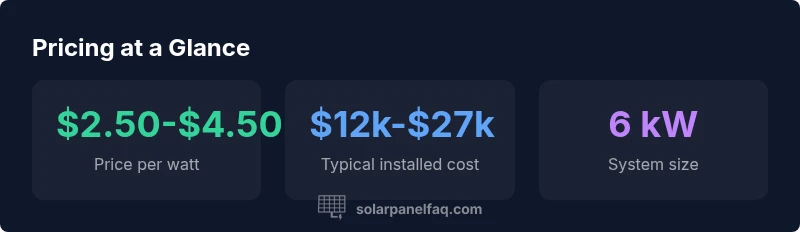
In 2026, the typical installed price for residential solar panels ranges roughly from $2.50 to $4.50 per watt, translating to about $12,000 to $28,000 for a standard 6 kW system before incentives. Prices vary by region, equipment quality, and installer, so get multiple quotes and model your savings with or without incentives.
What drives solar panel price in 2026
According to Solar Panel FAQ, the price homeowners pay for a residential solar system is driven by a mix of hardware costs, labor, permitting, and regional factors. Key input costs include the solar modules themselves (which vary by efficiency and brand), inverters (string vs micro inverters), mounting hardware, and electrical components. Labor costs for installation and interconnection, site preparation, roof accessibility, and building permits add a substantial portion to the total. Regional differences—such as local wage levels, permitting timelines, and interconnection rules—also shape price. The homeowner should expect a strong relationship between system size and total installed price, but the exact dollars per watt can swing based on panel quality, warranty terms, and the installer’s pricing strategy. For a typical 6 kW home system, a price per watt range of roughly $2.50-$4.50 translates to a broad installed price band before incentives. Keeping abreast of market dynamics and obtaining quotes from multiple installers is essential for budgeting and ROI.
Price per watt: how to read quotes
Quote comparisons should ideally be on a price-per-watt basis to apples-to-apples compare dissimilar configurations. For example, a 6 kW system at a total installed price of $15,000 yields about $2.50 per watt. If another quote lists $4.00 per watt, you can analyze what each includes and whether higher upfront costs bring long-term benefits like better warranties, higher efficiency panels, or premium inverters. Remember that price per watt ladders with system design: larger, well-optimized layouts can drop the per-watt cost due to economies of scale, while premium components or complex roof angles may increase it. Use per-watt metrics alongside a direct cost breakdown to understand the real value of each quote and avoid paying for features you do not need.
Installed cost vs. panel cost
Panel price is only one portion of the total. A typical quote splits costs into panels, inverters, mounting hardware, electrical work, permitting, and labor. In many cases, labor, permitting, and interconnection dominate the final installed price, especially in regions with complex permits or longer interconnection queues. Panels themselves may vary by efficiency and brand, but the difference in installed cost between a mid-range and premium panel often sits in the inverter, racking, and labor line items rather than the panel module alone. Homeowners should request a full breakdown from each installer to assess where value is gained or lost and to identify possible substitutions (e.g., different racking or a different inverter) that fit the budget without compromising system reliability.
Incentives, rebates, and financing
Incentives can substantially reduce the net price. The federal ITC offers a credit that reduces a portion of system costs and certain state or utility programs may supplement that with rebates or performance-based incentives. Financing options—such as solar leases, power purchase agreements (PPAs), or solar loans—change the effective price and monthly cash flow, which is often more relevant for homeowners than the upfront sticker price. Solar Panel FAQ recommends evaluating incentives immediately when budgeting and to factor in potential changes in policy over time. Be sure to verify eligibility and expiration dates for all incentives and to compare financing terms as part of your overall price strategy.
Regional and installer differences
Prices can differ significantly by region due to labor costs, permit timelines, and local utility interconnection requirements. Some installers offer bundled packages with promotions or volume discounts, which can lower per-watt costs but may come with trade-offs like longer lead times or reduced post-install support. When comparing quotes, ask each installer for their average installation time, warranty coverage, and the extent of post-install maintenance included. Visiting local job sites and reviewing recent projects can also reveal how regional conditions influence price and performance, helping homeowners calibrate expectations for their own roof and climate.
How to compare quotes effectively
Start with a side-by-side quote template that includes a breakdown by category (panels, inverter, mounting, electrical, labor, permits, interconnection). Ensure each quote uses the same system size and configuration so you are comparing like-for-like. Look for the total installed price, price per watt, expected production estimates, warranty terms, and service levels. Request certifications and check installer licensing; confirm that the quotes factor in any expected energy production over the first 5–10 years. Finally, price is not the only factor—reliability, service, and warranty depth can significantly affect long-term value. A careful comparison eliminates surprises after installation.
Practical steps to estimate your price
- Determine system size based on roof area and energy goals. 2) Gather at least three full quotes with itemized line items. 3) Compare price-per-watt and total installed costs, noting what is included. 4) Investigate available incentives locally and regionally. 5) Consider financing options and their impact on cash flow. 6) Review warranties for panels, inverters, and labor. 7) Choose a bundle that best aligns with your energy goals, budget, and risk tolerance. Following this checklist helps homeowners build an accurate pricing picture and avoids overpaying for features they don’t need.
Pricing elements for residential solar installations
| Pricing element | Value range | Notes |
|---|---|---|
| Panels only | $0.50-$0.90 per watt | Cost before installation and permits |
| Installed price per watt | $2.50-$4.50 | Includes inverter, mounting, wiring, interconnection |
| Typical 6 kW system cost | $12,000-$24,000 | Excludes incentives and finance charges |
Frequently Asked Questions
What factors most influence solar panel price?
The main influences are panel efficiency and brand, inverter type, mounting hardware, labor, permitting, and interconnection. Roof complexity and site conditions can add to installation time and costs. Reading quotes with a breakdown helps identify where you gain value or pay for extras.
The price is driven by hardware quality, installation labor, and permitting. Look for a clear cost breakdown to understand what you’re paying for.
What is price per watt, and why does it matter?
Price per watt standardizes quotes so you can compare different system configurations on an even basis. It’s calculated by dividing installed price by system size. A lower price per watt generally means better value, but verify what’s included in that quote.
Price per watt lets you compare quotes easily. Always check what each quote includes to ensure apples-to-apples comparison.
Do incentives reduce installed costs?
Yes. Incentives reduce net costs, though eligibility varies by region and program. Federal and state programs, plus utility rebates, can cut the total price. Check current programs and factor them into your budgeting and payback calculations.
Incentives cut the net price, but eligibility varies by location. Check local programs before deciding.
Is price likely to drop over time?
Prices have trended downward over the past decade, with some volatility due to material costs and supply chains. Long-term declines are still expected, but regional factors can cause short-term fluctuations.
Prices have generally fallen, though regional factors can cause short-term fluctuations.
How should I compare solar quotes effectively?
Use a standardized checklist: system size, price per watt, total installed cost, component quality, warranties, and service terms. Verify licensing and look for third-party certifications. A side-by-side comparison minimizes surprises after installation.
Create a side-by-side quote checklist to compare size, price per watt, warranties, and service.
“Price is a function of hardware quality and the installer’s expertise; the best deals come from transparent quotes that break out each cost.”
Top Takeaways
- Prices vary by system size and region
- Always compare quotes on a price-per-watt basis
- Incentives can significantly reduce net costs
- Obtain a full cost breakdown (panels, inverter, labor, permits)