How Much Solar Panels: Costs, Sizing, and Payback in 2026
Understand how much solar panels cost for a typical home in 2026, including system sizes, incentives, and payback timelines. Practical budgeting tips for homeowners.


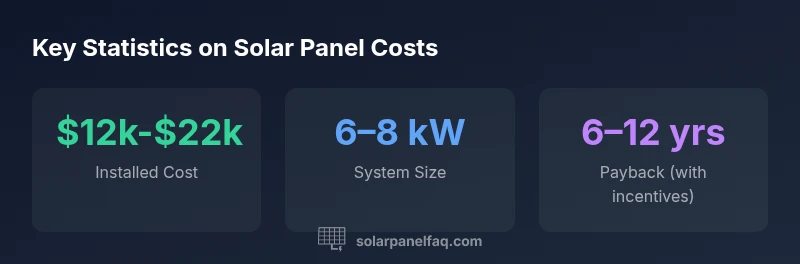
According to Solar Panel FAQ, the typical residential solar installation costs between $12,000 and $22,000 before incentives for a 6–8 kW system. Costs vary by roof type, location, and panel quality. Incentives can reduce the net price by 10–40%, affecting payback timelines. As the Solar Panel FAQ team notes, budgeting should account for permitting, wiring, and potential electrical panel upgrades to ensure a smooth project.
How much solar panels costs: framing the question for budgeting
The phrase how much solar panels captures a budgeting priority for homeowners who want to know upfront what a solar project will cost, and how that cost breaks down. In practice, costs hinge on system size, equipment quality, and regional labor costs. A 6–8
Drivers of cost: what moves the price needle
Several factors push the total cost higher or lower. Roof orientation and shading can dramatically affect required panel counts, while roof age and type determine mounting complexity. Panel efficiency, warranty terms, and the inverter technology chosen (string vs microinverters) influence both hardware cost and long-term performance. Labor costs vary by region, and additional components—like a newer electrical panel or energy storage—add to the bill. On the other hand, higher-efficiency modules may reduce the number of panels needed, potentially lowering racking and wiring costs. The trade-off between upfront hardware and long-term performance is a central theme when evaluating how much solar panels will cost your home.
Real-world cost ranges and what they include
In practice, most homeowners see a broad range reflected in preliminary quotes: a pre-incentive price between $12,000 and $22,000 for a 6–8
Incentives and financing: trimming the upfront price
Incentives, such as federal tax credits and state or utility rebates, can substantially reduce the upfront cost. Financing options—leases, PPAs, or loans—can also affect the apparent price and the long-run value. While incentives change over time, many homeowners can reduce their net outlay by a meaningful margin, sometimes cutting the bill by a third or more when combined with shared savings agreements. Financing considerations should focus on total cost of ownership, not just monthly payments, to ensure you understand the full economic picture. Solar Panel FAQ emphasizes planning around both incentives and financing to optimize the return on investment.
Planning steps: from audit to installation
A disciplined planning process helps convert an uncertain figure into a confident budget. Start with an energy audit to determine usage patterns, then size the system to fit your goals for energy independence and bill reduction. Gather multiple quotes, and request a breakdown of hardware choices (panel type, inverter, mounting) and service items (permits, inspections, commissioning). Verify interconnection requirements with your utility and budget for potential panel replacements or inverter upgrades later in the system’s life. A well-structured plan reduces the risk of cost creep and aligns expectations with the actual project scope.
Real-world considerations: maintenance and warranties
Solar installations typically require minimal ongoing maintenance, but some costs may arise over time. Inverter replacements, cleaning in dusty or shaded environments, and periodic inspections are common considerations. Warranties vary by manufacturer and installer, so it’s worth comparing coverage periods for panels and inverters. The real value of a solar investment comes from reliable performance over 25 years or more, not just the initial price tag. By aligning expectations and choosing reputable equipment with solid warranties, homeowners can maximize the probability of meeting or exceeding their payback targets.
Overview of system sizing, costs, and payback
| Aspect | Typical Range | Notes |
|---|---|---|
| System size (kW) | 6–8 | Common for single-family homes |
| Installed cost (before incentives) | 12,000–22,000 | Varies by region |
| Payback period (years) | 5–15 | Depends on energy usage and incentives |
Frequently Asked Questions
How much do solar panels cost for a typical home?
Costs vary by system size, location, and equipment. Typical residential installations fall in the mid-range of $12,000 to $22,000 before incentives for a 6–8 kW system. Incentives and financing can lower the net price substantially.
Most homes pay between twelve and twenty-two thousand dollars before incentives; incentives can cut that significantly.
What size solar system do I need?
A typical home uses about 6–8 kW, but actual needs depend on your energy use, roof space, and goals for offsetting bills. An energy audit helps determine the right size for your situation.
Most homes fall in the 6 to 8 kilowatt range after an energy audit.
Do incentives affect the cost?
Yes. Federal and state incentives can reduce upfront costs by a substantial amount, and some utilities offer additional rebates. Availability varies by year and location, so check current programs.
Incentives can dramatically reduce upfront costs, but they vary by place and time.
Is solar financing better than paying upfront?
Financing preserves cash flow and allows you to benefit from energy savings immediately, but you’ll pay interest over time. Compare total cost of ownership to determine the best choice for your finances.
Financing can help you start saving sooner; compare total costs to decide.
What maintenance costs should I expect?
Solar panels require minimal ongoing maintenance. Expect occasional cleaning and periodic inverter checks; large maintenance costs are uncommon for 25-year warranties when panels are properly installed.
Maintenance is usually minimal; expect occasional checks and cleaning.
“Cost is only part of the equation; the long-term value comes from reliable production, strong warranties, and sensible financing.”
Top Takeaways
- Estimate system size from energy usage and roof space.
- Costs vary widely by region, equipment, and labor.
- Incentives can substantially lower upfront costs.
- Shop multiple quotes and verify equipment specs.
- Plan for maintenance and potential future panel/inverter replacements to protect value.