How Much Is a Solar Panel System? A 2026 Cost Guide
Learn realistic cost ranges for residential solar panel systems, what drives price, incentives, financing options, and how to estimate your home’s solar investment in 2026.


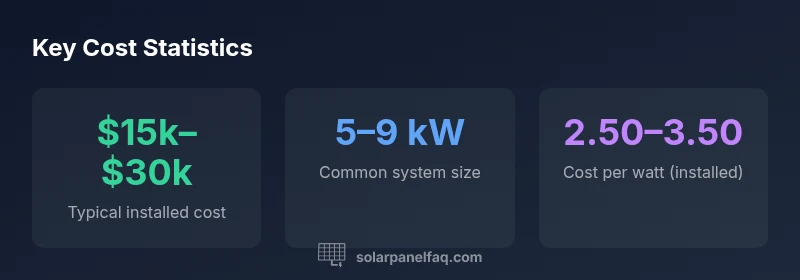
How much is a solar panel system? For most homes, the installed cost ranges from about $15,000 to $30,000 before incentives, driven by system size, roof complexity, and location. A typical residential size is 5–9 kW, with per-watt prices around $2.50–$3.50. Incentives can substantially reduce the out-of-pocket cost.
What determines the price of a solar panel system?
When homeowners ask how much is a solar panel system, the answer hinges on several key variables that affect the upfront sticker price and long-term value. System size is the most obvious driver: larger systems demand more panels, inverters, wiring, and mounting hardware, and thus cost more. Roof characteristics—height, pitch, access, and shading—change install difficulty and safety requirements, influencing labor hours and equipment choices. The choice of modules (crystalline vs. thin-film), inverter technology (string vs. microinverters or optimizers), racking systems, and monitoring hardware also impact price. Permitting, electrical upgrades, and interconnection with the grid add to the cost, especially in dense urban areas with strict codes. Finally, labor market conditions, contractor availability, and regional wage differences can cause meaningful price variation. In short, the same nominal system will cost more in some markets or on harder roofs, while a simpler installation in another area can be cheaper. This is why you should request multiple quotes to understand your local spread.
Cost ranges by system size and components
Pricing scales with system size and component quality. A 3–6 kW setup often falls in the $12,000–$18,000 range before incentives, while a 6–9 kW installation commonly lands between $18,000–$28,000. For larger 9–12 kW systems, costs typically run from $24,000–$36,000. These ranges cover panels, inverters, mounting hardware, wiring, and professional installation, but exclude permitting fees, electrical upgrades, interconnection costs, and potential shading fixes. Per-watt prices installed generally sit in the $2.00–$3.50 range, depending on equipment choice and market factors. Location matters: labor rates, permit complexity, and installer availability can push prices up or down. When evaluating quotes, ensure apples-to-apples comparisons across system size, equipment quality, and warranties.
Incentives, financing, and net cost
Incentives play a crucial role in lowering the upfront price. Federal tax credits, state programs, and utility rebates can substantially reduce the net cost, though availability varies by location and program rules. Financing options—purchased with cash, solar loans, or leases/PPAs—change the math but do not alter the system’s energy production. A cash purchase maximizes long-term savings but requires higher upfront cash, while loans and leases spread costs over time with different ownership and risk profiles. When calculating net cost, include installation charges, potential interconnection fees, and any required electrical upgrades. Always verify current incentives before committing, and recompute your payback period after applying credits and rebates.
Getting the most value from smart design
Value comes from thoughtful system design, not just a higher nameplate efficiency. Design considerations include system size aligned to actual energy use, selection of durable modules and a reliable inverter, and architectural choices that minimize shading and maximize sun exposure. Microinverters or power optimizers can improve performance on partially shaded roofs and flip the economics in marginal conditions. Monitoring software helps you catch underperforming panels or equipment early. Also, plan for future needs (battery storage, EV charging) when sizing the system to avoid under- or over-sizing.
Buying vs leasing or PPA: pros and cons
Buying typically yields the best long-term value, as you own the system and capture all energy savings and tax benefits. Loans reduce upfront burden while preserving ownership. Leasing and power purchase agreements (PPAs) shift maintenance and performance risk to the installer or finance provider and offer lower upfront costs, but total lifetime savings may be lower and the contract can limit flexibility. Always compare total cost of ownership over the system’s expected life, not just the first year. Read the fine print on warranties, maintenance duties, and what happens at contract end.
How roof type, shading, and orientation influence price
Roof characteristics directly affect installation complexity and cost. Steep pitches, multiple roof planes, or tiles can require specialized mounting hardware and slower work, increasing labor. Shading from trees or nearby structures reduces energy output, potentially prompting larger system sizing to meet demand, which raises cost. Orientation and azimuth influence production; roofs that face optimal directions may enable smaller, cheaper systems with higher yields. Addressing shading with trimming, pruning, or microinverters can also alter the pricing calculus.
Estimating your home's solar cost: practical steps
Start with your current energy usage—your electric bill is a clue for annual kWh. Assess your roof: available area, direction, tilt, and shading. Gather quotes from multiple installers, ensuring they account for the same system size and equipment. Ask about the warranty terms for panels and inverters, the expected lifetime of monitoring equipment, and maintenance services. Factor in potential future needs, like adding storage or EV charging. Finally, calculate the net cost after incentives and compare against projected savings from reduced grid purchases to estimate payback.
Long-term value and maintenance costs to consider
Solar systems are resilient assets, typically designed for decades of operation. Most panels come with 25-year power output warranties, while inverters may require replacement every 10–15 years on some models. Regular maintenance is usually minor—cleaning panels, ensuring clean wiring, and monitoring performance. Maintenance costs tend to be modest relative to benefits like reduced energy bills and potential property value increases. When evaluating quotes, consider the cost of potential inverter replacement, monitoring services, and any warranty extension options to accurately forecast long-term value.
Estimated installed costs by system size (before incentives)
| System Size (kW) | Estimated Installed Cost | Cost per Watt | Notes |
|---|---|---|---|
| 3-6 | 12,000-18,000 | 2.00-3.00 | Smaller homes or shaded roofs |
| 6-9 | 18,000-28,000 | 2.50-3.50 | Most common residential size |
| 9-12 | 24,000-36,000 | 2.70-3.80 | Larger homes, more panels |
Frequently Asked Questions
What factors influence the upfront cost of a solar panel system?
Upfront price is driven by system size, inverter type, panels quality, roof complexity, permitting, and installation labor. Shading and orientation can push costs up or down.
Upfront costs depend on size, equipment, roof, and labor—shade and roof shape matter too.
Do incentives reduce the upfront cost?
Yes. Federal and state programs can significantly cut net price; eligibility varies by location and system type; check current programs.
Incentives can lower upfront costs, but availability varies by location.
Should I buy, lease, or choose a PPA?
Buying usually yields the best long-term value; loans and leases shift risk but can reduce upfront burden; compare total cost of ownership.
Buying often saves more in the long run; financing and leases have tradeoffs.
How does roof type affect cost?
Roof material, slope, and shading affect mounting complexity and permit requirements, influencing labor and hardware costs.
Roof type changes mounting and permitting costs.
What ongoing costs should I budget for?
Inverter replacement, maintenance, monitoring, and potential cleaning; warranties help, but plan for occasional service.
Expect inverter replacement and maintenance over time.
“Match your system size to actual energy use and invest in reliable equipment; incentives help, but smart design drives long-term value.”
Top Takeaways
- Estimate cost with size, roof, and location in mind
- Incentives can substantially lower net price
- Most homes aim for 5–9 kW for value balance
- Shop multiple quotes for pricing clarity
- Plan for maintenance and inverter replacement over time