What Happens When a Solar Panel Breaks? An Urgent Troubleshooting Guide
Learn urgent steps to diagnose and respond when a solar panel breaks. Safety, warranty considerations, and repair vs. replacement guidance for homeowners in 2026.


Short answer: when a solar panel breaks, the most likely issues include cracked glass, microcracks in cells, or damaged bypass diodes. Immediately shut down the system, avoid touching damaged areas, and have a professional inspect to determine safety, warranty coverage, and whether repair or replacement is necessary. Do not attempt risky DIY fixes.
what happens when a solar panel breaks
What happens when a solar panel breaks ranges from cosmetic damage to compromised safety and significant efficiency loss. Visible cracks or shattered glass can allow moisture to enter, accelerating corrosion and reducing output. Microcracks inside cells may propagate under temperature cycling, lowering voltage and overall system performance long before you notice it on an energy meter. Electrical safety matters too: broken bypass diodes or damaged junction boxes can create arc risks or hot spots. For homeowners, the immediate concern is safety, followed by a measured assessment of whether the panel can be repaired, whether the module must be replaced, and how this affects warranty terms. Solar panels operated within a proper system design should not pose immediate danger when handled correctly, but any breakage should be treated as an urgent issue that warrants professional evaluation, especially if the panel is connected to other modules and in-learning electrical pathways.
Common causes of panel breakage
Panel breakage happens for several common reasons that homeowners can recognize after a careful, safe inspection. Hail impact or a hard impact from a falling object is a leading cause, easily cracking the glass or shattering the laminate. Improper installation can place undue stress on frames and glass, making panels susceptible to micro-fractures over time. Temperature fluctuations, especially in regions with rapid heating and cooling, contribute to material fatigue and sealant failures, which in turn can weaken the panel’s protective layers. Debris from nearby trees, foot traffic during cleaning, or accidental stepping on panels can also cause damage. Understanding these causes helps you document the issue for warranty claims and decide whether a repair or replacement is warranted.
How damage affects energy production and safety
Damage directly reduces the panel’s ability to convert sunlight into electricity. A cracked glass surface can scatter light and reduce efficiency; broken cells or interconnects interrupt the electrical path, causing voltage dips or open circuits. In some cases, shading from a damaged area can affect neighboring panels in the string, lowering overall system output. Safety concerns include exposed conductors, sharp edges, and the potential for moisture ingress that leads to corrosion. If a microcrack remains undetected, it may propagate, causing more severe failure. In practice, damaged panels often require isolation to prevent backfeed or short circuits, and the system’s monitoring should flag abnormal voltage or current readings that warrant professional inspection.
Immediate steps you should take
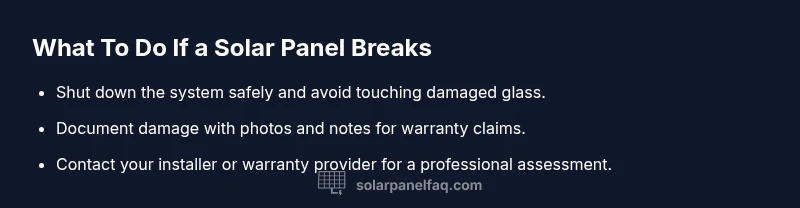
If you notice damage, safety comes first. Power down the system at the main disconnect and avoid touching the damaged area. Do not climb onto roofs or remove panels yourself unless you are trained and equipped for rooftop work. Document the damage with clear photos from multiple angles, note the panel location and serial numbers, and check your warranty terms. Contact your installer or solar provider promptly to arrange a professional assessment. If you have a microinverter or optimizers, report any abnormal readings to the technician. Keep children and pets away from the area, and never attempt to bypass safety mechanisms to test the panel.
Diagnosing repair vs replacement: what to consider
Deciding between repair and replacement hinges on panel age, warranty coverage, and the type of damage. If the panel is relatively new and still under warranty, the manufacturer or installer may offer a replacement or module repair at no or minimal cost. In contrast, older panels may be less cost-effective to repair, and a replacement could be the better long-term option. The overall health of the system, the number of affected panels, and the potential for future failures should factor into the decision. Always obtain a written assessment from a licensed technician and review warranty terms to determine eligibility. Try to avoid DIY repairs that could void warranty or create safety risks.
What to tell your installer or warranty provider
When you contact your installer or warranty provider, provide a concise incident report: the date, location of the damage, observed symptoms (crack, discoloration, loss of output), and any monitoring data that shows abnormal production. Include photos and serial numbers. Ask about what the warranty covers (glass breakage, workmanship, and electrical components) and whether a field service visit is required. Request a formal assessment, a quote for replacement or repair, and an estimated timeline. If a claim is needed, ask about documentation requirements, pre-authorization, and any deductible.
Preventing future breakage and proper maintenance
Prevention starts with proper installation and routine maintenance. Schedule regular inspections, especially after severe weather, and keep the mounting hardware tight and corrosion-free. Keep the panel surface clean and free of abrasive debris that could scratch the glass. When walking near panels or performing maintenance, use proper fall protection and avoid stepping on frames or glass edges. Consider reinforcing inventory and documentation for warranty claims so you can act quickly if damage occurs. Finally, review insurance coverage to ensure you have adequate protection for panel damage and associated losses.
Steps
Estimated time: 45-75 minutes
- 1
Power down the system safely
Use the main disconnect to shut off the array and inverter. Confirm no voltage is present before touching anything. This reduces the risk of shock or arc faults.
Tip: Wear insulated gloves and use a non-conductive ladder if roof access is needed. - 2
Assess safety from a distance
Observe from ground level or a safe stance to identify obvious damage (cracks, broken glass, or signs of moisture). Do not attempt to move panels or panels' frames.
Tip: Keep pets and kids away; do not lean on damaged glass. - 3
Document damage thoroughly
Take wide and close-up photos of the affected panel(s), frame, wiring, and mounting hardware. Note the exact location and any abnormal readings shown on the monitoring app.
Tip: Include the serial numbers and any identifiable marks for warranty records. - 4
Check warranties and service options
Review the panel warranty, installer workmanship warranty, and any home insurance implications. Contact your installer or the manufacturer for guidance on next steps.
Tip: Ask for a written assessment and a quote for repair or replacement. - 5
Coordinate a professional inspection
Arrange a site visit with a licensed solar technician to inspect electrical integrity, sealant condition, and potential cascade effects on the string.
Tip: Provide photos and incident details to the technician in advance. - 6
Decide on repair vs replacement
Based on the assessment, decide whether to repair the module, replace it, or upgrade the entire string. Factor in warranty status and long-term performance goals.
Tip: Avoid DIY fixes that could void warranties or create safety hazards.
Diagnosis: Visible damage to one or more solar panels, reduced energy output, or abnormal monitoring readings
Possible Causes
- highImpact damage from hail or object strike
- mediumThermal or mechanical stress from improper mounting
- lowMoisture ingress due to cracked seals
Fixes
- easyIsolate the damaged string and have a professional assess for replacement or repair
- mediumRequest a warranty evaluation if within coverage terms
- easyDocument damage and schedule a safe rooftop or ground-level inspection by a licensed technician
Frequently Asked Questions
What should I do first if I notice visible damage to my solar panel?
Prioritize safety: shut down the system, avoid touching the damaged area, and contact a licensed professional for an inspection. Document the damage with photos and note any monitoring alerts.
First, shut down the system and avoid touching the damaged area. Then contact a licensed professional and document the damage with photos.
Can a damaged panel still generate electricity?
Yes, a damaged panel may still generate some electricity, but output is reduced and safety risks may increase. A professional assessment helps determine if replacement is needed.
A damaged panel can still produce power, but less efficiently and with higher safety risk. Get a professional assessment.
Is it safe to touch a cracked panel?
Avoid touching cracked glass or exposed components. Shut down the system and wait for a technician to inspect, as exposed conductors can pose shock or arcing hazards.
No, avoid touching cracked panels. Shut down the system and wait for a technician.
Will a damaged panel void my warranty?
Warranty terms vary by manufacturer and installer. A professional assessment is needed to determine coverage and whether the damage qualifies for replacement.
Warranty rules differ; check with the manufacturer and your installer to see if coverage applies.
When should I repair a panel vs replace it?
If the panel is new or under warranty, repair or replacement is often covered. Older panels without coverage may be more cost-effective to replace as part of a system upgrade.
If under warranty, repair or replacement is likely covered. Otherwise, consider system-wide replacement for long-term value.
How long does a typical inspection take?
A standard technician inspection typically takes 30-60 minutes, depending on the number of affected panels and accessibility. A full replacement may require scheduling a follow-up visit.
Most inspections take 30 to 60 minutes; replacements may require an additional visit.
Should I call my insurer for panel damage?
If you have homeowners or solar-specific coverage, file a claim with photos and documentation. Insurance decisions vary, but many policies cover accidental damage.
Yes, consider filing a claim with your insurer if damage is covered; provide documentation.
Watch Video
Top Takeaways
- Inspect damage promptly to protect warranty coverage
- Prioritize safety and involve licensed professionals
- Decide between repair and replacement based on age and cost
- Document thoroughly for claims and future maintenance