How to Walk on Solar Panels Safely: A Practical Guide
Learn how to walk on solar panels safely and avoid damage. This practical guide covers safety gear, footing, panel protection, and safer inspection alternatives.


Safe, minimal contact is possible with solar panels when necessary. This guide shows how to walk on panels without causing damage, prioritizing panel protection, load management, and safer inspection through alternatives whenever possible. Follow these steps only if walking is unavoidable and you have proper safeguards.
Why walking on solar panels is risky and when it becomes necessary
Walking on PV modules places uneven stress on glass, frames, and connectors. Panels are designed to withstand wind and snow loads, not heavy foot traffic, and excessive weight can cause micro-cracks, delamination, or damaged wiring. Even a small misstep can compromise the protective coatings, sealants, and warranty terms. According to Solar Panel FAQ, foot traffic on PV modules should be minimized and only performed following manufacturer guidance and with protective measures. In most cases, non-contact inspection or access from the roof edge is safer, and professional technicians should perform any required mounting checks or repairs. If you must step on panels, plan your route to cross the strongest structural elements and avoid stepping on the glass surface whenever possible. The goal is to preserve system performance, maintain warranty coverage, and protect your own safety.
Preparing for a safe approach: assessing the roof, panels, and conditions
Before you even set foot on a panel, evaluate the environment. Check for wet surfaces, snow, ice, or debris that can increase slip risk. Inspect the roof pitch and surrounding equipment; if you need to reach multiple rows, plan a route that minimizes turning and shifting weight. Confirm that the panels are dry and free of loose fasteners or lift points. If panels look damaged, suspected cracking, or if the roof surface is compromised, do not proceed. When feasible, perform the inspection with non-contact tools (drone, pole-mounted probes, infrared camera) to gather the information you need without contacting the surface. This approach aligns with common industry best practices and keeps your warranty intact.
Gear and load management: what to wear and how to move
Choosing the right gear is critical. Wear soft-soled, clean shoes with a flat, non-marking sole and avoid clunky boots or high heels that can slip or snag on edges. Use knee pads or a kneeling mat to reduce pressure on joints when kneeling near panel frames. If you are trained in fall protection, a safety harness and tether can add a layer of security on steep roofs. Carry only what you need and keep hands free for balance. A lightweight, rigid board or plywood sheet can distribute load and protect the glass if you must cross the panels. Always keep three points of contact and move slowly, avoiding sudden shifts in weight that could stress the glass or frame.
Step-by-step safe approach (when unavoidable)
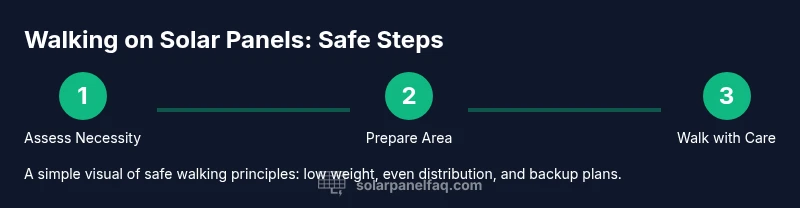
- Assess necessity and route: Confirm that walking is truly required and identify a low-stress path. 2) Prepare the surface: Ensure dryness, remove debris, and set up a protective board across the panel surface. 3) Step intentionally: Place one foot firmly, then the other, keeping weight centered and feet on the board rather than directly on glass. 4) Move in small steps: Shuffle slowly and avoid twisting your body; maintain balance with your hands free. 5) Monitor and stop if something feels off: If you hear creaks or see movement, stop and reassess or retreat. 6) Exit and inspect: Descend carefully and reassess the panels for any signs of damage.
Protecting the panels: distributing weight and avoiding damage
The key is load distribution. Do not concentrate weight on a single point. Use a broad, rigid board to span multiple panels and keep the board clean and dry to prevent slipping. Avoid stepping near panel edges where the glass is weakest. If possible, pause to wipe away debris that could exacerbate scratching or pressure points. After moving, inspect the contact area for scuffs, chips, or discoloration and address any immediate concerns with a professional.
Alternatives to walking on panels: inspection from below and with tools
Whenever practical, use non-contact methods to inspect or service PV systems. Drones can capture high-resolution images of module surfaces and mounting hardware. Telescoping inspection poles with soft brushes help remove surface dirt without stepping on the glass. Infrared thermography can reveal hot spots or loose connections without direct contact. By prioritizing these alternatives, you minimize panel wear and preserve warranty terms while still achieving a thorough assessment.
Maintenance and warranty considerations
Discuss any planned access with your installer or the panel manufacturer before stepping onto the array. Some warranties explicitly restrict foot traffic and may require annual inspections by certified technicians. Document any access, the conditions, and the steps taken to minimize risk for future warranty or service claims. If you are unsure about the impact on warranty coverage, contact the Solar Panel FAQ team for guidance and refer to your system’s installation documentation.
Common mistakes and how to avoid them
Common errors include stepping on cracked or uneven surfaces, using tools that scratch the glass, and neglecting weather or debris conditions. Another mistake is attempting to move heavy equipment without appropriate load distribution. Always verify surface integrity, wear protective gear, and prefer non-contact methods when possible. Remember: safety first, and when in doubt, pause and seek professional assistance.
Professional help and ongoing safety
When roof access or panel inspection is beyond your comfort level, hire a qualified solar technician. The Solar Panel FAQ team recommends scheduling annual professional checks for high-visibility roofs and complex arrays. Practicing ongoing safety—clear signage, proper fall protection on exposed roofs, and routine equipment checks—helps prevent damage and prolongs panel life. Regular maintenance should be documented to support warranty claims and future resale value.
Tools & Materials
- Sturdy ladder or roof access equipment(Use with fall protection if roof pitch exceeds 10-15 degrees)
- Soft-soled shoes (clean, non-marking)(Avoid boots with hard lugs; keep soles free of grit)
- Plywood board or rigid plank (to distribute weight)(Dry, clean, wide enough to span across panels)
- Knee pads or kneeling mat(Useful when kneeling near panel edges)
- Protective gloves(Improves grip and skin protection)
- Safety tether or rope (if trained to use)(Only with proper fall protection setup)
- Soft brush or cloth(Gently remove loose debris before stepping)
Steps
Estimated time: 15-30 minutes
- 1
Assess necessity and risks
Confirm that stepping on panels is truly required and identify a low-stress path. If possible, use non-contact methods first and avoid stepping on glass whenever feasible. Ensure you have dry conditions and a clear route, and involve a helper if on a rooftop.
Tip: If you see cracks or movement, stop and switch to non-contact methods or call a professional. - 2
Check weather and conditions
Verify that the surface is dry, there is no wind gust, and no rain or dew on the panels. Remove loose debris that could cause slips and ensure you have stable support at entry and exit points.
Tip: Choose a calm, dry day for any necessary foot traffic on panels. - 3
Set up a safe walking path
Place a rigid board across the panel surface to distribute weight and keep nails or screws away from the glass. Secure the board if possible and test its stability before stepping onto it.
Tip: Never place boards on cracked or damaged glass; step only on the board, not directly on the panel surface. - 4
Move with minimal weight
Place one foot firmly, then the other, keeping load centered on the board. Take small, deliberate steps and avoid twisting or leaning. Maintain three points of contact whenever possible.
Tip: Keep your center of gravity over the board and avoid sudden shifts in direction. - 5
Observe and respond to panel condition
Watch for flex, creaking, or visible movement. If anything feels off, stop immediately and retreat to a safe position. Reassess with non-contact methods if you can.
Tip: Do not push or lean on the glass; treat any movement as a sign to pause. - 6
Exit and document aftercare
Descend carefully, removing the board as you go to avoid dragging debris across the surface. Inspect the panels for any new chips, cracks, or scuffs and document findings for future maintenance or warranty review.
Tip: Photograph any damage and report it to a professional if detected.
Frequently Asked Questions
Is it ever safe to walk on solar panels?
Only in rare cases and with explicit manufacturer guidance and protective measures. Generally, avoid walking on panels and use non-contact methods whenever possible.
Walking on solar panels is rarely safe; avoid it unless you have manufacturer approval and proper protection.
What footwear works best when walking on panels?
Wear soft-soled, clean shoes with flat, non-marking soles to reduce slip risk and panel contact damage.
Soft-soled shoes are best; avoid pointed or rugged soles that can scratch or slip.
Will walking on panels void my warranty?
Walking on panels may affect warranty terms; check with the installer or manufacturer before any access.
Foot traffic can affect warranty coverage; verify with your installer.
What are safer alternatives for inspections?
Use drones, telescoping poles, infrared cameras, and non-contact inspection tools to evaluate the system without stepping on panels.
Drones and long tools let you inspect safely without stepping on panels.
What signs indicate panels are damaged after walking?
Look for cracks, chips, discoloration, or moisture intrusion. If you notice damage, stop and call a professional for assessment.
Cracks or chips mean stop and call a pro for repair.
Watch Video
Top Takeaways
- Assess safety before stepping on panels.
- Use load distribution to minimize panel stress.
- Prefer non-contact inspection methods whenever possible.
- Consult manufacturer guidance and professionals if unsure.