Solar Panel Snow Removal: Safe & Simple Guide
Learn how to safely remove snow from solar panels to protect energy production. This step-by-step guide covers safety, tools, techniques, and maintenance for homeowners during winter.


This guide helps homeowners safely remove snow from solar panels to protect energy production. You will learn best practices, essential safety steps, and when to call a professional. Key requirements include a non-abrasive snow rake, a stable ladder, proper footwear, and a clear plan for handling light versus heavy snow. The goal is to maintain performance without damaging panels or voiding warranties.
Why snow matters for solar panels\n\nSnow can significantly reduce solar energy production by blocking sunlight and increasing cold-related losses. For homeowners, understanding solar panel snow removal is essential to maintain performance during the winter months. According to Solar Panel FAQ, snow accumulation can reduce the effective irradiance on the panel surface, leading to lower output even when the sun is shining. The sooner you address light snow, the faster your system can recover to its normal output. However, aggressive scraping can damage glass, frame, or seals, so technique matters as much as timing.\n\nIn many climates, natural sun and wind will clear light snowfall over a few hours, but heavy, wet snow or ice buildup can persist. The goal of solar panel snow removal is to maintain safe access to sunlight while protecting the long-term health of the installation. Pros and homeowners should tailor snow removal to their roof type, panel mounting, and local weather patterns. When done correctly, solar panel snow removal helps preserve energy production, reduces the risk of snow dams on roof edges, and minimizes the chance of electrical faults caused by moisture intrusion.\n\nTo begin, inspect the array from the ground or a safe stance to determine how thick the snow is and whether there is any ice. If panels appear coated with more than a few inches of snow, plan your approach, wear non-slip boots, and avoid stepping on frozen panels. Planning and skillful execution reduce the risk of injury and damage, making solar panel snow removal a practical winter maintenance task rather than a risky chore.
Safety First: Planning and risk assessment\n\nWinter work around a roofline carries inherent risks. Before you touch a snow-covered solar array, assess weather conditions, roof slope, and your own footing. If you notice heavy wind, freezing rain, or ice on the roof, postpone snow removal and consider professional help. Always keep three points of contact when using a ladder, and never stand on panels or ledges. A quick risk checklist can save you from costly mistakes: footwear with good grip, a stable ladder on level ground, a spotter below, and a plan to retreat if conditions worsen. According to Solar Panel FAQ, authority on winter maintenance emphasizes safety over speed.\n\nIn addition to physical safety, protect the system from moisture intrusion. Disconnecting the output is usually unnecessary for light snow, but if you’re uncertain, consult the manufacturer’s guidelines or a qualified technician. If you must work on the roof, use fall protection equipment and avoid working alone. The aim is a safe operation that preserves roof integrity and panel warranty while minimizing the chance of personal injury.
Tools and materials you’ll need for solar panel snow removal\n\nHaving the right tools makes the process safer and more effective. The essentials include a non-abrasive snow rake with a wide, soft head to prevent scratches on glass, a stable ladder or roof-safe access system, and insulated gloves. For icy patches, avoid metal tools that can gouge or crack the panel surface. A dry cloth or microfiber towel is useful for wiping moisture from frames once snow is cleared. Optional items include a harness for roof work, a second person to assist, and a de-icer pen for small ice patches near edges. Always choose tools that keep a comfortable distance from the panels, reducing the risk of accidental impact. Solar Panel FAQ notes that using purpose-built equipment designed for solar maintenance improves safety and reduces the chance of warranty issues.
Techniques for removing snow safely and effectively\n\nLight, fresh snow can often be brushed away from the top down. Start at the highest edge and work toward the bottom, using long, smooth strokes that glide over the surface rather than scraping. Keep the rake at a shallow angle to avoid lifting glass, seals, or mounting hardware. If snow is packed or icy, allow a few minutes of sun exposure to soften it slightly or use a warm, damp cloth at the edges—not hot water—to soften the ice rather than cracking the glass. Never hammer or strike the panels, and avoid stepping on the panels themselves. For sloped roofs, ground-based tools are safer than foot traffic on the roof. If ice becomes pervasive, stop and call a professional to prevent damage. The goal is to clear enough snow to restore sunlight access while preserving the panel’s integrity and warranty.
Handling ice, moisture, and wind during snow removal\n\nIce is a common hazard when temperatures hover near freezing. Do not attempt to remove thick ice blocks with a blunt instrument; instead, let the sun do some of the work, or use a plastic scraper with a slow, patient stroke. Wind can push you off balance, so keep a low center of gravity and never lean far from the ladder. If you must work near a gutter or edge, have someone assist and keep the area clear of bystanders. After removal, dry any remaining moisture on frames and connectors to minimize corrosion and ensure reliable sensor operation. If you encounter unusual moisture intrusion or signs of delamination, pause and consult a licensed solar technician.
Post-removal checks: verifying performance and safety\n\nOnce snow is cleared, observe the system’s output through your inverter or monitoring app to confirm energy production rebounds. Compare current output to typical performance on clear days to gauge recovery. Visually inspect seals around the panel edges for visible gaps or damage, and check cables for signs of wear or moisture. If you notice abnormal readings, erratic shutoffs, or warm spots on the back of panels, stop using the system and contact a professional. Document any visible damage for warranty considerations and future maintenance planning.
Maintenance after snowfall: prevention and ongoing care\n\nPreventive measures can reduce the frequency of manual snow removal. Consider angled racking or panel orientation that facilitates shedding, and ensure surrounding tree branches do not deposit debris that can trap snow. Regular inspections in late fall and early winter help identify loose mounting hardware or worn seals before heavy snow arrives. Clean panels gently during milder days to remove dirt that can insulate the surface and hinder snow melt. Keeping panels clean supports efficiency and reduces the risk of snow mass causing localized shading and energy loss.
Tools & Materials
- Non-abrasive snow rake with soft head(Preferred 1-1.5 inches thick padding; avoid metal blades)
- Stable ladder or roof access system(Grounded on level surface; use a spotter if possible)
- Insulated gloves(Keeps hands warm and improves grip)
- Water-resistant cloth(For drying edges and connectors after removal)
- Fall protection gear (harness/anchor)(Only for steep roofs or high-risk setups)
Steps
Estimated time: 20-60 minutes
- 1
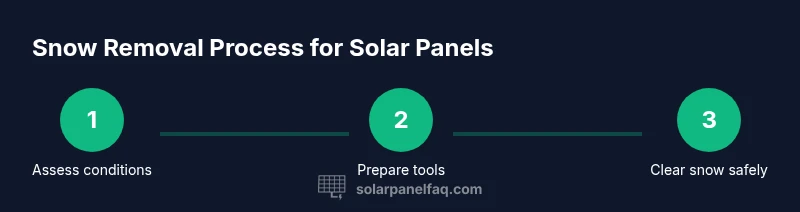
Assess conditions and plan
Begin by checking weather, light wind, and visibility. Decide if it’s safe to proceed and identify the best approach for your roof type and panel layout. This initial assessment helps you avoid unnecessary risk.
Tip: If there’s ice on the roof or heavy wind, postpone removal. - 2
Prepare your gear
Put on insulated gloves, boots with good traction, and ensure your ladder is stable. Gather the snow rake and any optional safety gear before you start.
Tip: Have a second person ground the ladder and assist if needed. - 3
Brush off loose snow from the top edge
From the ground, use long, even strokes to lift loose snow from the top edge downward. Avoid digging the rake into the glass. Move slowly to prevent slipping.
Tip: Start from the highest row and work downwards in sections. - 4
Tackle packed snow and ice carefully
If snow is packed or icy, loosen it with gentle vibrations or a warm cloth at the edge rather than scraping hard. Do not use metal tools that can scratch the surface.
Tip: Let the sun soften edges slightly before attempting removal. - 5
Avoid stepping on panels
Never step on solar panels; stepping can crack glass or dislodge mounting hardware. Stay on the ground or use a safety harness if you must access the roof.
Tip: If a panel creaks under foot or shows movement, retreat immediately. - 6
Dry and inspect edges
After snow is cleared, wipe moisture from frame edges and connectors. Look for signs of wear, corrosion, or loose mounting hardware.
Tip: Untreated moisture can lead to long-term damage; keep connectors dry. - 7
Check system output
Use your inverter or monitoring app to verify energy production returns toward typical values. Compare to weather-normalized expectations for the day.
Tip: If production remains suppressed, consult a professional to inspect for hidden damage. - 8
Clean up and store tools
Dry tools, return them to their storage, and inspect for wear after use. Ensure no tools are left lying near the panel area to avoid trip hazards.
Tip: Document tool wear and schedule maintenance for next season.
Frequently Asked Questions
Is it safe to remove snow from solar panels myself?
Yes, it is generally safe if you follow safety guidelines and use appropriate tools. Avoid stepping on panels and be mindful of ice and wind. If you’re unsure, hire a professional to protect the panels and your safety.
Yes, you can if you follow safety guidelines and use the right tools. Don’t step on the panels and watch for ice and wind; consider hiring a pro if unsure.
Can I use hot water to melt snow on solar panels?
No. Hot water can cause thermal shock and crack the glass or seals. If needed, use lukewarm water and gentle methods to loosen ice, or simply wait for sun and temperature changes.
No—hot water can crack the glass. If you must, use lukewarm water and gentle methods or wait for warmer conditions.
What if heavy snow or ice persists after removal?
If heavy or stubborn ice remains, stop and call a professional. For safety and warranty reasons, persistent ice may indicate mounting or sealing issues that require expert assessment.
If heavy ice sticks around, stop and contact a pro. It might indicate mounting or seal issues.
Will snow removal void my solar panel warranty?
Removing light snow carefully typically does not void warranties, but damage from improper techniques can. Always follow manufacturer guidelines and consult a technician if in doubt.
As long as you follow manufacturer guidelines and avoid damage, snow removal usually won’t void the warranty.
When is the best time to remove snow?
During daylight and when temperatures are above freezing is safest. Avoid removing during heavy wind or icy conditions to minimize risk.
Do it in daylight with warmer conditions, avoid icy or windy times.
Should I install a heated cable system for snow?
Heated cable systems can prevent snow buildup but are costly and require professional installation. For most homeowners, proactive removal with proper tools is preferable.
Heated cables work but are costly; for most, manual removal with proper tools is better.
Watch Video
Top Takeaways
- Assess safety before you act.
- Use non-abrasive tools and gentle strokes.
- Avoid stepping on panels and watch for ice.
- Verify system performance after snow removal.
- Plan maintenance to minimize future snow risks.