Clean Solar Panels: Safe, Effective Cleaning Guide
Learn safe, effective ways to clean solar panels and maximize energy output. This guide covers when to clean, tools, and a clear process for roofs or ground mounts.


Learn safe, effective ways to clean solar panels and maximize energy output by safely cleaning panels. This quick guide outlines when cleaning is needed, the best tools, and essential safety steps for roof or ground installations. Use gentle methods to protect coatings and schedule cleanings around weather for optimal results and maintenance.
What 'clean solar' means for your system
Keeping solar panels free of dirt isn't vanity—it's about maximizing energy output and protecting your investment. When panels accumulate dust, pollen, bird droppings, or streaks, their ability to absorb sunlight declines, especially in hot climates where dirt bakes onto glass. For homeowners aiming to optimize a roof-installed system, 'clean solar' isn't about perfection but about maintaining a reliable cleaning baseline. According to Solar Panel FAQ, a simple inspection after storms or heavy winds can identify when cleaning is warranted. Even light debris can cause noticeable performance loss over months. In the long run, investing a little time in cleaning can reduce production losses and extend panel life by lowering the risk of algae or mineral deposits that degrade coatings. The goal is a practical, safe routine that fits your home, roof design, and climate. This article follows a safety-first approach and uses non-abrasive tools to protect anti-reflective coatings and sealants while maintaining overall system efficiency. The Solar Panel FAQ team emphasizes that consistent care can significantly improve long-term output and reliability for clean solar systems.
How dirt affects performance and when to clean
Solar panels work best when surfaces are clean, allowing maximum light to reach solar cells. Dirt reduces light transmittance, creating shading that lowers current and, in turn, energy output. Dirt accumulation varies by location: dusty deserts, coastal salt spray, or heavy pollen seasons tend to demand more frequent attention. The Solar Panel FAQ analysis shows that performance gains are typically observed after removal of heavy dust or grime, though rainfall and humidity can help reduce build-up. Visual checks after storms or high pollen periods guide decisions. If panels sit behind shade or receive inconsistent sun, cleaning reveals whether reduced output is due to shading or dirty surfaces. Seasonal patterns—spring pollen and autumn leaves—can temporarily degrade performance. Maintain a maintenance log to track improvements and adjust cadence accordingly. Solar Panel FAQ’s findings reinforce that a simple, regular cleaning routine sustains efficiency and energy production across diverse climates.
Safe, effective cleaning methods for different roofs
Before you start, consult the manufacturer’s guidelines; many panels use tempered glass that requires mild care. For ground-mounted systems or low-slope roofs, use a soft brush, a long-handled microfiber mop, and a garden hose with a spray nozzle. A bucket with warm water and a few drops of eco-friendly soap can loosen grime, but avoid detergents with harsh solvents that could damage coatings. For steep roofs or tall installations, hiring a pro or using a roof-safe work platform is wise. Rinse from the top down to avoid pushing dirt into clean areas, and never use high-pressure wands that can scratch glass or infiltrate seals. If you must walk on panels, test stability first and wear non-slip footwear. After cleaning, dry any residual water with a microfiber cloth to minimize streaks. Cleaner panels help, but they are not a substitute for inverter maintenance or shade management, and always consider roof-safety priorities when planning a cleaning session. The goal is a practical, safe approach that preserves coating integrity while maximizing light transmission.
Safety first: gear, weather, and access
Safety matters more than speed when cleaning solar panels. Use a sturdy, roof-rated ladder, fall-protection gear if needed, and two-person communication for high-risk work. Check the forecast to avoid cleaning in strong winds, rain, or freezing temperatures. Wear gloves, safety glasses, and non-slip shoes; keep a first-aid kit nearby. Secure hoses and tools to prevent slips or drops, and never work alone on steep or unstable surfaces. If you doubt your ability to access the panels safely, hire a certified professional. Simple safety planning reduces the risk of falls and damage, protecting both you and your investment in clean solar energy.
Cleaning cadence and maintenance planning
Develop a practical cleaning cadence that matches your climate and roof. In dusty or coastal areas, plan more frequent cleanings; in temperate climates, align with seasonal pollen or leaf fall. Keep a maintenance log that records dates, weather conditions, and any observed performance changes. This log helps you determine whether you should increase or decrease cleaning frequency and can highlight potential panel corrosion or mounting issues over time. Pair cleaning with routine inspections, checking for loose mounts, degraded seals, or micro-cracks. A simple, consistent plan minimizes production losses and keeps solar energy generation near peak potential.
Common mistakes to avoid and troubleshooting
Avoid cleaning panels in direct sunlight or when they are hot to prevent rapid drying and streaks. Do not use high-pressure water, abrasive scrubbers, or harsh cleaners that could scratch coatings or damage seals. Walking on panels can cause cracks if the glass is stressed; always prioritize safety and consider pro help for steep roofs. If output remains low after cleaning, verify shading issues from nearby trees, panel orientation, or inverter problems. Keep notes and photos of each cleaning session to spot recurring issues and track improvements over time.
Tools & Materials
- Extending ladder(Stable, roof-safe, rated for your weight)
- Fall-protection gear(Harness, rope, anchor points if working on roof)
- Soft-bristled brush(Non-abrasive to avoid scratches)
- Microfiber cloths(For drying and streak prevention)
- Garden hose with adjustable nozzle(Low pressure; avoid high-pressure jets)
- Mild eco-friendly soap(Only if grime persists)
- Bucket(Warm water preferred for better cleaning)
- Non-slip footwear(Grip on potentially slippery surfaces)
- Safety glasses(Eye protection while scrubbing)
- Ground tarp or mat(Catch runoff and protect surfaces)
Steps
Estimated time: 45-60 minutes
- 1
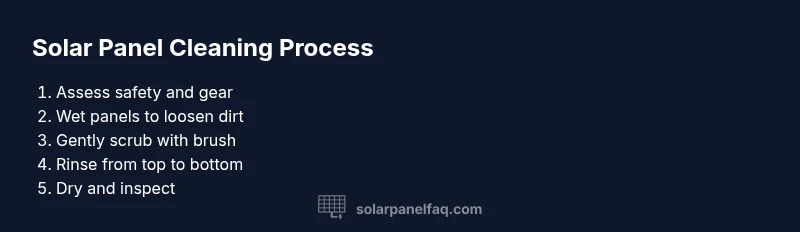
Assess safety and plan
Inspect access routes, check weather, and confirm you have fall protection. Decide if you can complete the task from ground level or if a roof-access is required. Clear the area of obstacles and inform someone of your plan.
Tip: Two-person team improves safety and efficiency. - 2
Gather tools and prep area
Assemble all tools within easy reach. Lay down a tarp to catch runoff and reduce the risk of slipping on wet surfaces. Pre-fill buckets with warm water and soap if using soap.
Tip: Test water temperature on a small area first. - 3
Wet panels and loosen grime
Rinse panels from the top down with a gentle stream to loosen dust. Do not spray directly at seals or electrical components. Ensure the area below is protected from splashing.
Tip: Always start at the highest point to avoid recontamination. - 4
Gently scrub with non-abrasive brush
Use a soft brush or microfiber pad with minimal pressure to lift dirt. Avoid circular scrubs on coatings to prevent micro-scratches. Work in sections for thorough coverage.
Tip: Keep strokes light and steady; let the brush do the work. - 5
Rinse thoroughly and dry
Rinse from the top to bottom until all soap residues are gone. Dry with microfiber cloths to prevent water spots. Leave panels to air-dry if safe, or towel-dry with a clean cloth.
Tip: Check for soap residues that could attract dust. - 6
Inspect and log results
After cleaning, inspect mounting hardware and seals for wear or looseness. Update maintenance log with date, weather conditions, and observed performance changes.
Tip: Take photos for future comparison.
Frequently Asked Questions
Do I really need to clean solar panels?
Not always. If you have minimal dust and panels are performing well, cleaning may be optional. Look for visible dirt and performance changes to decide.
You don't always need to clean; watch for visible dirt and performance changes to decide.
Can I use soap on solar panels?
Use a mild, eco-friendly soap with plenty of water. Rinse thoroughly to remove all soap residue, which can attract more dirt.
Yes, mild soap is fine; rinse well to avoid residues.
Is it safe to clean panels on a roof?
Only with proper fall protection and stable footing. If unsure, hire a trained professional to avoid injury and damage.
Cleaning a roof can be dangerous; use safety gear or hire a pro.
What if panels are very dirty or stained?
Soak and gently scrub with a soft brush. If stains persist, consider professional cleaning to avoid damage.
Soak and scrub gently; call a pro if stubborn stains persist.
Should I clean during rain?
Cleaning during rain is not recommended. Wait for a dry period to avoid slips and ensure soap dries properly.
It's best to wait for dry weather to clean safely.
Can I use a high-pressure hose?
No. High-pressure water can damage coatings and seals. Stick to low-pressure rinsing.
Avoid high pressure; stick to gentle rinsing.
Watch Video
Top Takeaways
- Regular cleaning maintains efficiency and output.
- Safety should drive every cleaning plan.
- Use proper tools to protect coatings.
- Document maintenance to optimize cadence.