Solar Clean: Safe Solar Panel Cleaning Guide for Homes
A practical, safety‑first guide to solar clean maintenance for home solar systems, covering when to clean, how to wash, safety tips, and professional help decisions.


Solar clean refers to practical, safe maintenance of solar panels to maximize efficiency. According to Solar Panel FAQ, you can perform light cleaning with plain water and a soft brush, avoiding harsh detergents. Do this when panels are cool, on a cloudy day, and never climb on the roof. A light rinse is often enough.
What is solar clean and why it matters
Solar clean describes routine care that keeps photovoltaic panels free from dirt, dust, pollen, bird droppings, and algae. Dirt on the surface can create shading and raise operating temperatures, which lowers energy output. For many homeowners, a simple cleaning can recover a portion of the lost production, often equivalent to a small percentage of annual savings. According to Solar Panel FAQ, the safest approach is to use plain water and a soft brush on panels that are cool to the touch. This is especially important for flat and low-slope roofs where dirt tends to accumulate in the center and edges. In practice, solar clean isn’t about turning every panel into a showroom surface; it’s about removing particles that block light or trap heat. The goal is to restore the panel’s natural glare-free appearance and ensure that the system continues to convert sunlight efficiently. Even modest improvements in cleanliness can translate to measurable gains in daily output, particularly in dusty, windy, or pollen-heavy environments. The Solar Panel FAQ team emphasizes moderation: avoid aggressive scrubbing or abrasive tools, which can scratch coatings and reduce long-term performance. When in doubt, consult your system’s manual or a qualified technician before climbing onto the roof.
Assessing panel cleanliness and determining need for cleaning
Not all dirt warrants a wash. Start with a visual inspection from the ground or a safe rooftop vantage, looking for obvious dust, bird droppings, sap, pollen, or mineral films. If panels still look glossy but yield noticeably less power, soiling may be the culprit. Use a flashlight at dusk to spot smudges you otherwise miss in bright sun. Consider the local climate: desert regions accumulate fine dust that clings to glass; coastal areas trap salt spray; agricultural areas bring pollen and sap. Before you wash, confirm that the panels are cool to the touch; touching hot glass can cause burns and cracking. Check for signs of damage—cracks, loose frames, or discolored sealants—that cleaning could worsen. If you notice damage, postpone cleaning and call a professional. For most homes, a routine assessment every season helps determine whether a rinse is necessary. Document the results so you can compare year over year and track how weather patterns influence dirt buildup. Remember: the goal is to remove buildup, not to erase the panel’s protective coating from a careless scrub. Solar Panel FAQ analysis shows that modest, well-timed inspections correlate with better long-term performance in dusty environments.
Cleaning methods: when to wash and what to use
Begin with a simple rinse: use a gentle water spray from the bottom edge to the top in slow, sweeping motions to avoid pushing dirt into crevices. If dirt persists, switch to a soft-bristle brush or microfiber wash mitt and work in light, circular strokes. Avoid high-pressure washers, strong detergents, or abrasive pads; their force and residues can scratch the glass or leave film that reduces light transmission. For most residential systems, plain water is enough; if you do use soap, choose a mild, non-detergent formula and rinse thoroughly. Clean on a cool, overcast day or early morning when panels are still damp; this minimizes streaks as water dries. After washing, air-dry if possible or gently wipe with a clean microfiber cloth to minimize streaks and water spots. For roof-mounted panels, work from sides to center and avoid stepping directly on the glass; use a long-handled tool to reach difficult areas. Finally, recheck the output on a sunny day to confirm a successful cleaning.
Safety and best practices for DIY cleaning
Safety comes first when cleaning on or near a roof. Wear non-slip footwear, use a stable ladder with a spotter, and never lean heavily on glass surfaces. Turn off the DC disconnect or main service switch if your system’s manual recommends doing so; this reduces the risk of electric shock during rinsing. Do not clean during rain, high winds, or extreme heat; moisture and glare can make slips more likely. Keep your hands dry, wear gloves if you handle cool metal, and test the wash water temperature to avoid shocking panels. If you must reach higher panels, install temporary fall protection and stay on solid ground whenever possible. Mind the wiring and inverter location; accidental contact can cause resets or electrical issues. Finally, respect wildlife and nearby property: wash from your own roofline and avoid spraying onto neighbors’ yards or windows.
Professional cleaning vs DIY: making the call
DIY cleaning works for small, well-accessed installations and for maintenance checks when no damage is present. If your roof is steep, you lack secure access, or you’ve noticed persistent residue that won’t rinse away, hiring a professional is wise. Pros bring specialized equipment, fall protection, and experience handling panels with delicate coatings or edge seals. They can assess mounting hardware, seal integrity, and inverter behavior during a cleaning cycle, which is valuable for long-term reliability. In some cases, a professional clean is bundled with a system inspection, reducing the chance of overlooked issues. Before booking, ask about their safety practices, insurance coverage, and whether they use water only or approved cleaning solutions. Obtain a written estimate and request a pre-clean diagnostic so you can compare measured output before and after. Remember that not all dirt is the same: seasonal pollen, coastal salt spray, and desert dust require different cleaning approaches. Solar Panel FAQ analysis shows that professional checks can flag issues that would otherwise go unnoticed, protecting long-term performance.
Maintenance plan and long-term care for solar clean
Develop a simple maintenance calendar that aligns with your climate and roof access. In dry, dusty environments, plan light rinses more frequently, while humid or pollen-rich zones may benefit from periodic deeper cleans. Keep a log noting the date, weather conditions, panel area cleaned, and observed performance; use this data to refine future schedules. Combine cleaning with other checks: inspect for loose wiring, ensure bushings and rails remain tight, and verify the integrity of seals around modules. When possible, perform cleaning during cool hours and on non-windy days to minimize risk and maximize effectiveness. If you notice reduced performance after cleaning, revisit the approach—dirt isn’t the only factor: shading from new vegetation, snow cover, or soiling gaps can also limit output. The Solar Panel FAQ team recommends maintaining a cautious, methodical approach and consulting a technician for complex systems or uncertain conditions. With consistent care, solar clean helps sustain efficiency and extend the life of your solar investment.
Tools & Materials
- Ladder (stable, tall enough for roof access)(Use ladder stabilizer and a spotter)
- Hose with adjustable nozzle(Gentle spray for rinsing)
- Soft-bristle brush or microfiber wash mitt(Non-abrasive; long-handled option helpful)
- Squeegee with soft rubber blade(Optional for drying and streak removal)
- Non-detergent mild soap (optional)(Only if absolutely needed and rinse thoroughly)
- Safety gear (gloves, non-slip shoes, harness as needed)(Wear when working on roof; follow local safety guidelines)
- Spare towels or microfiber cloths(For detailing and drying visible streaks)
Steps
Estimated time: 60-120 minutes
- 1
Prepare safety and equipment
Before starting, confirm you have a stable ladder, a helper if possible, and all tools within reach. Inspect weather conditions and avoid cleaning in rain or high wind. If your system has a DC disconnect, turn it off per the manual to minimize electrical risk.
Tip: Check for loose roof tiles or slippery surfaces before stepping onto the roof. - 2
Inspect panels and plan route
Walk the roof area you will access and identify any damaged seals or loose mounting hardware. Plan a route that avoids stepping on the glass and keeps you away from edges. Note any heavy dirt zones (edges or central patches) to target with your brush.
Tip: Use a spotter on the ground for safety and stance. - 3
Rinse to loosen dirt
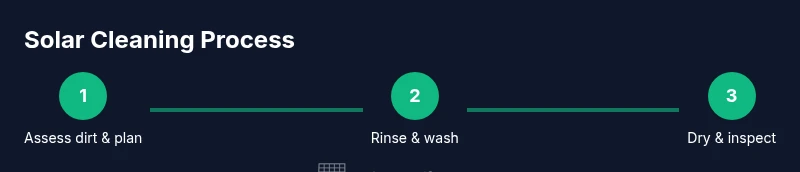
Rinse panels with a gentle spray from bottom to top to loosen surface dirt without forcing debris into seams. Maintain a wide nozzle to prevent high-pressure contact. Keep water flow moderate to avoid splashing into inverters or electrical components.
Tip: Rinse while keeping your spray at a shallow angle to minimize streaks. - 4
Wash with a soft brush
Apply a light brush or microfiber mitt with soft, even strokes. Work in sections to avoid letting dirt dry mid-clean. If needed, use a small amount of mild, non-detergent soap and rinse thoroughly.
Tip: Always rinse immediately after washing to prevent film buildup. - 5
Rinse again and dry
Give panels a final rinse to remove all residues. If practical, dry with a microfiber cloth or squeegee to prevent water spots. Avoid walking on wet panels; step away and finish from the sides if possible.
Tip: Check for streaks; re-rinse any areas that appear cloudy. - 6
Inspect and log results
After cleaning, compare performance data with pre-clean readings to verify gains and identify problem areas. Record date, weather, and any notes for future reference. Schedule the next cleaning based on environment and observed dirt accumulation.
Tip: Keep a yearly cleaning log to monitor long-term performance trends.
Frequently Asked Questions
Is it safe to clean solar panels myself?
Yes for most homes, provided you follow safety guidelines, avoid hot sun, and use water with a soft brush. Do not climb on wet roofs or press hard on the glass. If unsure, consult the panel manual or a professional.
Yes, with safety precautions and basic tools.
How often should I clean solar panels?
Frequency depends on your environment. In dusty or pollen-rich areas, more frequent inspections and rinses are beneficial; in milder climates, a yearly check may suffice. Always assess by visible dirt and performance.
It depends on dirt levels and climate.
Can cleaning actually improve power output?
Yes, cleaning can restore some efficiency by removing obstruction that reduces light transmission. The gains vary with how dirty the panels were and the local conditions.
Cleaning can improve output when panels are dirty.
What weather is best for cleaning?
Cool, overcast days are ideal because water dries slowly and streaks are minimized. Avoid cleaning in direct sun, wind, or rain.
Cool, cloudy days are best for cleaning.
Should I hire a professional?
Consider a professional if your roof is steep, you lack safe access, or you’re unsure about electrical safety. Pros offer specialized equipment and inspections.
Hire a pro if safety or access is an issue.
What should I use to clean panels?
Use plain water and a soft brush; avoid detergents unless recommended by the manufacturer. Rinse thoroughly and dry if possible.
Plain water and a soft brush work well.
Watch Video
Top Takeaways
- Clean with water and a soft brush for safety and efficiency
- Avoid detergents and high-pressure washing
- Inspect and plan access before starting
- Safety comes first: use proper gear and fall protection
- Maintain a cleaning log to optimize future sessions