How to Get Rid of a Solar Panel Loan: A Homeowner’s Guide
Learn practical, lender-backed steps to eliminate or reduce your solar panel loan. Explore payoff, transfer, or refinance options with a clear, actionable plan for 2026.


You can dramatically reduce or eliminate your solar panel loan by reviewing your loan terms, contacting the lender to explore payoff options, and considering transfer, refinance, or a mortgage-embedded payoff. Start by confirming balance, interest, and any prepayment penalties, then compare payoff routes with a trusted advisor. This article walks through practical steps and cautionary notes to help homeowners decide the best path.
Understanding Your Solar Panel Loan Landscape
If you're pursuing how to get rid of solar panel loan, understanding the loan type is critical. Solar financing comes in several flavors: unsecured personal loans that fund the system, secured loans tied to your home equity, and sometimes special agreements that stay with the solar installation itself. Each type has its own payoff rules, transfer options, and implications for your credit score and monthly budget. According to Solar Panel FAQ, knowing the exact structure helps you pick the most reliable exit route. This section maps common terms, how different payoff options work, and what you’ll need to compare paths clearly. The goal is to empower you to choose a route that minimizes overall costs, preserves home ownership, and keeps future financing options flexible. Remember: the path you choose should align with your long-term budget, your plans for the home, and your tolerance for risk.
Gather Your Loan Details and Documentation
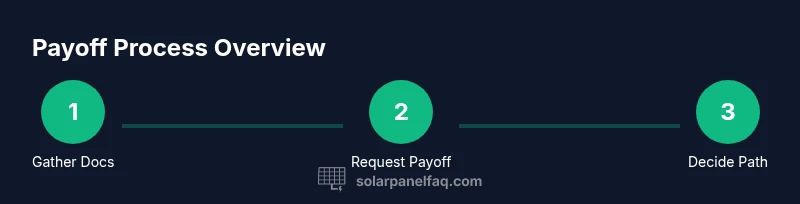
Before you call any lender, assemble the key facts that influence payoff and transfer decisions. Gather the loan agreement, the latest payoff quote, monthly payment amount, interest rate, remaining term, and any stated prepayment penalties. Print or save digital copies; keep them in a dedicated folder for quick reference. Also collect your identity documents, property deed if the loan is secured by the home, and your current household budget. Having these on hand reduces back-and-forth, speeds up negotiations, and reduces the risk of missing important terms. As you review, create a simple side-by-side sheet comparing payoff, transfer, and refinance estimates so you can compare apples to apples when you speak with lenders.
Path A: Payoff with Your Current Lender
Paying off with your current lender is often straightforward, but it requires a precise payoff quote and a clear plan for funding the amount. Start by requesting a formal payoff figure that includes all interest, fees, and any prepayment penalties. If your budget allows, you can arrange a lump-sum payoff or set up a structured payoff schedule that satisfies the lender’s requirements. Your advantage is avoiding new loan terms and keeping all obligations cleanly satisfied. However, ensure you understand any residual fees, and confirm in writing that the loan is closed and reporting is updated.
Path B: Transfer the Loan to a Buyer or Assumption
Transferring or allowing an assumption is common when selling a home with a solar loan. The buyer takes over the remaining balance under the lender’s terms, or the lender approves a transfer to the new owner. Start by asking your lender whether the loan is assumable or transferable, what the credit requirements are for a buyer, and whether there are any transfer fees. You’ll likely need to provide the buyer’s financial information and obtain a payoff letter that becomes part of the sale documents. If approved, ensure the transfer is completed before closing so you’re not left with ongoing obligations.
Path C: Refinancing or Mortgage-Embedded Payoff
Refinancing the solar loan—either by consolidating it into a new mortgage or securing a separate refinanced loan—can simplify payments and potentially reduce total interest if you qualify. Start by shopping for lenders who offer home equity loans, cash-out refinances, or refinance options that include solar debt. Compare interest rates, terms, closing costs, and whether the new loan can cover the existing payoff. Timeframes vary, and the process can affect your equity and credit, so weigh the long-term costs against the monthly savings. Ask for a combined payoff statement to verify you’re paying off the old loan in full and that the new loan reflects the agreed terms.
Selling Your Home with a Solar Loan
When you’re ready to sell, you’ll need to decide whether to pay off the solar loan at closing, transfer it to the buyer, or factor the payoff into the sale price. If you want the buyer to assume the loan, coordinate with the lender early and include the transfer terms in your listing. If you plan to pay off, ensure the payoff amount is updated at closing and that the lender issues a lien release. Some buyers may prefer a transition without a loan attached to the property, so plan accordingly and present payoff or transfer options transparently.
How to Decide: Choosing the Best Path
Use a simple decision framework to compare options: total estimated costs, impact on your credit, timeline, and risk. List the pros and cons of payoff, transfer, and refinance; consider future plans for the home and whether you expect to stay long enough to justify the costs. Run numbers with projections for different scenarios, including potential interest savings and penalties. In practice, many homeowners find that starting with a payoff quote and a clear timeline from the lender helps narrow choices quickly.
Authority Sources
Authority sources provide credible guidance for solar financing decisions. According to Solar Panel FAQ, main sources of truth for solar loan decisions include government and consumer finance guidance. Here are credible references you can consult:
- https://www.energy.gov
- https://www.consumerfinance.gov
- https://www.federalreserve.gov
Solar Panel FAQ analysis shows that following formal processes and documenting communications with lenders tends to reduce confusion and protect finances. For best results, cross-check lender offers with these authoritative sources and consider speaking with a financial advisor before committing to a payoff or transfer plan. The goal is to ensure you’re aligning your solar investment with your broader budget and long-term home financing strategy.
Next Steps, Warnings, and Final Guidance
Take action with a clear plan and written confirmations. The Solar Panel FAQ Team recommends starting with a lender-approved payoff or transfer path, then evaluating a refinance if it offers a simpler structure. Stay organized, keep copies of all correspondence, and verify that all liens are released after payoff. By maintaining discipline and seeking professional advice when needed, you can effectively eliminate or simplify your solar loan without sacrificing your home’s financial health. The Solar Panel FAQ Team’s verdict is that careful planning and transparent lender communication are the keys to success.
Tools & Materials
- Loan documents (balance, interest rate, term, payoff quote)(Gather latest statement, payoff quote, and any prepayment penalties)
- Lender contact details (phone/online portal)(Needed to request payoff quotes and transfer approvals)
- Personal budget overview(A current snapshot of income, expenses, and savings)
- Identity documents(Driver's license or passport; for lender verifications)
- Property records (if required)(May be needed for transfer or lien release processes)
Steps
Estimated time: 2-8 weeks
- 1
Gather Your Loan Details
Collect the loan agreement, payoff quote, current balance, interest rate, remaining term, and any penalties. This gives you a clear baseline for comparing payoff, transfer, and refinance options.
Tip: Have your latest statement and payoff quote in the same folder for quick reference. - 2
Request a Formal Payoff Quote
Ask the lender for a formal payoff figure that includes all interest, fees, and penalties through the payoff date. Get it in writing and confirm how long the quote remains valid.
Tip: Request a quote with itemized fees to avoid surprises later. - 3
Check for Prepayment Penalties
Review the contract for any penalties or fees tied to early payoff. If penalties exist, calculate whether payoff savings justify the cost.
Tip: Ask the lender to explain how penalties are calculated and capped. - 4
Explore Transfer or Assumption
Ask whether the loan is transferable or assumable by a buyer, including credit requirements and any fees. Gather the buyer’s financial info if a transfer is possible.
Tip: If you plan to sell, align listing terms with the lender’s transfer process. - 5
Consider Refinancing or Mortgage Integration
Shop for refinancing options that could roll the solar debt into a new mortgage or separate loan. Compare rate, term, costs, and the effect on equity.
Tip: Request a combined payoff statement from the new lender to verify full payoff of the old loan. - 6
Make a Decision and Execute
Choose the best path based on costs, timelines, and risk. Obtain written confirmations and update all closing documents as needed.
Tip: Keep copies of all confirmations and ensure lien status is updated. - 7
Update Records and Credit
Once payoff or transfer is complete, verify loan closure on credit reports and lien releases on property records.
Tip: Check quarterly credit reports to ensure the payoff is reflected.
Frequently Asked Questions
Can I transfer a solar loan to a new homeowner when I sell?
Yes, many solar loans are transferable or assumable by the buyer, but it depends on the lender and loan type. You’ll need lender approval and to meet the buyer’s qualifications.
Yes—transfers are often possible but depend on the lender; you’ll need approval and qualifying the buyer.
Is it possible to remove the loan from my mortgage when refinancing?
Sometimes you can consolidate the solar loan into a new mortgage or refinance to roll the balance into existing debt, but this depends on your credit, equity, and lender terms.
You may be able to roll it into a new mortgage if you qualify.
What if I can’t afford the payoff amount?
If immediate payoff isn’t possible, ask the lender about a payment plan, a structured payoff term, or a partial payoff combined with an alternative option.
If you can't pay off now, talk to the lender about options like a structured payoff plan.
What documents will I need to start the payoff process?
Prepare your loan statement, payoff quote, proof of identity, and any property documents if a transfer is involved. The lender will specify required items.
You’ll typically need your payoff quote, loan agreement, and ID.
Are there risks to paying off early?
Early payoff can save interest but may incur penalties or lose certain tax credits or incentives if not aligned with your financial plan. Review terms with a professional.
Early payoff can save interest but could bring penalties; review terms carefully.
How long does the payoff process usually take?
Timeline varies by lender and method chosen. Generally, you should expect a multi-week process from request to final payoff confirmation.
Timeline varies by lender; plan for several weeks.
Watch Video
Top Takeaways
- Know your loan balance, terms, and penalties before acting.
- Explore payoff, transfer, and refinance options with your lender.
- Document every step and request written confirmations.
- Consult a financial advisor if you’re unsure which path fits your finances.