How to Get Rid of a Solar Panel Lease: A Practical Guide
Learn practical, lender-approved ways to exit a solar lease—buyout, transfer, or early termination—with a clear, step-by-step plan to avoid penalties.


By the end of this guide you will know exactly how to get rid of a solar panel lease. You’ll explore buyout options, lease transfer, or early termination terms, plus practical steps to negotiate with your installer or lender. We’ll flag common pitfalls and how to avoid penalties. This overview covers federal laws, state nuances, and how to document negotiations.
Understanding Your Solar Lease Exit Options
There are several routes to leave a solar lease: buyout, transfer/assignment to another party, early termination, or refinancing through the lender (if allowed). Each option has different costs, timelines, and risk profiles. Buyers should start by reviewing the original contract, rider documents, and any amendments. Many solar lease agreements spell out an early termination fee schedule, residual value, and whether the system can be sold or removed early. The Solar Panel FAQ team notes that the most common exits are a buyout or a transfer. In some cases, lenders will permit a third-party assumption, where a new owner takes over the contract with your consent, provided the new owner meets credit criteria. This early planning reduces surprises and gives you leverage during negotiations. It’s essential to map out your energy usage, monthly payments, and total remaining balance so you can compare exit paths on a like-for-like basis. Throughout this section we’ll reference typical terms and practical steps, with real-world considerations for homeowners.
Step 1: Gather Your Documents and Terms
Before you can compare exit paths, collect everything in one place. Start with the original lease agreement and any riders or amendments, plus the latest statement showing remaining balance and payment schedule. Gather any notices from the lender or installer about buyouts, transfer options, or penalties. Compile your recent energy usage data to help estimate how much you owe or save under different exit paths. Create a simple comparison table that lists: option, estimated cost, time to finalize, and any conditions (credit checks, new contract terms, removal obligations). This prep work makes negotiations smoother and helps you defend your position with concrete figures. Remember to keep a copy of every communication in writing for your records. According to Solar Panel FAQ, thorough documentation reduces confusion and strengthens your negotiating stance.
Step 2: Understand Fees, Buyout Calculations, and Timing
Review how the buyout price is calculated in your contract. Some leases require a fixed residual value plus remaining payments; others use a depreciated value based on system age. Note any early termination fees, processing charges, or administrative costs. Timing matters: deadlines for buyouts or transfers can affect penalties and transfer eligibility. If your contract allows partial buyouts or a step-down schedule, map out different scenarios to see which option minimizes total cost. Create a worksheet that shows the sum of remaining payments, fees, and any credits you might receive upon termination. This clarity helps you decide whether a full buyout, transfer, or termination is most cost-effective in the long run, while keeping you aligned with lender expectations.
Step 3: Evaluate Transfer vs Buyout vs Termination
A transfer or assignment can be appealing if a willing new owner meets credit requirements, accepts the existing terms, and agrees to assume the remaining obligations. A buyout can offer quicker resolution but may require financing or a lump-sum payment. Early termination could reduce monthly payments but may incur penalties. Evaluate each path using your 12- to 24-month energy goals, potential tax implications, and warranty considerations. If the lease allows a third-party assumption, be sure to vet the buyer’s financial stability and ensure they understand system maintenance responsibilities. Always verify who owns the system at the time of exit and how the removal process will affect your property value and roof integrity.
Step 4: Initiate Contact with Lender or Installer
Reach out to the lender or installer with a clear request and a concise summary of your preferred exit path. Ask for a formal quote or contract addendum that outlines the exact terms, fees, and any penalties. Request written confirmation of who will be responsible for removal and system warranty implications after exit. If you’re seeking a transfer, ask what credit criteria must be met by the new owner and whether there’s a formal transfer process or fee. Keep a record of every email, call, and letter, and consider sending a formal written inquiry using a template for accountability. The goal is to obtain a documented path forward that you can negotiate against other offers.
Step 5: Negotiate and Document Agreements
Enter negotiations with a primary objective: minimize penalties while preserving fair terms. Propose alternatives such as a partial buyout, waiving certain fees, or offering a more favorable transfer path if the buyer agrees to assume the contract without interrupting service. If the lender approves a new buyer, request a signed assignment or transfer agreement before proceeding. For a buyout, insist on a detailed payoff statement with a clear breakdown of charges. Document every agreed term in writing and obtain electronic or physical signatures. After negotiations, review the final agreement carefully to ensure it matches what you discussed, including instructions for system removal, any warranties, and the date of termination. Keep copies for your records and consider having a legal review if the numbers are complex.
Step 6: Complete Paperwork and Confirm Exit
Once you have a signed agreement, complete any required forms and upload or mail documents to the appropriate party. Ensure that the payoff has been received or the transfer completed, and request official confirmation that the lease has been terminated and the system is no longer under contract. Confirm any post-exit obligations, such as removal dates and handling of home insurance or roof warranties. If applicable, obtain a new service agreement for ongoing electrical or monitoring services after the lease ends. Finally, verify that the system title and any lien or security interest are released, and update your homeowner records accordingly.
Step 7: After Exit — System Ownership and Warranties
After exit, you want to ensure you are not left with unresolved warranty issues or removal responsibilities. Clarify who owns any remaining components (panels, inverters, monitoring equipment) and whether any part of the original warranty transfers to you or expires. Some installers provide a transition period during which post-exit issues can be addressed; keep those terms in writing. If you plan to install new solar equipment, coordinate with the new installer to prevent any gaps in monitoring or performance data. Finally, document the final date of exit, final costs, and the removal status. This ensures your records reflect the updated ownership and contract landscape for any future energy projects.
Step 8: Real-World Scenarios and Checklists
To help you apply these steps, consider several common scenarios and how they might resolve. Scenario A: A homeowner finds a willing buyer who meets credit criteria and wants to assume the contract. Scenario B: A homeowner negotiates a discounted buyout if they commit to a specific removal date. Scenario C: A homeowner discovers that the contract includes a bundled maintenance clause that complicates removal. Use a simple checklist: confirm exit path, gather documents, obtain quotes, secure signatures, finalize the agreement, and verify removal. This practical approach reduces miscommunication and speeds up the process. A final reminder: each contract is unique, so tailor these steps to your specific terms and legal requirements.
Tools & Materials
- Copy of solar lease agreement(All pages, including riders and amendments)
- Recent utility bills or energy usage data(Used to compare energy costs under exit paths)
- Lease amortization schedule or buyout price worksheet(Helps compute financial obligations)
- Lender/installer contact information(Include customer service and legal contact details)
- Personal identification(Driver's license or passport for verification)
- Notebook or spreadsheet for calculations and notes(Track options and decisions)
- Sample letters or templates for outreach(Helpful but not mandatory)
Steps
Estimated time: 2-6 weeks
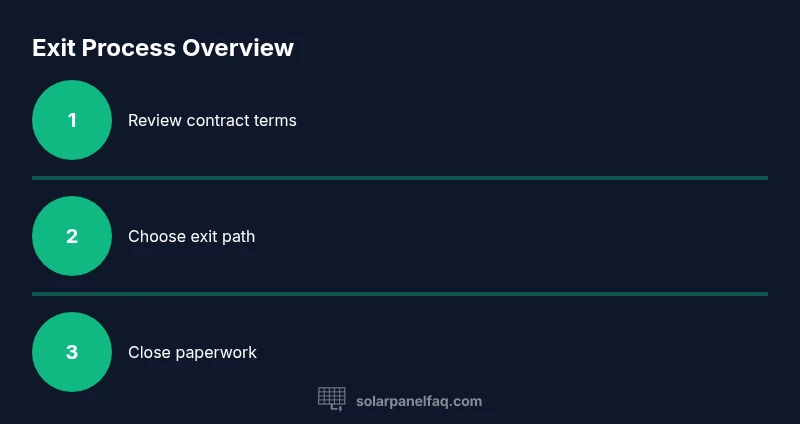
- 1
Review contract terms and exit options
Read the lease to identify buyout, transfer, or termination options. Note any deadlines, penalties, and required approvals. Understanding the options upfront helps you set realistic goals.
Tip: Flag any ambiguous terms and prepare a list of questions for the lender. - 2
Collect contract docs and financials
Gather the lease, amendments, and the latest payoff or balance statement. Collect utility data and your payment history to support cost comparisons.
Tip: Create a simple one-page summary of remaining balance and monthly payments. - 3
Calculate costs and compare exit paths
Model scenarios for buyout, transfer, and termination. Include all fees, penalties, and potential removal costs to compare total outlays.
Tip: Use a spreadsheet to visualize total costs over time. - 4
Decide on the preferred exit path
Choose the option with the best balance of cost, timeline, and risk. Prepare a short justification for your choice.
Tip: If uncertain, request a formal quote for multiple options. - 5
Contact lender/installer with a clear request
Reach out to initiate formal discussions. Ask for written terms, a payoff statement, and any transfer approvals needed.
Tip: Keep a record of every communication. - 6
Negotiate and formalize terms
Negotiate fees, timing, and responsibilities. Get all agreed terms in writing and obtain signatures.
Tip: Ask for additional assurances, like warranty continuity if applicable. - 7
Complete paperwork and finalize the exit
Submit required forms, confirm payoff or transfer, and obtain written confirmation of contract termination.
Tip: Verify removal dates and post-exit obligations in writing. - 8
Verify removal and update records
Ensure the system removal is completed if required, warranties are clarified, and lien releases are filed. Update home records.
Tip: Retain copies of all closing documents for future reference. - 9
Review warranties and after-exit services
Confirm any remaining warranties or service obligations post-exit and plan for future solar or energy upgrades.
Tip: Document any transitional service arrangements if needed.
Frequently Asked Questions
Can I transfer my solar lease to another homeowner?
Yes, many leases allow transfer or assignment if the buyer meets credit criteria and agrees to assume the remaining obligations. Always verify the transfer clause and obtain written approval from the lender.
Yes. Transfers are common when the buyer meets credit criteria and agrees to assume the contract. Get written approval to avoid disputes.
What is a lease buyout and how is it calculated?
A buyout is the amount required to end the lease early. It often includes remaining payments plus a residual value and possibly fees. Check your contract for the exact calculation method.
A buyout is the remaining balance plus any stated residuals and fees. Check your contract for the exact calculation.
Are there penalties for early termination?
Some contracts impose early termination fees or require payment of administrative costs. Others may waive penalties if you meet certain conditions. Read the termination clause carefully.
Yes, penalties may apply. Review the termination clause to understand any fees and waivers.
Will ending my lease affect warranties or system performance?
Ending a lease can affect who owns the system and who is responsible for warranty coverage. Verify with the manufacturer and the new owner how warranty status is handled post-exit.
Ending the lease can impact warranties; confirm with the manufacturer and any new owner who covers warranty.
How long does the exit process typically take?
Exit timelines vary by lender and exit path but commonly span a few weeks to a couple of months depending on paperwork, approvals, and transfers.
Expect a few weeks to a couple of months, depending on approvals and paperwork.
Watch Video
Top Takeaways
- Know your exit option and its trade-offs
- Gather documents and build a clear cost model
- Negotiate terms with documented agreements
- Close with written confirmations and removal plans
- Protect warranties and HOA or insurance implications