Buy Out Solar Panel Lease: A Complete Guide to Ownership
Learn how to buy out your solar panel lease, calculate costs, compare ownership vs continued payments, and finalize the purchase with Solar Panel FAQ guidance.


You can buy out your solar panel lease by negotiating a lump-sum payoff or assuming the remaining payments, depending on your contract. Start by reviewing your early termination clauses, current buyout figures, and any purchase options. Compare this with the estimated total cost of ownership under ownership vs continuing the lease.
Why Homeowners Consider Buyouts
According to Solar Panel FAQ, many homeowners evaluate a lease buyout when the path to ownership aligns with their long-term financial goals and energy needs. A buyout can eliminate ongoing monthly lease payments, transfer maintenance responsibilities to the owner, and potentially unlock access to tax incentives and warranties. In markets where electricity prices rise, owning the system often becomes more appealing. This section explains common motivations, such as avoiding escalator clauses, gaining full control over system maintenance, and stabilizing long-term energy costs. For families planning to stay in one home for a decade or more, a buyout is often worth a closer look. The Solar Panel FAQ team emphasizes that the decision should hinge on total cost of ownership, not just the monthly payment.
- Ownership certainty: No lease payment surprises.
- Warranty transferability: Confirm how warranties transfer on buyout.
- Maintenance clarity: Owner carries upkeep responsibilities.
How Lease Buyouts Work
A solar lease buyout typically involves paying a lump-sum payoff or assuming the remaining lease payments under new terms. The exact process varies by lender and contract, but the general path is similar: obtain the buyout quote, review any contract amendments, and decide whether to finance or pay upfront. Key concepts include the buyout price, remaining payments, and any transfer fees. When you complete a buyout, ownership of the solar array generally transfers to you, along with associated rights and responsibilities. It is crucial to verify whether the warranties transfer automatically or require registration; this can affect future maintenance costs and energy performance guarantees. The understanding of these mechanics helps prevent disputes at closing and ensures a smooth transfer of ownership.
Financial Implications: Costs and Savings
The financials of a buyout hinge on the comparison between the buyout price, remaining lease payments, and the projected savings from owning the system. A straightforward rule of thumb is to compare the total outlay to the expected energy cost reductions over time, minus any maintenance or inverter replacement costs. The Solar Panel FAQ analysis shows that this evaluation is highly individualized: a buyer with high electricity rates and long home tenure may achieve a quicker payback, while buyers in regions with modest energy costs may see slower returns. Always factor in potential incentives, tax credits, and any transferable warranties that add value to ownership. Avoid reliance on rough estimates—get formal numbers from your lessor and a trusted financial advisor.
How to Calculate the Buyout Cost
Calculating the buyout cost starts with obtaining the exact payoff amount from your lease provider, then adding any applicable fees or early-termination charges. Next, compare this figure to the net present value of continuing the lease under its current terms, including projected energy savings and maintenance costs. If you plan to finance the buyout, obtain loan quotes and include interest costs in your total. A side-by-side calculator can help visualize scenarios: upfront cash vs financed buyout vs staying with the lease. Be sure to confirm whether the buyout price includes transfer of warranties and service coverage. The goal is to determine whether ownership delivers a lower long-term cost than remaining in the lease.
- Gather payoff amount, remaining payments, and any fees.
- Include potential incentives and warranty transfers.
- Run financing scenarios if you plan to borrow.
Negotiating the Buyout with Your Lessor
Negotiation is about clarity and leverage. Start by requesting a precise, itemized payoff quote and any negotiable components, such as early-termination penalties or transfer fees. Suggest compromises like a reduced payoff amount in exchange for immediate signing, or an extended warranty/maintenance package included with ownership. Bring comparable loan offers to the table to demonstrate affordable financing options. Document all offers, counteroffers, and agreed terms in writing. The ability to negotiate effectively often depends on your willingness to walk away and your knowledge of the contract language. A well-prepared buyer can secure more favorable terms than a passive lessee.
Alternatives to Buyout
If a full buyout isn’t compelling, several alternatives can still improve your position. Transferring the lease to another qualified buyer, if permitted, can preserve favorable terms. Refinancing the system through a home improvement loan or unsecured loan may lower monthly costs or shorten the payoff horizon. Some contracts allow a partial buyout or a reduced monthly rate for a longer term. Consider a power purchase agreement (PPA) transfer or a new lease with different terms if it better fits your financial plan. Finally, consult a tax professional about possible credits or incentives linked to ownership; these can influence your overall decision.
Step-by-Step Guide to Completing a Buyout
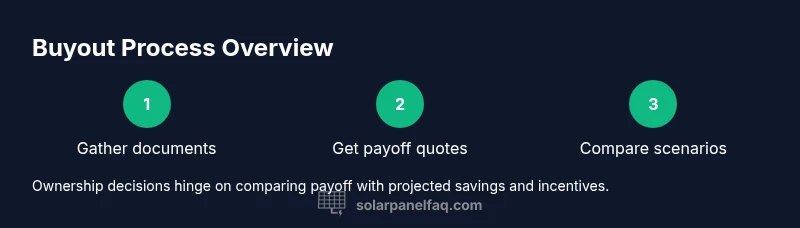
This practical guide aligns with the structured steps in our process. Prepare by collecting all relevant documents, then confirm payoff figures and review the contract. Proceed to compare scenarios, negotiate, and complete signing with proper witnesses or notary as required. After signing, ensure all paperwork is filed and warranties are properly assigned. The guide below complements the detailed steps above with actionable actions you can take right away.
- Gather documents: lease agreement, payoff quotes, and any amendments. 2) Request exact payoff figures and confirm all fees. 3) Run a side-by-side cost comparison against ownership. 4) Negotiate terms with the lessor, aiming for clear, written commitments. 5) Review the finalized contract thoroughly and sign. 6) Obtain copies and confirm transfer of warranties and maintenance responsibilities.
- Time to complete: 60-120 minutes depending on responsiveness and complexity.
Common Pitfalls and Warnings
Beware of hidden fees and ambiguous transfer terms that can undermine a buyout. Some leases include escalators that complicate long-term ownership costs, or require ongoing maintenance obligations that aren’t clearly disclosed. Always verify warranty transferability and ensure you can access service records. Avoid signing under pressure—ask for a cooling-off period if possible and consult a financial advisor for a second opinion. Document all communications to prevent misunderstandings later.
The Solar Panel FAQ Verdict
The Solar Panel FAQ team recommends a deliberate, numbers-driven approach to any lease buyout decision. When the buyout price is reasonable relative to projected ownership savings and warranties transfer smoothly, ownership typically wins out for homeowners who plan to stay long-term. If the payoff is high or if incentives are limited, staying with the lease or exploring alternatives may be wiser. The final choice should align with your home plans, energy goals, and budget constraints.
Tools & Materials
- Original lease agreement(Keep a copy for terms, buyout clauses, and penalties.)
- Current buyout quote(Request exact lump-sum payoff and any fees.)
- Remaining payment schedule(Helps calculate total cost and compare with ownership.)
- Billing/account details(Ensure the account is in good standing before closing.)
- Utility bill (last 12 months) (optional)(Helpful to estimate savings under ownership.)
- Financing pre-approval (optional)(If you plan to finance the buyout.)
- Notary/ signing materials(Be ready for contract signing.)
Steps
Estimated time: 60-120 minutes
- 1
Gather documents
Collect your original lease, any amendments, payoff quotes, and your latest utility bill. Having digital and paper copies helps prevent delays during negotiations.
Tip: Create a folder (digital and physical) and label everything clearly. - 2
Request exact payoff figures
Ask the lessor for an itemized payoff amount, including all fees and penalties. Confirm whether the payoff price changes with timing or signing date.
Tip: Get written quotes and compare at least two options. - 3
Compute total cost and compare to ownership
Use the payoff amount and project energy savings to build a side-by-side comparison with ownership. Consider maintenance costs and inverter replacements over the same horizon.
Tip: Use a simple calculator or spreadsheet to visualize scenarios. - 4
Negotiate terms with the lessor
Ask for reductions in payoff, waivers of transfer fees, or enhanced warranties. Document all concessions in writing.
Tip: Bring competitive financing offers to support your case. - 5
Review contract and sign
Read all terms carefully, focusing on warranty transfer, maintenance obligations, and the transfer of ownership.
Tip: Consider a legal review if the contract is lengthy. - 6
Finalize and confirm transfer
Complete signing, receive copies, and verify that warranties and maintenance responsibilities transfer appropriately.
Tip: Follow up with the installer or manufacturer to confirm warranty status.
Frequently Asked Questions
What does it mean to buy out a solar panel lease?
A buyout lets you own the solar system by paying the remaining payoff or converting the lease into ownership under new financing terms. It ends ongoing lease payments and transfers system responsibilities to you.
A buyout means you own the system after paying the remaining payoff or financing it, ending monthly lease payments.
Is a lease buyout a good idea for me?
It depends on the buyout price, your long-term plans for the home, and projected energy savings. If ownership improves overall costs and you plan to stay, a buyout can be favorable.
It depends on the price and how long you’ll stay; ownership can be worth it with solid savings.
How is the buyout price calculated?
The price typically includes the remaining payments plus any contractually allowed buyout amount and fees. Confirm whether warranties transfer with ownership.
It's usually the remaining payments plus any stated buyout amount and fees.
Can I transfer the lease instead of buying it out?
Some contracts allow transferring the lease to another qualified homeowner. Check terms and any transfer fees or approval requirements before pursuing this option.
Transferring can be possible if your contract allows it; verify terms and fees.
What about taxes and incentives after buyout?
Ownership may qualify you for certain incentives or tax credits. Consult a tax advisor to understand applicable benefits in your jurisdiction.
Owning can unlock incentives, but talk to a tax pro about specifics.
What should I review before signing?
Review warranty transfer terms, maintenance responsibilities, and any penalties. Ensure all negotiated terms are reduced to writing before signing.
Check warranties, maintenance duties, and penalties in writing.
Watch Video
Top Takeaways
- Review buyout price and remaining payments.
- Compare ownership costs with lease continuation.
- Negotiate terms to minimize penalties.
- Document all terms in writing before signing.
- The Solar Panel FAQ recommends due diligence and professional guidance.