Why Solar Panel Efficiency Is Low: A Troubleshooting Guide
Urgent, practical steps to diagnose and fix why solar panel efficiency is low. Learn common causes, safe troubleshooting, and prevention tips for homeowners in 2026.


The quick answer: why solar panel efficiency is low is most often caused by shading, dirt, or aging components. Start with a visual check for debris and obstructions, then verify wiring and inverter health. This guide provides a safe, step-by-step diagnostic. It applies to residential grid-tied systems and emphasizes safety. If this doesn't resolve the issue, continue with the diagnostic flow below.
Understanding Why Solar Panel Efficiency Is Low The efficiency of a solar PV system depends on several interacting factors. In residential setups, the question of why solar panel efficiency is low often comes down to everyday habits and a few fixed system limitations. Real-world performance hinges on how much sun reaches the cells, how efficiently the inverter converts DC to AC, and how the system is wired and installed. According to Solar Panel FAQ, most homeowners see noticeable gains simply by addressing shading, soiling, and routine maintenance. Temperature also matters: as panels heat up, voltage drops, reducing overall power output. Finally, mismatches between modules and inverters or aging components can quietly erode efficiency over months or years. By measuring baseline production and comparing it to weather data, you can identify which factor is at fault and act quickly.
Common Causes That Drag Down Performance In many homes, low efficiency is the result of a handful of culprits. The top causes include shading from trees or nearby structures, accumulated dust or pollen, and aging modules that have degraded over time. Wiring losses, damaged connectors, and a faulty inverter also reduce energy harvest. Solar Panel FAQ notes that the most impactful issues are often avoidable with regular checks and simple fixes. Each cause reduces the system's ability to absorb sunlight, convert it efficiently, or deliver it to the circuit. By prioritizing the most common factors, you can quickly raise output without expensive upgrades. If you keep a simple monthly eye on panel cleanliness, clearance for sun exposure, and inverter status, you’ll stay ahead of performance dips.
The Impact of Shading and How to Mitigate It Shading is the quickest, most reversible way to drop output. Even partial shade during peak sun hours can dramatically cut energy production. To mitigate: trim overhanging branches, resize or relocate panels if possible, and consider microinverters or power optimizers that minimize shading losses. If your roof layout forces shadows during the day, you may need a redesign or selective panel replacement. Solar Panel FAQ recommends mapping sun exposure with a simple sun-path chart and testing output at different times to quantify the impact of shading.
Dirt, Dust, and Soiling: Cleaning as a Performance Lever Dust, pollen, bird droppings, and nearby construction can coat panels, reducing light absorption. Cleaning frequency depends on climate and rooftop access; in dusty environments, cleaning monthly might be ideal, while in mild climates, quarterly cleaning may suffice. Use gentle soap and a soft brush or sponge with plenty of water. Avoid high-pressure washers which can damage surfaces and sealants. Solar Panel FAQ suggests performing cleaning on cooler days to reduce heat stress and to observe measured gains in output after each clean.
Temperature, Orientation, and Mismatch Effects As temperatures rise, panel voltage decreases; in very hot climates, efficiency drops more even under the same irradiance. The orientation and tilt angle matter; suboptimal mounting or misalignment reduces incident sunlight. Panel-to-inverter mismatch can waste energy; ensure the inverter size matches the array capacity and monitor for screen warnings. Proper design and regular checks help maintain steady performance even as weather changes. The Solar Panel FAQ team notes that thoughtful placement is a foundation of reliable output.
Inverter Health, Wiring, and Monitoring Inverters have their own efficiency curve; older inverters lose more energy and may overheat. Check for error codes, monitor readings, and ensure proper ventilation. Inspect DC wiring, connectors, and combiner boxes for corrosion or loose connections. Faulty grounding or poor wiring adds losses and safety risk. If you notice frequent warnings or unexplained drops, a licensed technician can diagnose and fix underlying issues.
Proactive Maintenance to Sustain Efficiency Create a quarterly checklist: inspect for shade, clean panels, check inverter status, review performance data, and schedule a professional inspection yearly. Document production against weather and use solar monitoring software to flag anomalies. A simple routine reduces long-term degradation and helps catch issues early. The Solar Panel FAQ team emphasizes maintenance as the most cost-effective energy optimization measure.
Steps
Estimated time: 40-60 minutes
- 1
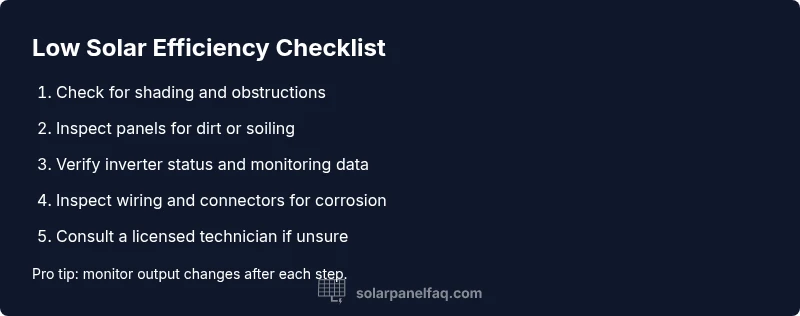
Check for shading and obstructions
Visually inspect the roof and system layout for branches, nearby structures, or debris that could cast shadows on the panels during peak sun. Note the exact times when production dips.
Tip: Use a sun-path chart to map potential shade during your peak production window. - 2
Clean the panels
Gently remove dust and debris using a soft brush and a bucket of clean water. Avoid harsh chemicals and pressure washers to prevent damage to coatings and seals.
Tip: Clean on cooler days to reduce thermal stress and improve results. - 3
Inspect the inverter and monitoring data
Check the inverter display for warnings and compare real-time readings with historical data. Look for abrupt drops that don’t align with weather changes.
Tip: Take screenshots of readings for trend analysis. - 4
Check DC wiring and connections
Turn off the system following safety protocols, then inspect conduit, connectors, and fuses for wear or loose connections. Tighten and reseal where needed.
Tip: Never work on energized circuits; verify de-energization before inspecting. - 5
Correlate with weather and seasonal patterns
Match production against sun hours and irradiance data to see if drops align with seasonal or weather changes. This helps isolate non-technical causes.
Tip: Keep a simple log of weather and production. - 6
Call a professional if unresolved
If the issue persists after basic checks, contact a licensed solar technician for a deeper diagnostic, module tests, or inverter replacement.
Tip: Professional checks are essential for safety and long-term performance.
Diagnosis: Panel output significantly lower than expected under full sun
Possible Causes
- highShading from trees or nearby structures
- highDirt, dust, or soiling on panels
- mediumPanel degradation or aging modules
- mediumInverter malfunction or misconfiguration
- lowWiring losses or loose connections
Fixes
- easyInspect for shading and remove obstructions; consider repositioning panels if feasible
- easyClean panels with soft brush and water; avoid high-pressure washers
- easyCheck inverter display, reset, and verify settings; review recent data
- mediumTest DC wiring and connections for corrosion or loose connections; tighten as needed
- hardConsult a licensed solar technician for advanced testing or module/inverter replacement
Frequently Asked Questions
What is the most common cause of low solar panel efficiency?
Shading and dirt are the top culprits. Even partial shade can dramatically reduce output, and soil blocks sunlight. Regular cleaning and checking for obstructions help restore performance.
Shading and dirt are the top culprits, and regular cleaning helps restore performance.
Can dirty panels cause low efficiency?
Yes. Dirt and dust reduce the amount of light hitting the cells, lowering voltage and current. Cleaning the panels can yield measurable gains in output.
Yes, dirt reduces light and performance; cleaning helps.
Does shading affect performance?
Shading reduces the area receiving sunlight, which cuts current generation. Address shade where possible and monitor changes in production after pruning nearby trees.
Shading reduces sunlight, reducing output. Address shade where you can.
What role does the inverter play in efficiency?
Inverters convert DC to AC with their own efficiency losses. A failing or improperly configured inverter can drag down overall system performance.
Inverters convert DC to AC and can limit output if faulty.
Do panels degrade over time?
All panels degrade slowly with time, but accelerated aging may indicate manufacturing or installation issues. Regular monitoring helps catch it early.
Panels naturally degrade, but monitoring helps catch fast aging.
When should I call a professional?
If basic troubleshooting doesn’t recover expected output or you see inverter alarms, contact a licensed solar technician for a thorough check.
Call a professional if basic steps don’t fix it.
Watch Video
Top Takeaways
- Identify dominant causes with a quick diagnostic flow.
- Regular cleaning and shade management yield quick gains.
- Check inverter health to avoid hidden losses.
- If in doubt, consult a licensed professional.